

Easter Egg Bread
As an amazon associate I earn from qualifying purchases.
Homemade Easter Egg Bread has a special charm. It's festive and beautiful, bringing a touch of tradition to your holiday table. This Easter egg bread is soft, fluffy, and lightly sweet, with a rich buttery flavor and a tender crumb. It tastes as good as it looks.
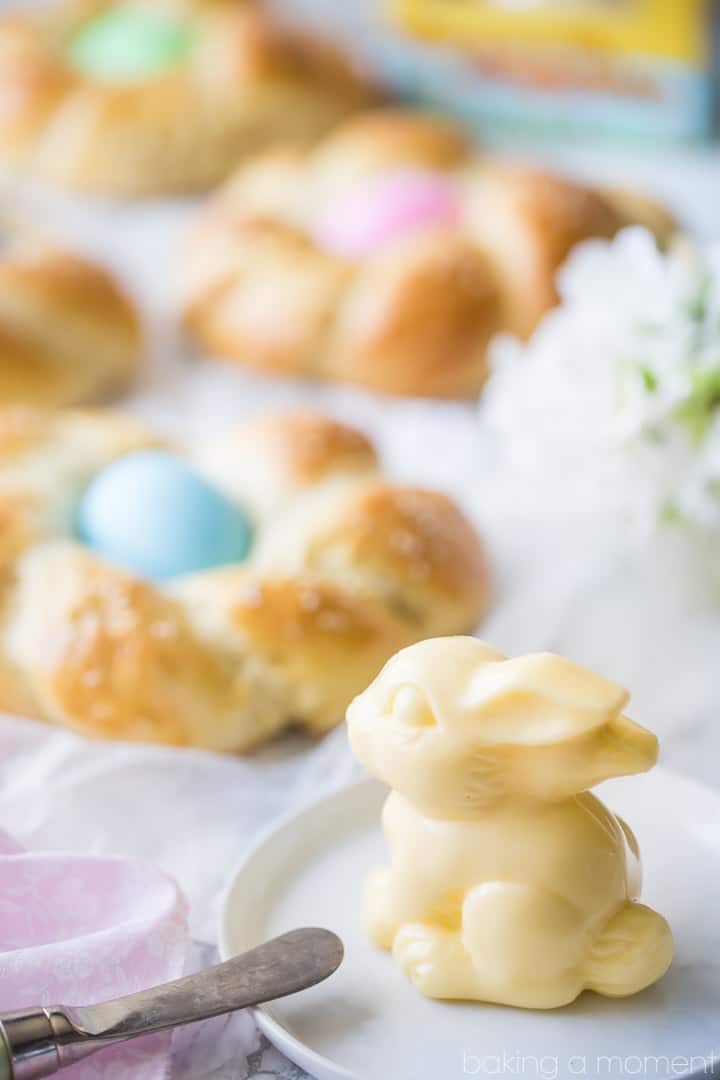
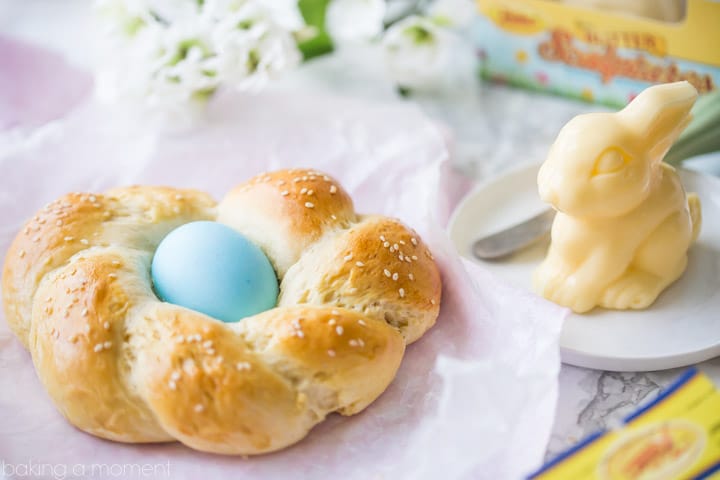
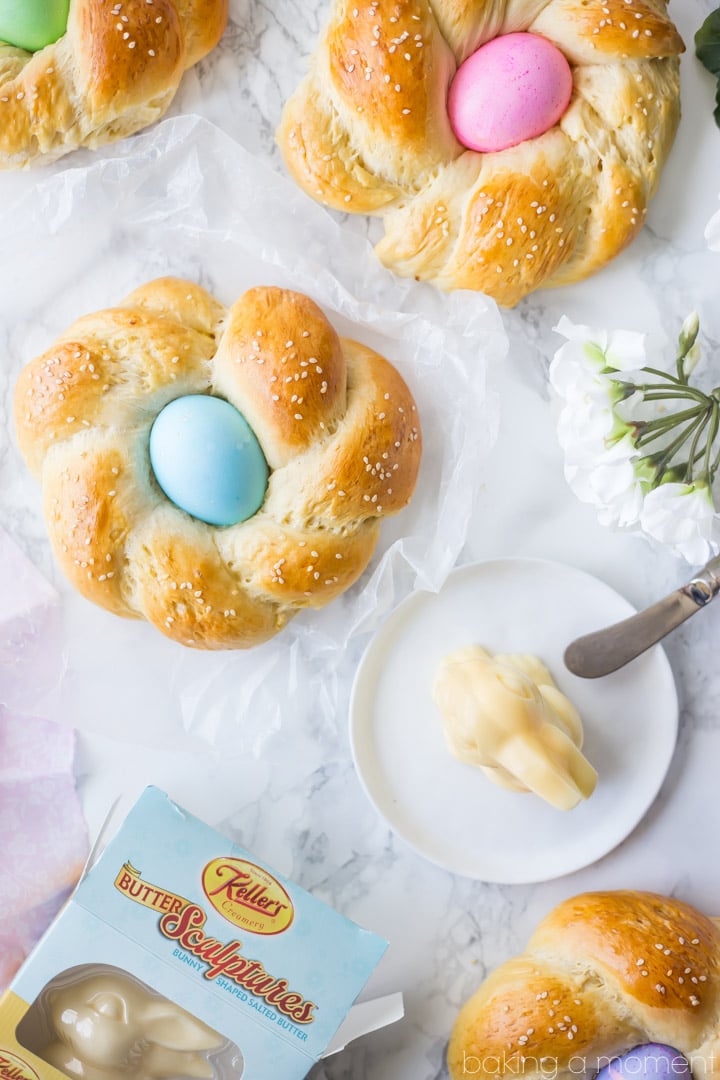
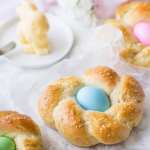
Each loaf is shaped into a twisted ring with a pastel-colored egg in the center. The bread looks cheerful and perfect for spring. Serve it at Easter brunch, as dessert, or on your holiday table, and it will definitely stand out!
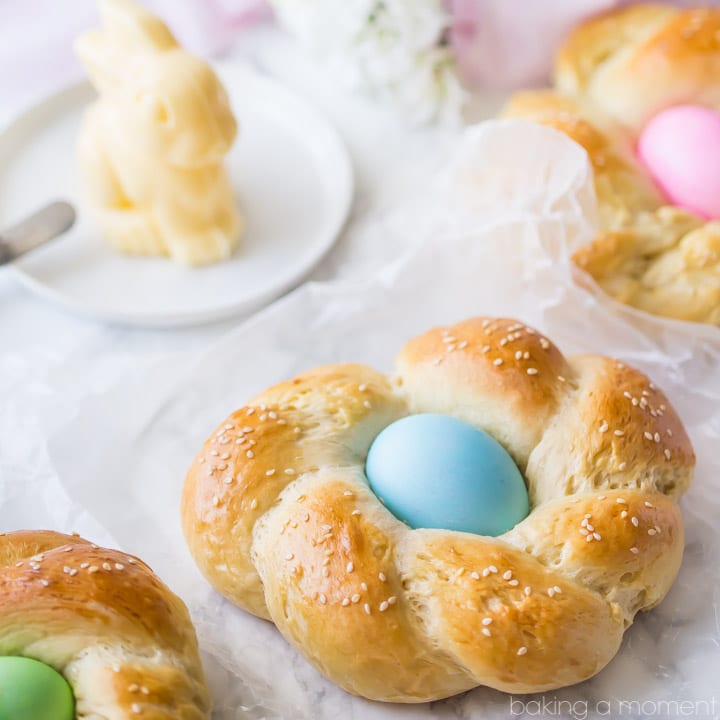
Here at my house, Easter is pretty low-key, but one thing is for sure: there will be baskets of candy and colorful eggs. And of course, a few of them will be tucked into these cute little braided Easter egg bread loaves.
It was so much fun to make these little beauties! The dough comes together easily and is really nice to work with. I based it on the traditional Italian Easter bread, also known as Pane di Pasqua.
They bake up light, soft, and buttery, with a hint of aromatic vanilla and orange blossom, which, to me, is just so perfect for Spring. I love the subtle flavor, and it really brings out the bread's natural sweetness.
Here's Why You'll Love This Recipe
- Soft, fluffy, and lightly sweet.
- Beautifully festive for Easter and spring celebrations!
- Made with simple pantry staples.
- Orange blossom water gives it a delicate, special flavor.
- Each loaf is topped with a colorful egg for a gorgeous presentation!
- Perfect for gifting, sharing, or displaying on a holiday table.
Ingredients You'll Need
The recipe card at the bottom of the post contains the full list with all of the amounts. Refer to that when you're cooking.
For the Easter Egg Bread
- Warm milk: Helps activate the yeast and adds richness to the dough.
- Active dry yeast: Gives the bread its rise and soft, fluffy texture.
- Unsalted butter: Adds moisture, tenderness, and a rich buttery flavor.
- Granulated sugar: Lightly sweetens the dough and helps create a tender crumb.
- Eggs: Enrich the dough and contribute to the bread's structure and softness.
- Vanilla extract: Adds warmth and rounds out the flavor.
- Orange blossom water: Adds a delicate floral note to the bread. Orange zest can be used instead for a more citrusy flavor.
- Kosher salt: Balances the sweetness and enhances the overall flavor.
- All-purpose flour: Forms the structure of the dough. You may need a little more depending on the humidity and how sticky the dough feels.
- Dyed eggs: Tucked into the center of each loaf for that signature Easter look.
- Egg wash: Brushed on top to give the loaves a shiny, golden finish.
- Sesame seeds: Sprinkled over the top for a pretty garnish and a little texture.
For the dyed eggs
- Boiling water: Used as the base for the dye baths.
- Distilled white vinegar: Helps the color adhere to the eggs.
- Gel paste food coloring: Creates those bright, cheerful pastel shades.
- Uncooked eggs: Dyed first, then baked right into the bread for a traditional finish.
How To Dye The Eggs
Step 1: Prepare the dye baths
Divide the boiling water evenly between 4 small bowls. Stir 1 teaspoon of vinegar into each bowl, then add 1 drop of gel paste food coloring to each.
Step 2: Dye the eggs
Put one uncooked egg in each bowl and gently turn it to coat. Let the eggs sit until they reach the color you want, then take them out and let them dry on a wire rack.
How To Make Easter Egg Bread
Step 1: Proof the yeast
Pour the warm milk into a large bowl and add the yeast. Let it sit for about 10 minutes, until it looks foamy on top. This means the yeast is active.
Step 2: Mix the dough
Mix in the softened butter, sugar, beaten eggs, vanilla, orange blossom water, and salt. Add the flour slowly, about half a cup at a time, until the dough forms a ball and pulls away from the bowl.
Step 3: Knead until smooth
Knead the dough for 5 to 10 minutes, until it's smooth, elastic, and soft. You can knead by hand or use a stand mixer with a dough hook.
Step 4: Let the dough rise
Put the dough in a greased bowl, cover it, and let it rise until it doubles in size, about 1 hour.
Step 5: Shape the loaves
Punch down the dough and split it into 4 equal pieces. Cut each piece in half, then roll each half into a 10-inch rope. Twist two ropes together, pinch the ends, and form a ring.
Step 6: Add the eggs
Put each twisted ring on a parchment-lined baking sheet and place a dyed egg in the center. Repeat with the rest of the dough and eggs.
Step 7: Rise again
Cover the shaped loaves loosely and let them rise for 30 minutes.
Step 8: Brush and bake
Preheat your oven to 350°F. Brush the loaves with egg wash, avoiding the dyed eggs. Sprinkle on sesame seeds, then bake for 20 to 25 minutes, until golden and puffed.
Helpful Tips and Tricks
- Make sure the milk is warm, not hot: If it's too hot, it can kill the yeast. It should feel warm, not hot, to the touch.
- Add the flour gradually: Humidity changes how much flour you need, so add it slowly until the dough is soft and easy to work with.
- Do not overflour the dough: This bread should be soft and tender, so don't add too much flour when kneading.
- Twist the ropes gently: Gently twisting the ropes gives the loaves a nice braided look without making the dough too tight.
- Be careful with the egg wash: Brush it around the dyed eggs, not over them, to keep the colors bright.
More Easter Recipes
- Easter Basket Cupcakes with American-Style Buttercream
- Decorating Easter Egg Cookies with Kids
- Pavlova
- Peanut Butter Eggs
- Chocolate Covered Coconut Eggs
- Frosted Sugar Cookie Bars
- Carrot Cake Loaf
- Ham Glaze Recipe
- Coconut Cream Pie
Ingredients
For the Easter Egg Bread
- ¾ cup (183 g) warm milk
- ¼ ounce (7.09 g) active dry yeast, (1 packet)
- ½ cup (113.5 g) unsalted butter,, softened
- ⅓ cup (66.67 g) granulated sugar
- 2 large eggs,, beaten
- 1 teaspoon vanilla extract
- 1 teaspoon orange blossom water, (zest of half an orange can be substituted)
- 1 teaspoon kosher salt
- 4 ¼ cups (531.25 g) all-purpose flour, (you may need as much as to 4 ½ cups)
- 4 dyed eggs, recipe follows
- egg wash, (one large egg beaten with 1 tablespoon milk)
- 1 tablespoon sesame seeds
For the dyed eggs
- 1 ⅓ cup (333.33 g) boiling water
- 4 teaspoons distilled white vinegar
- 1 drop each of Rose Pink, Violet, Royal Blue, and Grass Green gel paste food coloring
- 4 large eggs, uncooked
Instructions
To make the Easter Egg Bread:
- Place the warm milk in a large mixing bowl, and stir in the yeast. Allow it to prove until foamy (about 10 minutes).
- Stir in the softened butter, sugar, eggs, vanilla, orange blossom water, and salt.
- Stir in the flour, a half cup at a time, until the dough forms a ball and pulls away cleanly from the sides of the bowl.
- Knead the dough until smooth and elastic (5 to 10 minutes).
- Place the dough in a greased bowl, cover with plastic wrap, and allow it to prove until doubled in size (about 1 hour).
- Punch down the dough and divide it into 4 equal balls.
- Divide each ball in half and roll each half into a rope about 10 inches long.
- Pinch 2 ropes together at one end, and twist them together. Pinch the other end together and bring the twist around into a circle shape.
- Place on a parchment-lined baking sheet and nestle a dyed egg in the center.
- Repeat with the remaining dough balls and eggs.
- Cover loosely with plastic wrap and allow to rise for 30 minutes.
- Preheat the oven to 350 degrees F, and lightly brush the loaves with egg wash, taking care to avoid the eggs.
- Sprinkle with sesame seeds for garnish, and bake for 20 to 25 minutes or until golden brown and puffed.
To make the dyed eggs:
- Divide the boiling water equally between 4 small bowls.
- Place 1 teaspoon of vinegar in each bowl.
- Place 1 drop of gel paste food coloring in each bowl, and stir to dissolve.
- Place 1 uncooked egg in each bowl, turning to coat evenly with dye.
- Allow the eggs to sit in the dye until desired color is reached, then remove and drain on a wire rack.
Author

More Easter


Have a question about this recipe? Ask AI:

I presume the eggs turn out the equivalent of hard boiled. Is that right?
Yes, exactly!
Can I make the dough early morning up to dividing dough into to 4 balls then refrigerate for a couple of hours without ruining the dough. I thought the grandkids would enjoy making the ropes & twisting them together but I’d like to be prepared prior to their arrival. Don’t know a lot about making bread but they look great.
Thank you!
Yes absolutely! The dough will keep in the fridge for up to 48 hours, or in the freezer for up to 2 weeks. Good luck and enjoy!
These are beautiful . I noticed the dye on the eggs doesn’t run . Do they always come out beautiful for you ?
I haven't had the dye run at all... I use the Paas kits that you can find at the grocery store.
How far in advance can you make these, that the egg won't spoil?
I would say around 3 days or so?
I need 8..can I double?
Please say yes:)
I followed the recipe exactly as written and ended up with 8, they're baking as I type.
Hope you enjoy!
Yes! Absolutely, it should work beautifully. Thanks for reading!
You state, divide the dough into 8 equal balls and then cut them in half and braid, that would make 8 loaves, not 4.
Thank you for the heads up! I've made the correction.
These are so gorgeous Allie - truly a work of art! Pinning and drooling - happy Easter!
So happy you like them Tricia- thank you!
They look great! Love the fact that they are a small batch bake - I can bake and not have left-overs - thank you! 🙂
I love recipes like that too Sandra! Thank you so much for the sweet comment 🙂
What a beautiful Easter recipe!! I love the shaped butter, so perfect! And I am glad you are sharing this family favorite with us.
Thank you so much Zainab!