

Biscoff Cheesecake
As an amazon associate I earn from qualifying purchases.
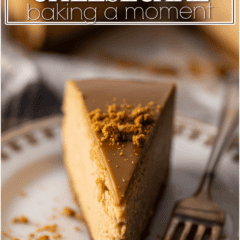
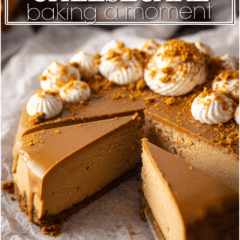
This Biscoff Cheesecake is rich, creamy, and packed with the deep caramelized cookie flavor everyone loves!
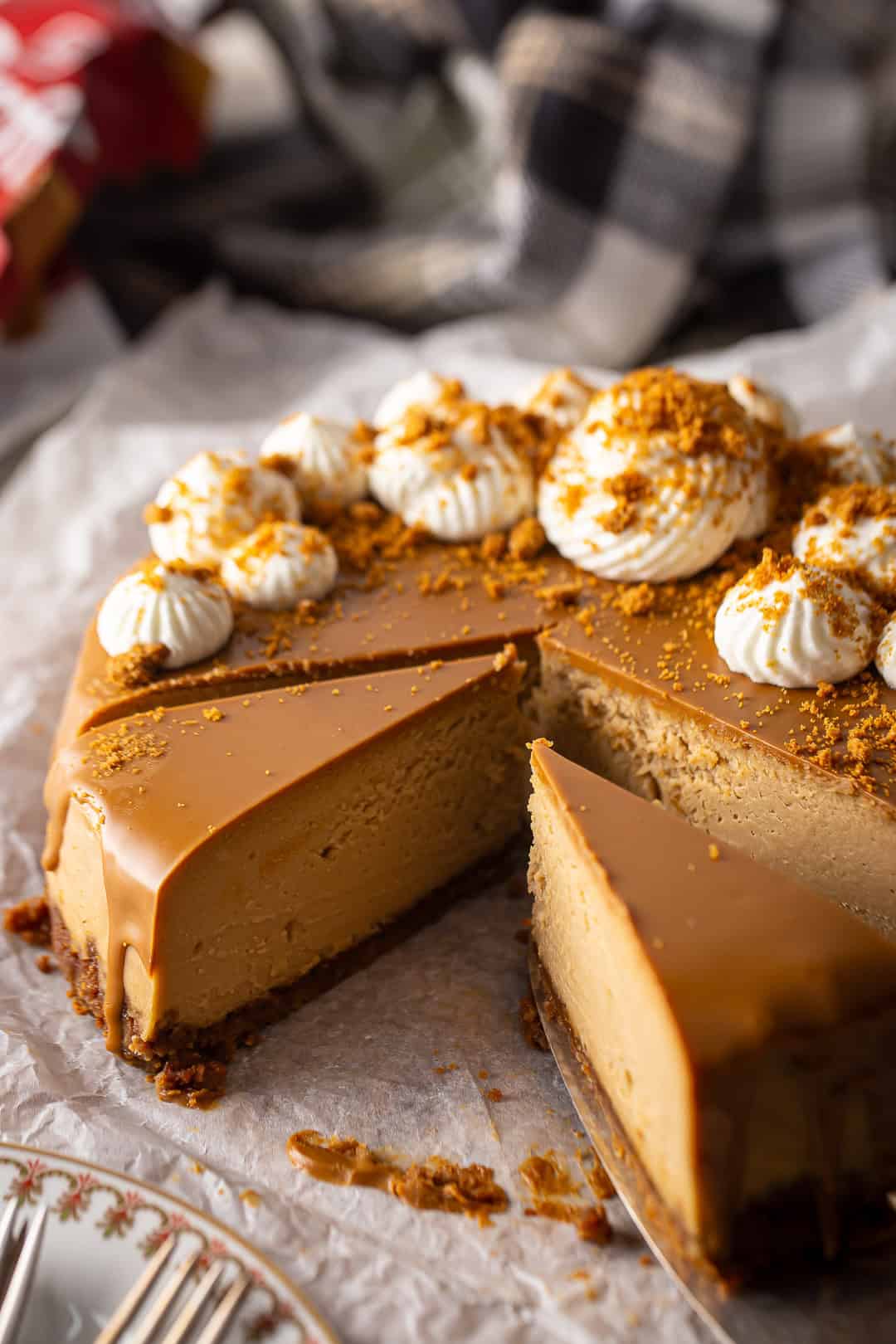
Cheesecakes are one of my favorite desserts to make, especially in the summer months when cool treats are the perfect finish to a day in the sun. I've got a lot of Cheesecake Recipes to choose from, but this one is one of my very favorites because I'm a little obsessed with Biscoff cookies.
First, you make a buttery Biscoff cookie crust. Then fill it with a smooth cookie butter cheesecake batter and bake it gently in a water bath until it is perfectly creamy. Finish by topping it with melted Biscoff spread, whipped cream, and crunchy cookie pieces. It is as close to cheesecake perfection as you can get.
If you have a Biscoff fan in your life, you need to make them this cheesecake!
Here's Why You'll Love This Recipe
- This cheesecake is all about big flavor and dreamy texture.
- Biscoff cookies add warm flavors of brown sugar, spice, and caramel. The cookie butter blends into the filling, giving the cheesecake a rich, cozy taste just like a bakery treat.
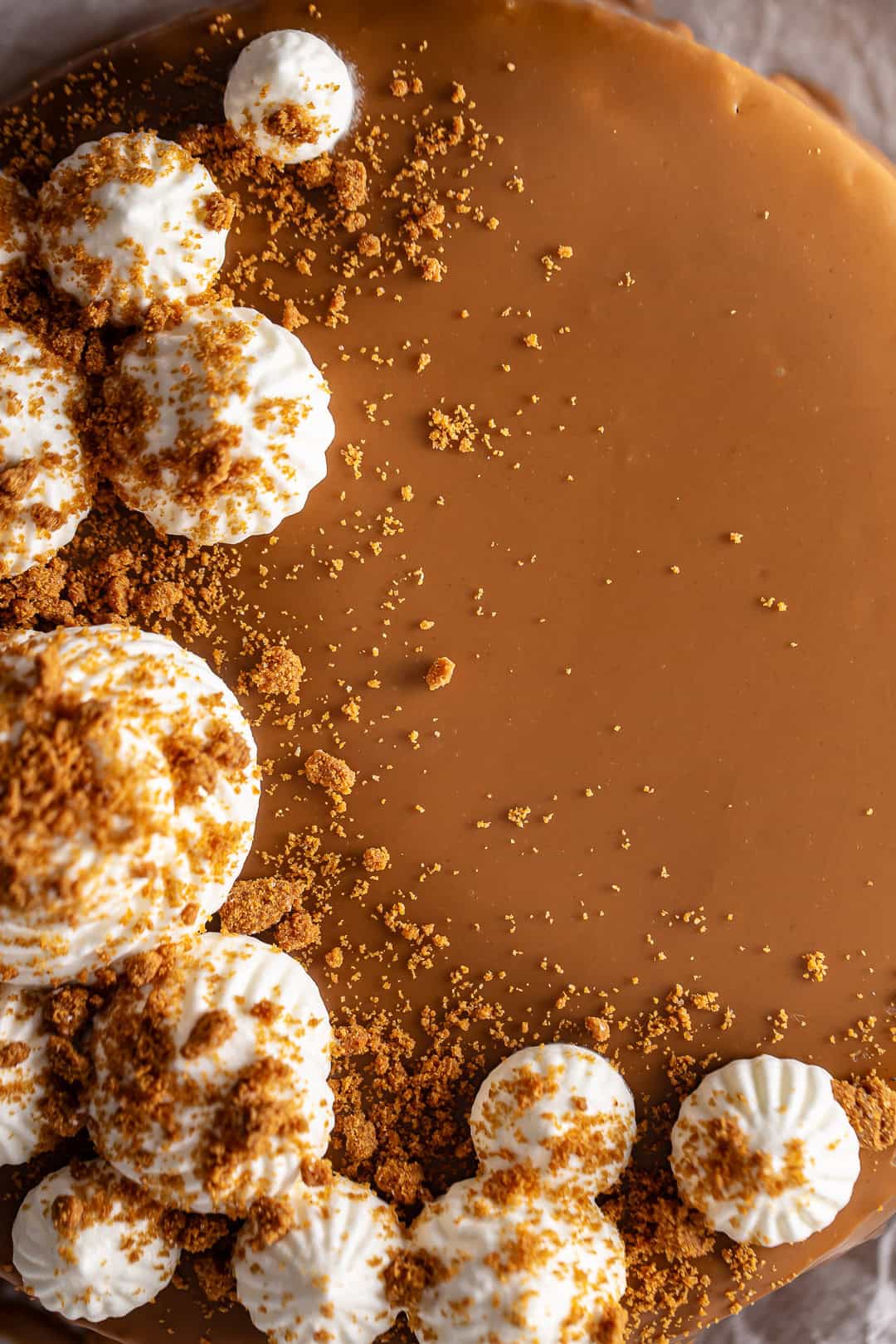
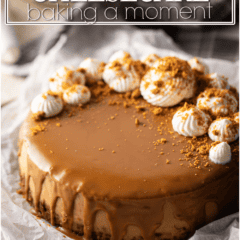
- You'll also love how beautiful it looks with the toppings. The shiny cookie butter drizzle, whipped cream, and crumbled cookies make it look elegant without much extra work.
- Since it needs time to chill, this is a perfect make-ahead dessert. Bake it the day before and add the toppings just before serving.
Ingredients You'll Need
The recipe card at the bottom of the post contains the full list with all of the amounts. Refer to that when you're cooking.
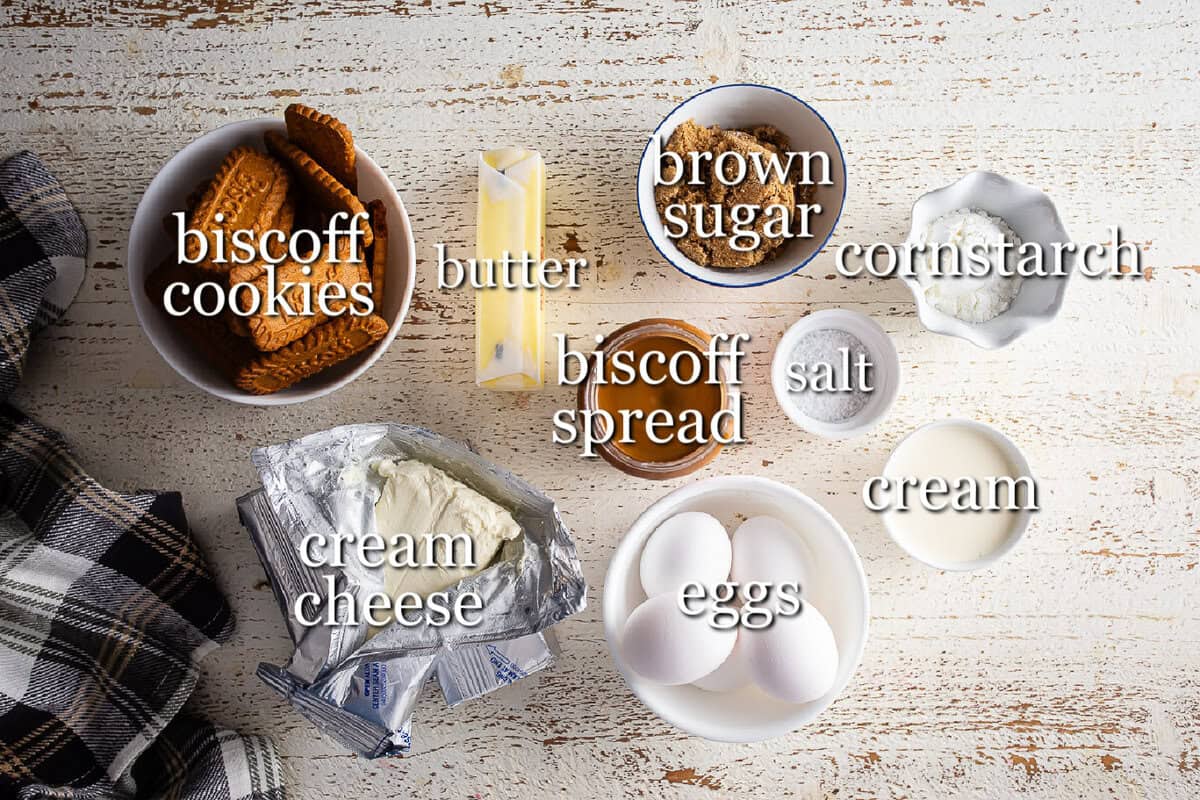
For the Crust
- Biscoff cookies: These cookies have a signature flavor everyone loves, and they work so well as a crust!
- Unsalted butter: You can use salted butter if needed, but the filling already has salt.
For the Filling
- Cream cheese: For the best texture, use full-fat block-style cream cheese.
- Dark brown sugar: Adds sweetness, moisture, and a deep caramel flavor that goes well with the cookie butter. Light brown sugar can be substituted if that's what you have on hand.
- Cornstarch: Stabilizes the filling and gives the cheesecake a soft, velvety texture.
- Kosher salt: Balances the sweetness and brings out the cookie butter flavor.
- Cookie butter: The star ingredient. It gives the filling its classic Biscoff flavor and creamy richness.
- Eggs: These help set the cheesecake and give it structure. Add them one at a time to keep the batter smooth.
- Egg yolk: Adds extra richness and helps make the cheesecake texture extra smooth.
- Heavy whipping cream: Loosens the batter a bit and adds a smooth, creamy finish.
For the Toppings
- Biscoff spread: Warm it until pourable, then drizzle it over the chilled cheesecake for a beautiful topping.
- Heavy whipping cream: Whip it into a light, fluffy topping to balance the cheesecake's richness.
- Powdered sugar: Sweetens and helps stabilize the whipped cream.
- Biscoff cookies: Crush or break them over the top for crunch, texture, and a nice finish.
In Photos: How To Make Biscoff Cheesecake
Step 1: Make the Crust
Preheat the oven and get an 8-inch cake pan ready. Line the bottom with parchment paper and spray the sides with non-stick spray.
Pulse the Biscoff cookies in a food processor.
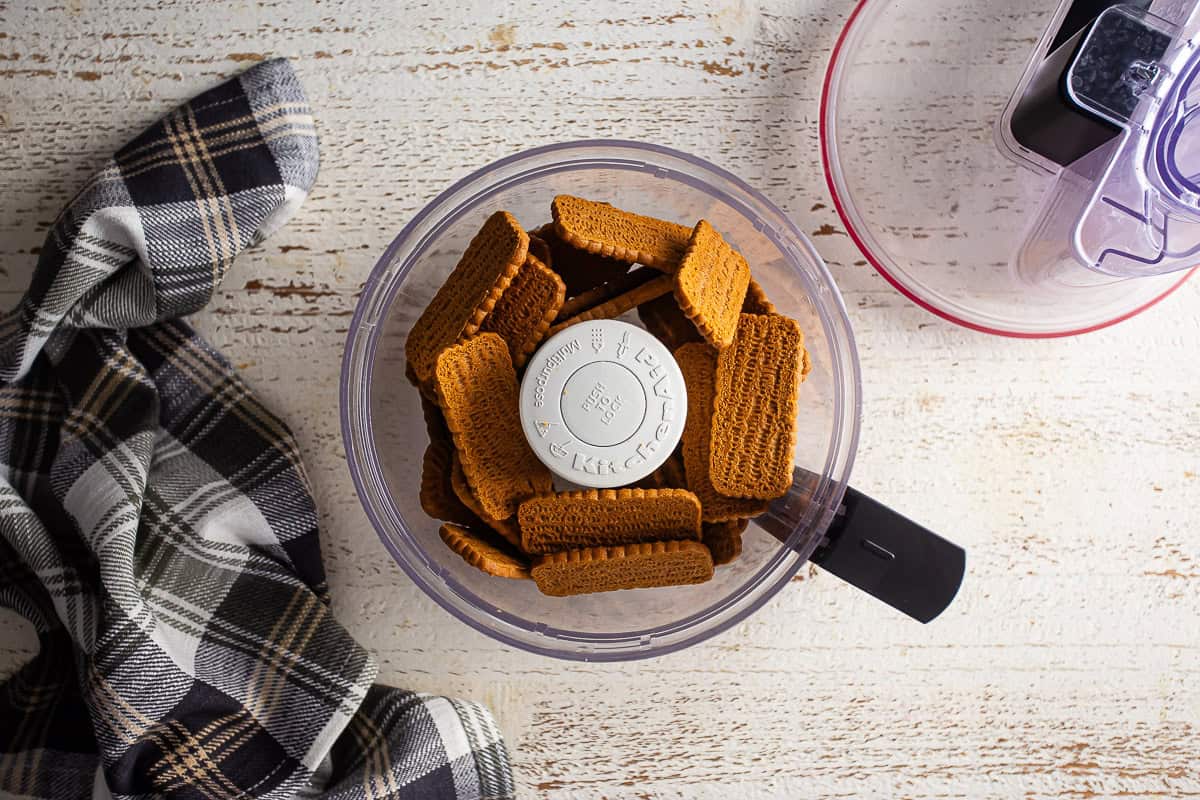
Pulse until you have fine crumbs.
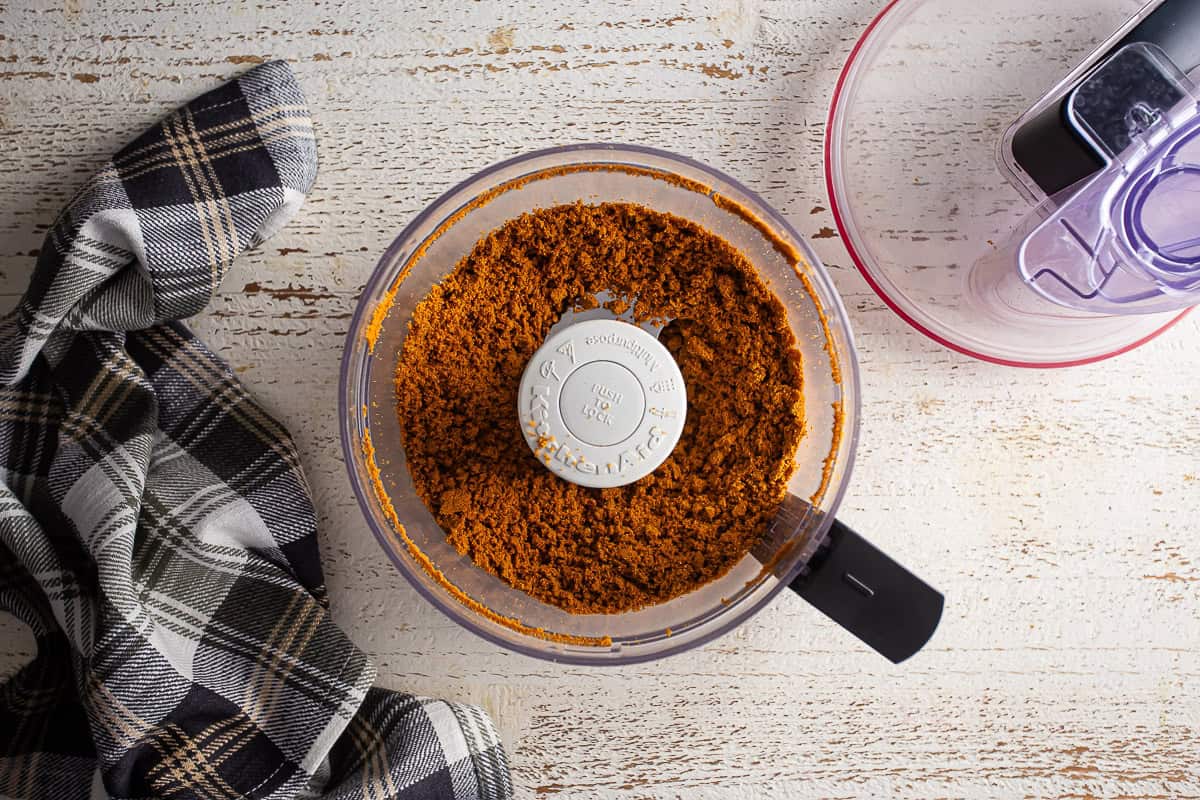
Add the melted butter to the cookie crumbs.
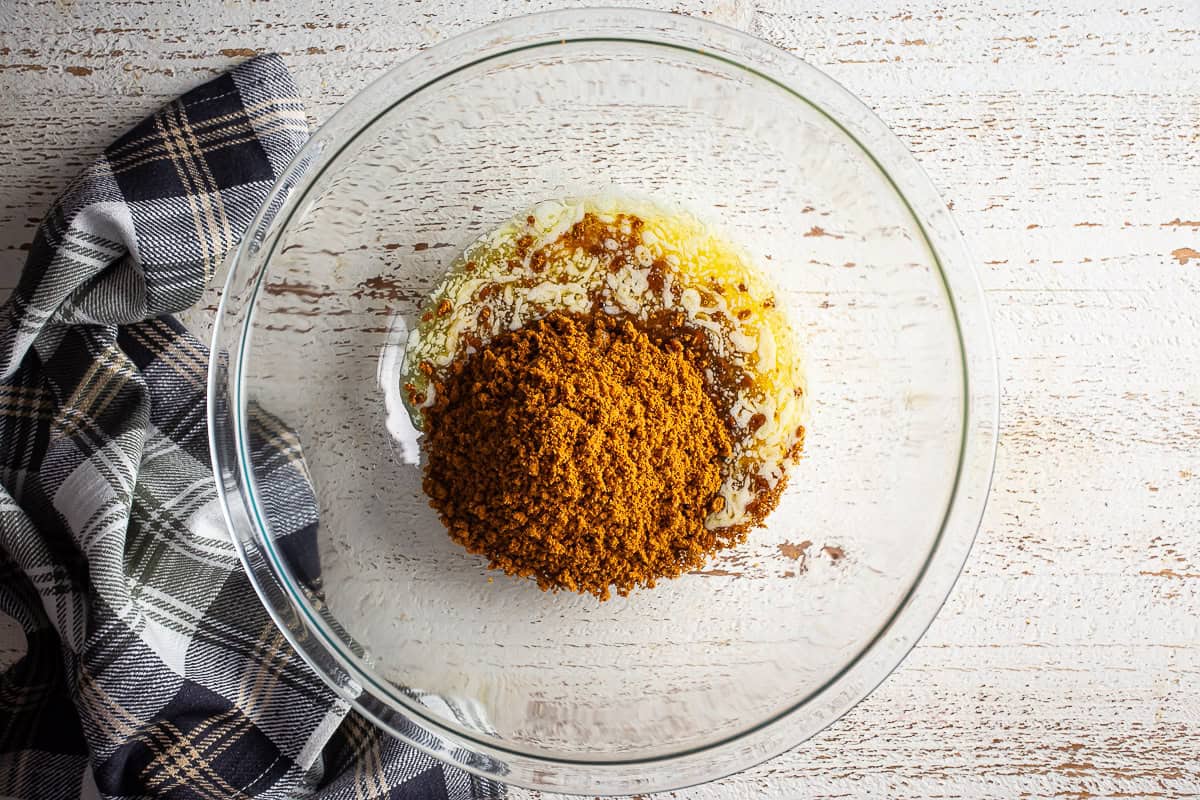
Mix until the crumbs are evenly moistened.
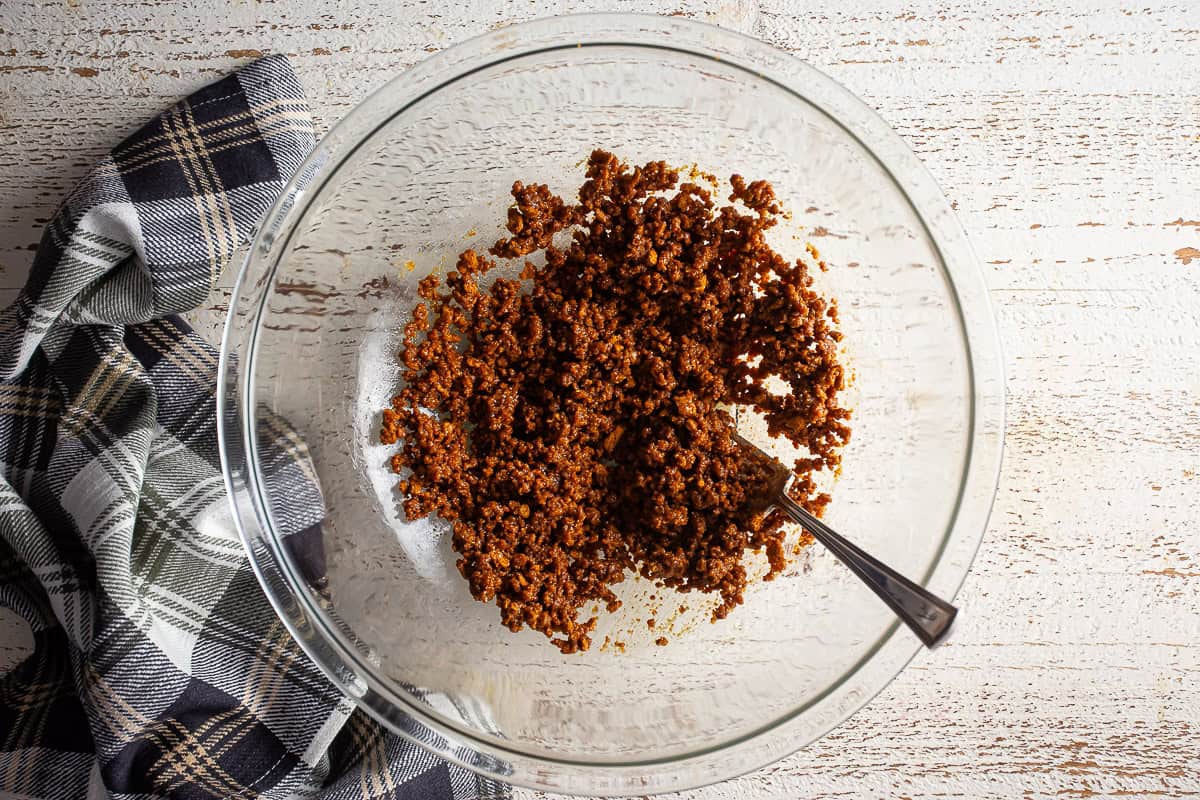
Press the mixture firmly and evenly into the bottom of your prepared pan.
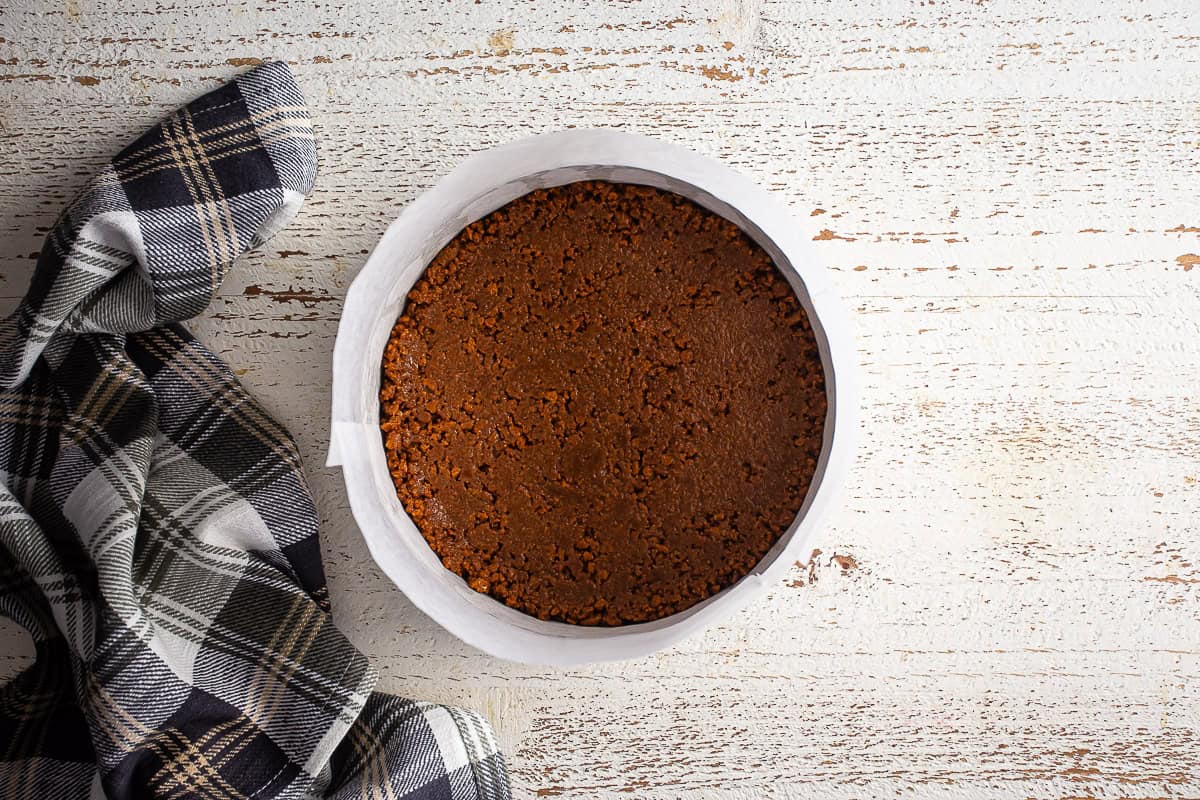
Step 2: Make the Filling
In a large mixing bowl, stir together the cream cheese, brown sugar, cornstarch, and salt until smooth.
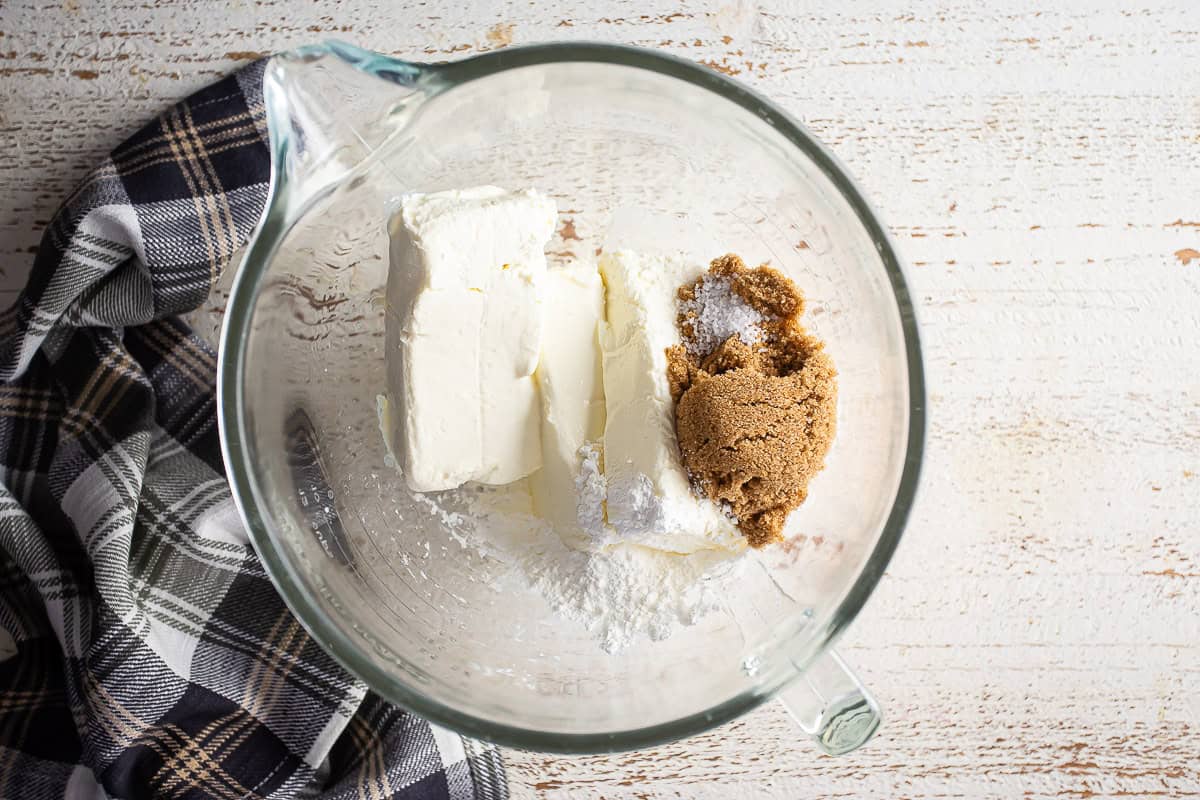
Add the cookie butter and mix until it's fully blended in.
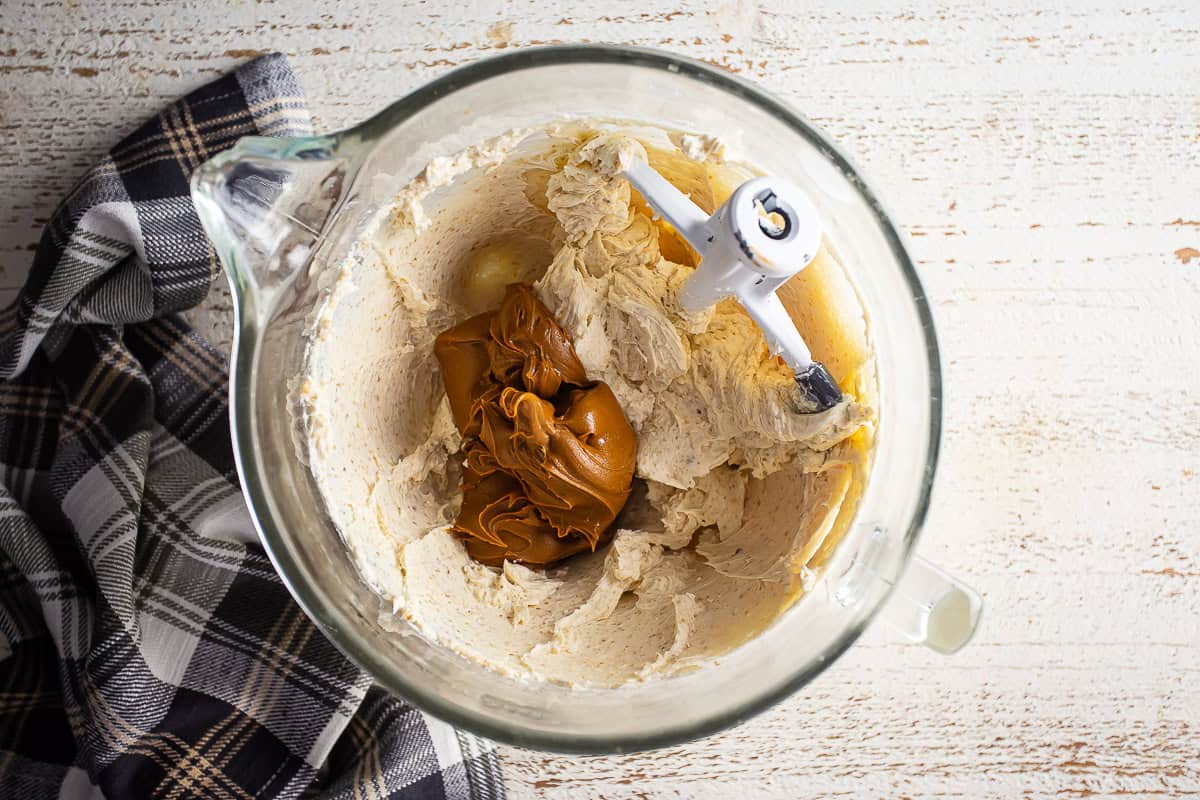
Next, add the eggs one at a time, letting each fully blend before adding the next. Stop often to scrape the bowl's bottom and sides with a spatula.
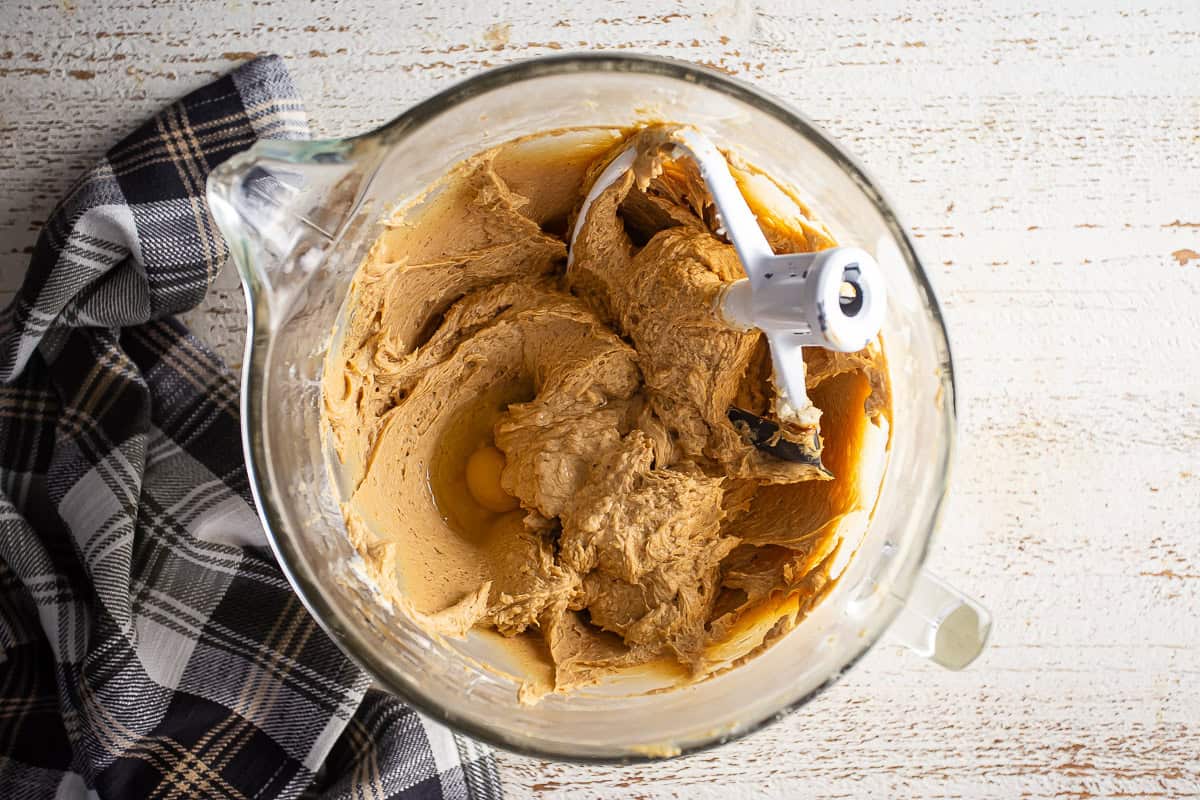
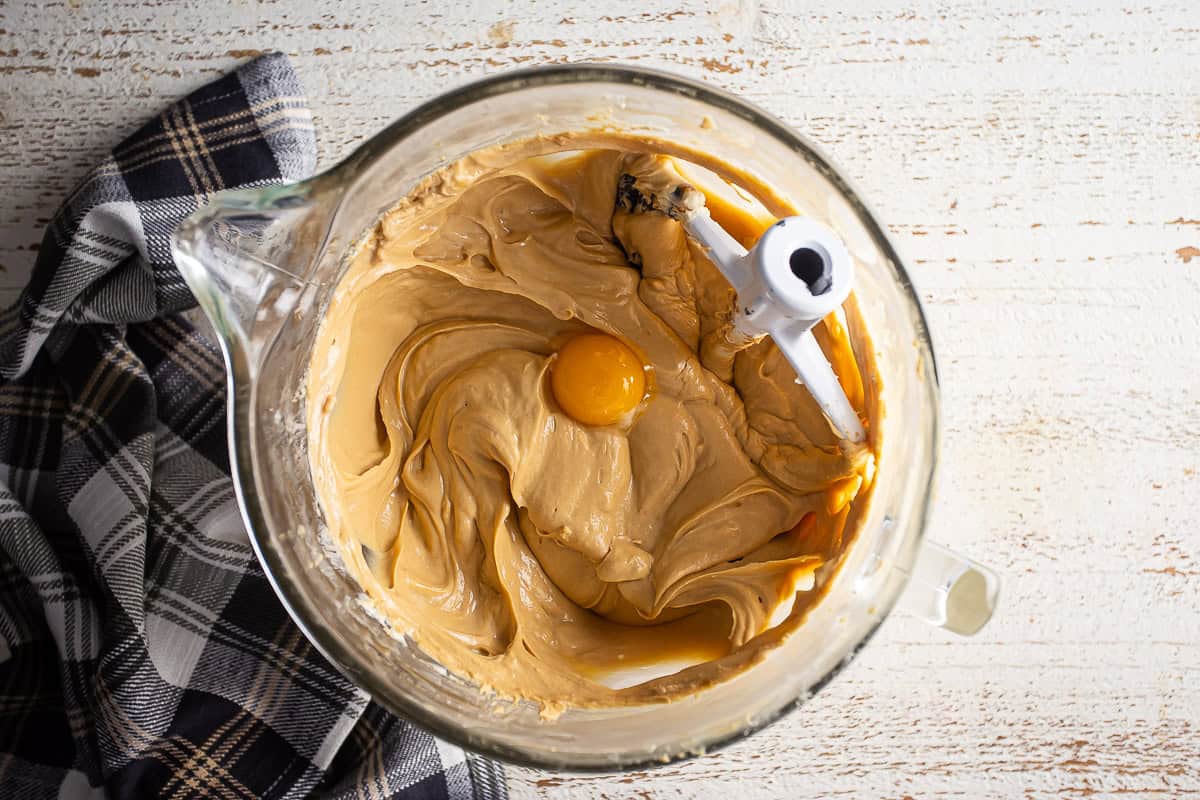
After the eggs are mixed in, scrape the bowl again. Then stir in the egg yolk and heavy cream.
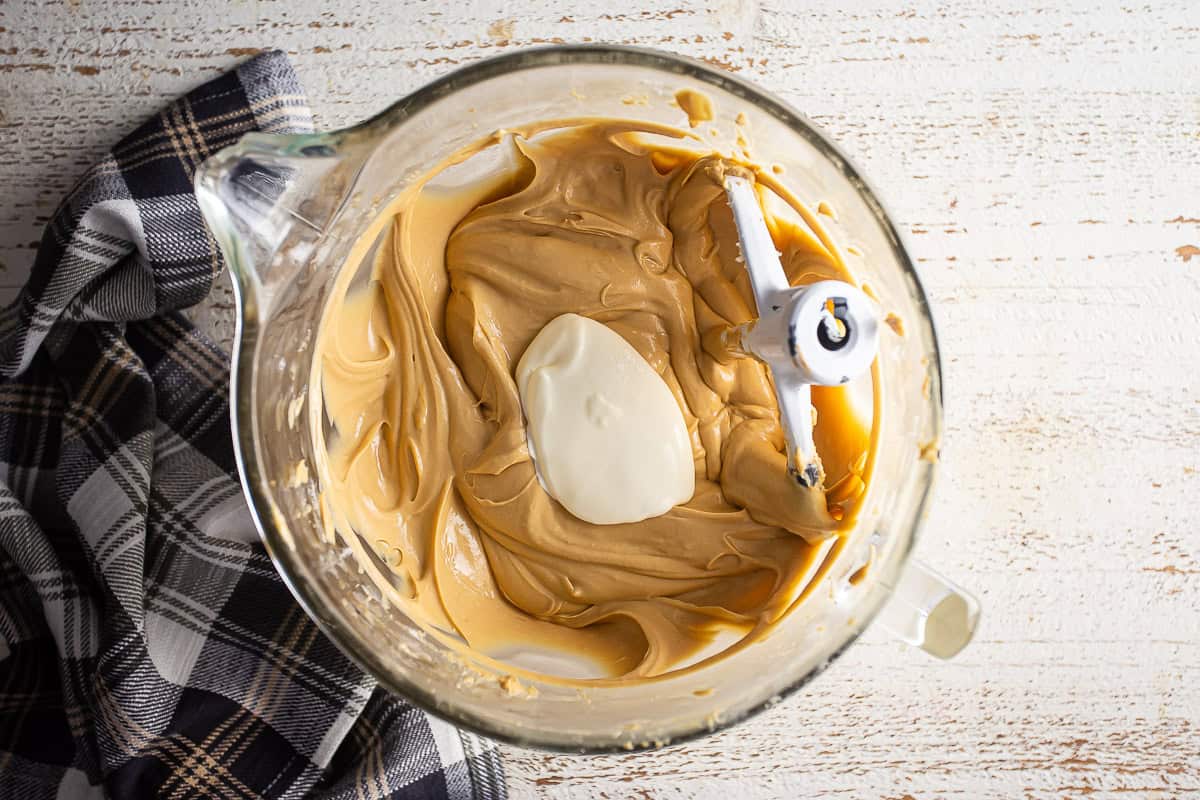
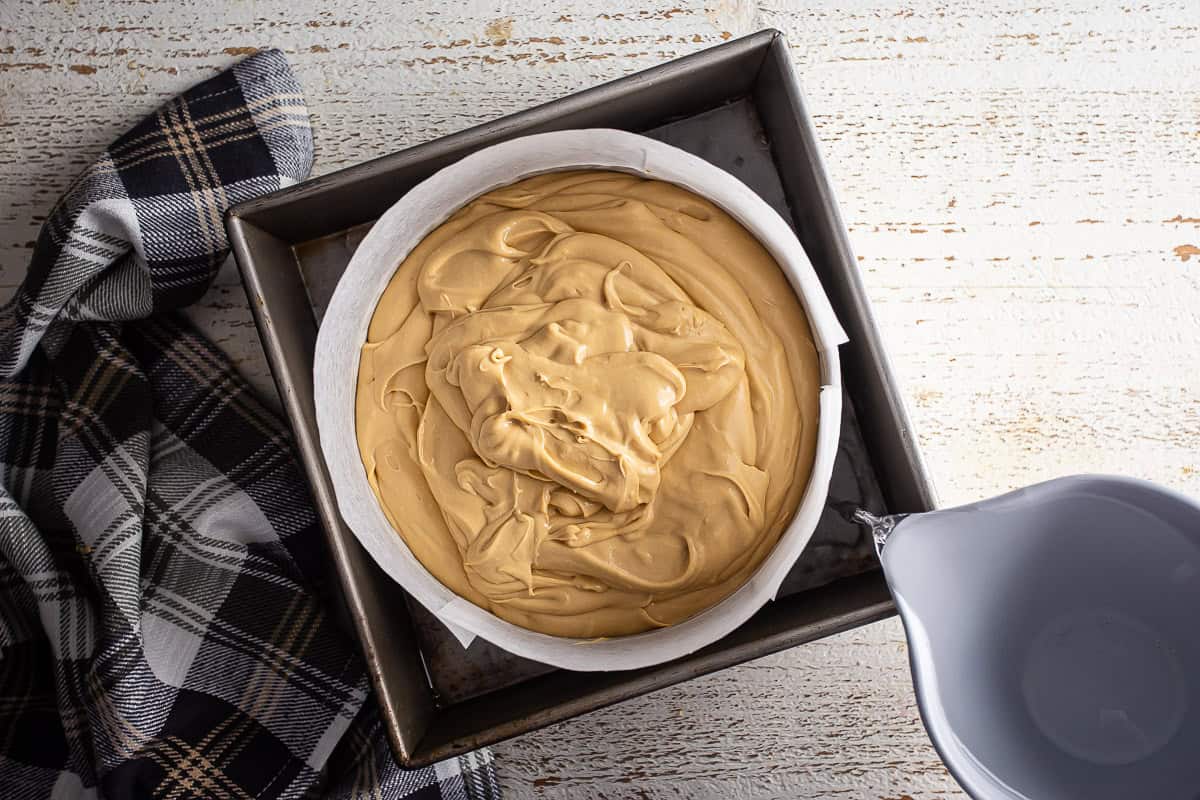
Pour the filling over the crust and smooth out the top.
Place the unbaked cheesecake in a larger baking dish. Pour about an inch of water into the larger dish to make a water bath.
Step 3: Bake the Cheesecake
Bake at a higher temperature first, then lower the oven temperature and keep baking until the edges are set and the center is still a bit wobbly.
The water bath helps the cheesecake bake evenly and keeps the texture smooth and creamy.
Step 4: Cool and Chill
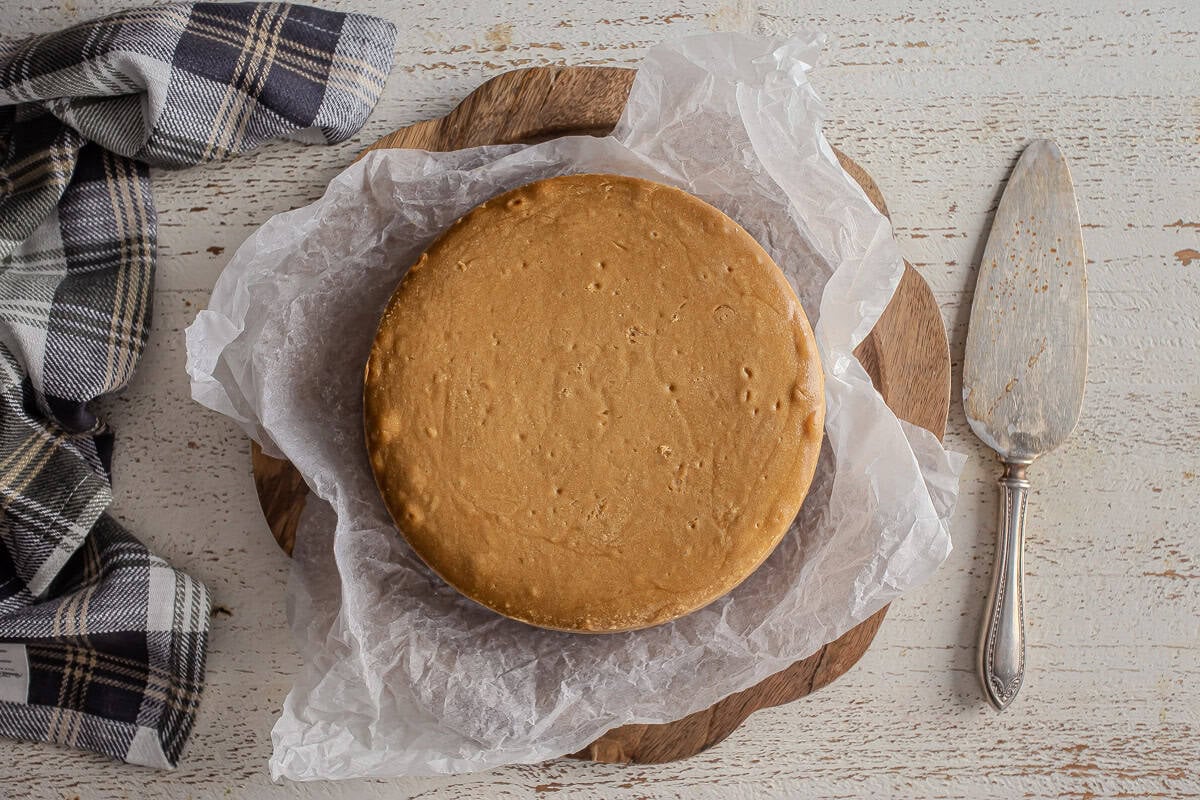
When it's done baking, turn off the oven and leave the door slightly open. Let the cheesecake cool slowly in the oven for about an hour.
Then move it to the refrigerator and chill for at least 2 hours or overnight.
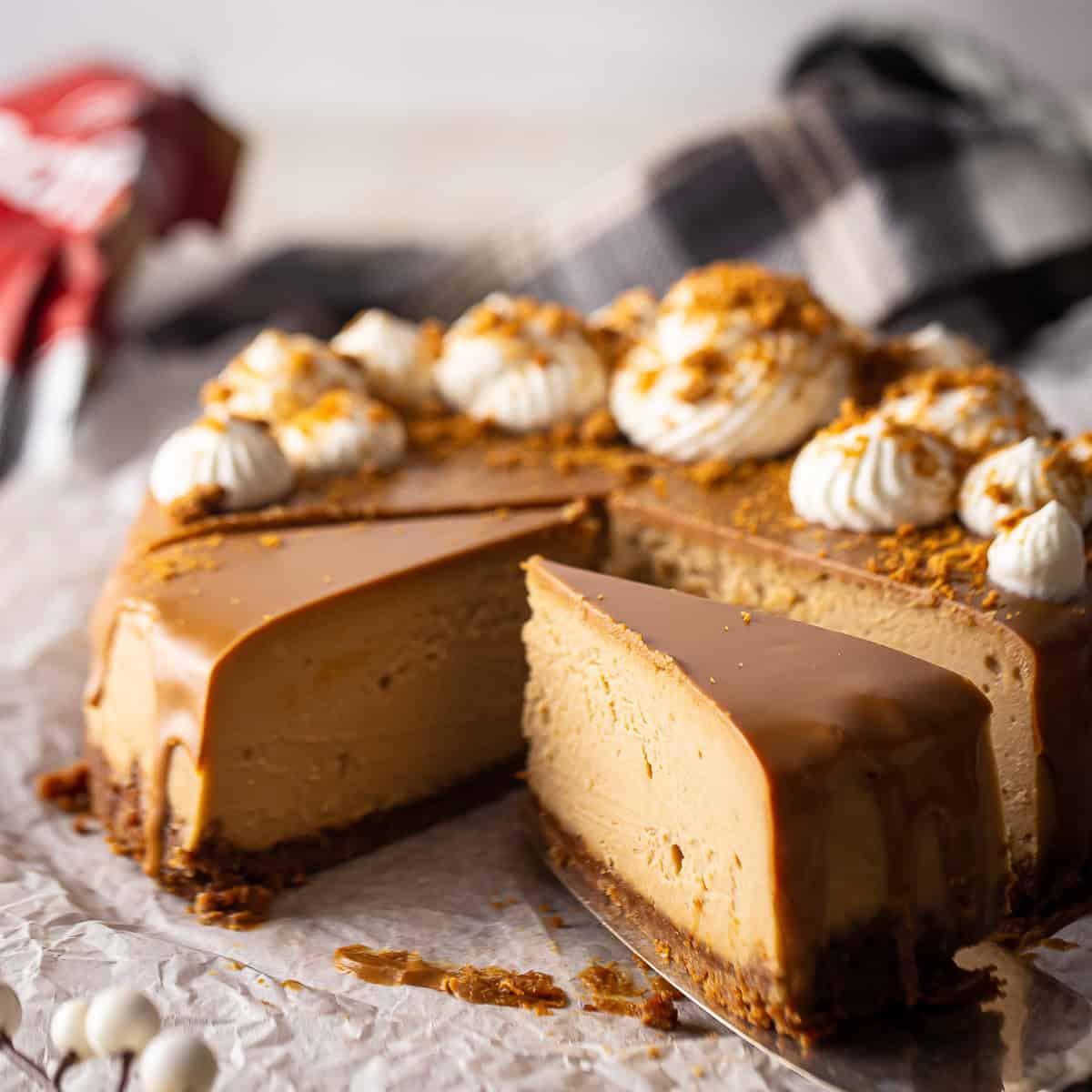
Chilling is important because it helps the cheesecake firm up and makes it much easier to slice.
Step 5: Add the Toppings
Once the cheesecake is fully chilled, remove it from the pan and place it upside down on a serving plate.
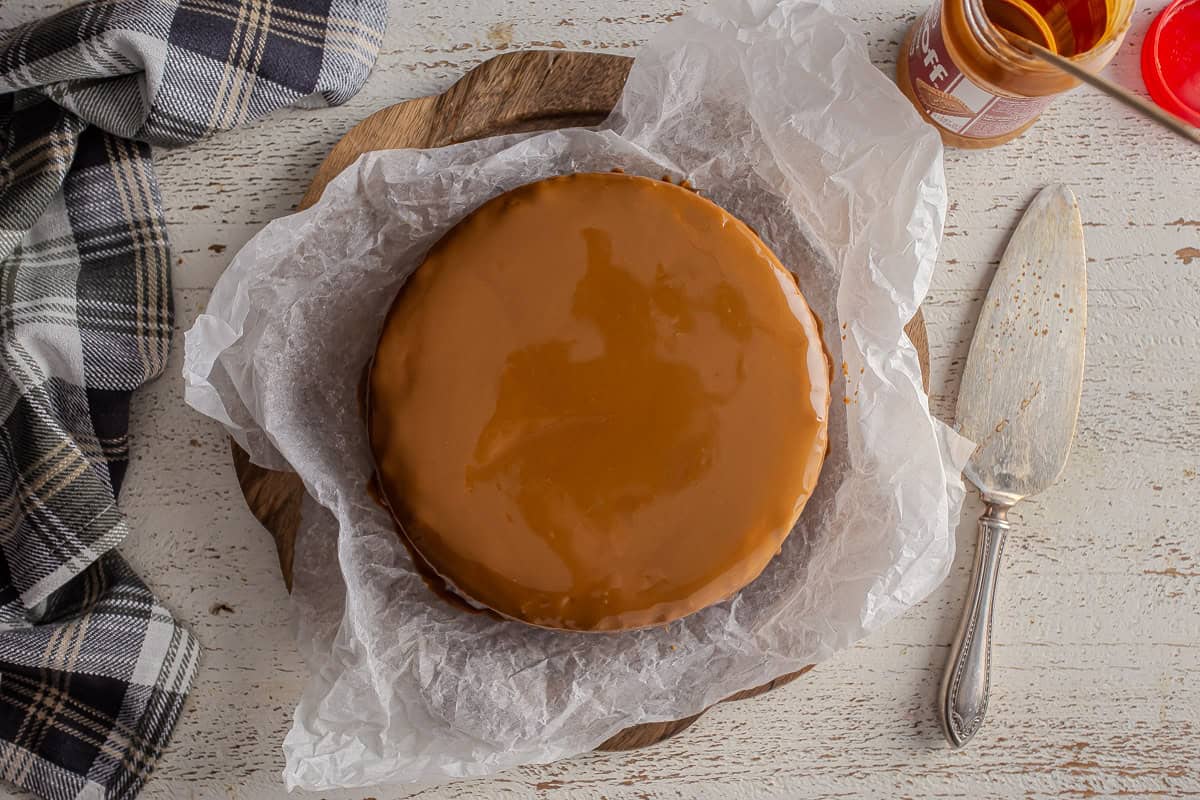
Warm the rest of the Biscoff spread until it's runny, then drizzle it over the cheesecake.
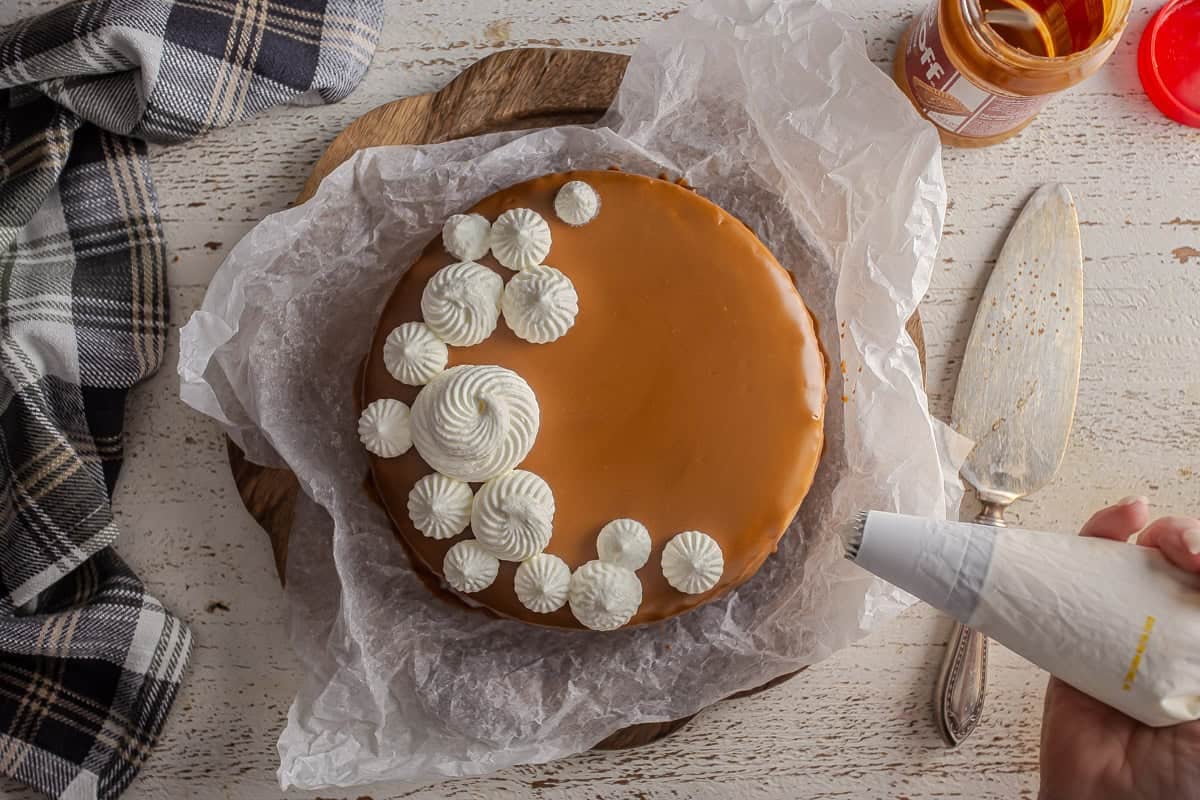
Whip the cold cream with powdered sugar until soft peaks form. Spoon or pipe it over the cheesecake.
Next, top with broken or crushed Biscoff cookies.
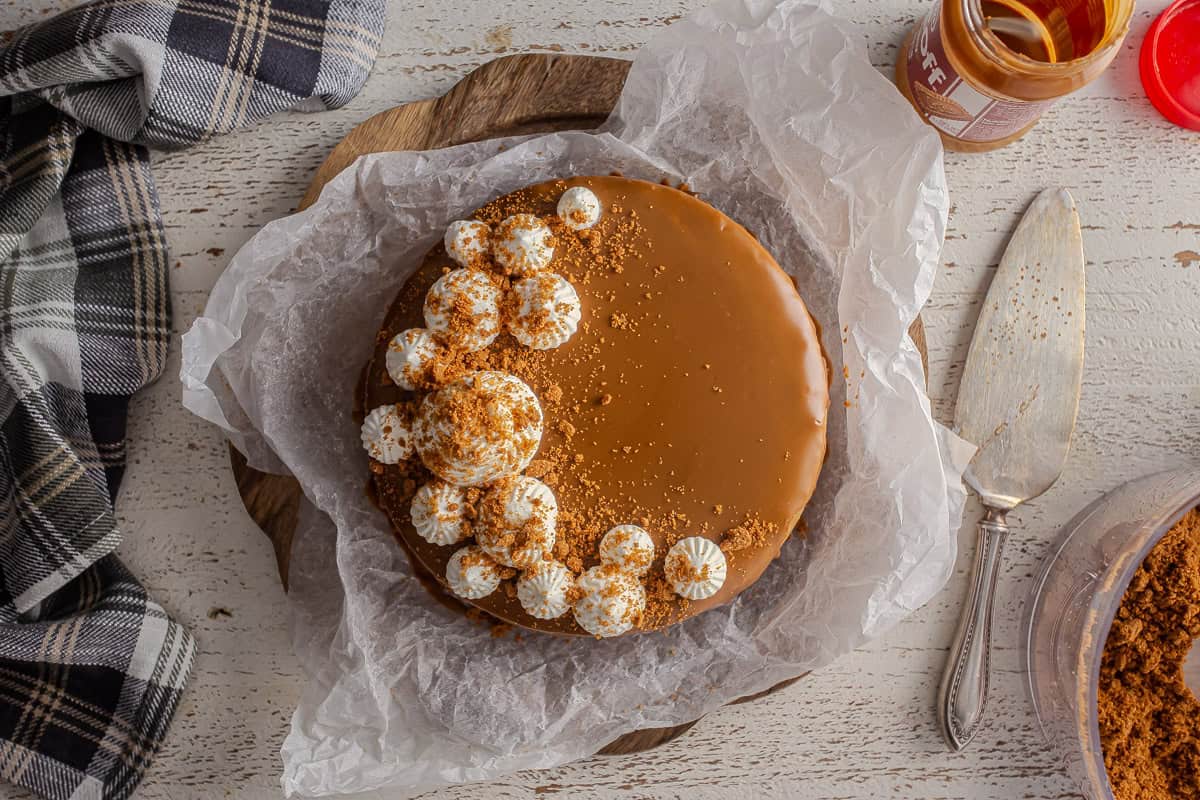
Slice and serve the cheesecake chilled.
Helpful Tips and Tricks
- Let the cream cheese come to room temperature so the filling mixes smoothly without lumps.
- Don't overmix after adding the eggs. Too much air in the batter can make the cheesecake puff up and crack.
- Scrape the bowl often. Cream cheese tends to stick to the bottom and sides, so scraping helps keep the batter smooth and even.
- Bake until the edges are set, but the center still wobbles gently. The cheesecake will keep firming up as it cools.
- Let the cheesecake chill completely before slicing. For neat slices, use a sharp knife and wipe it clean between cuts.
Ingredients
For the Crust
- 24 Biscoff cookies, (about ¾ of an 8.8-ounce package)
- ½ cup unsalted butter, melted
For the Filling
- 24 ounces cream cheese, (3 blocks)
- ¾ cup dark brown sugar, lightly packed
- 3 tablespoons cornstarch
- ½ teaspoon kosher salt
- 1 cup cookie butter
- 4 eggs, large
- 1 egg yolk, large
- ⅓ cup heavy whipping cream
For the Toppings
- ½ cup Biscoff spread, (what remains from a 14.1-ounce jar)
- ½ cup heavy whipping cream, cold
- 2 tablespoons powdered sugar
- 8 Biscoff cookies, (what remains from an 8.8-ounce package)
Instructions
To Make the Crust
- Preheat the oven to 400 degrees F, line an 8-inch diameter cake pan with a circle of parchment, and mist the sides liberally with non-stick spray.
- Pulse the cookies in a food processor until very fine.
- Work in the melted butter until combined.
- Transfer the mixture to the prepared pan and press it evenly into the bottom.
To Make the Filling
- Place the cream cheese, brown sugar, cornstarch, and salt in a large mixing bowl and stir together until smooth.
- Stir in the cookie butter spread until combined.
- Stir in the eggs one at a time, allowing each one to fully incorporate before adding the next, and stopping frequently to scrape the bottom and sides of the bowl with a silicone spatula.
- Scrape the bottom and sides of the bowl with a silicone spatula, and stir in the egg yolk and the cream.
- Layer the filling over the prepared crust, place the unbaked cheesecake in a larger baking dish, and pour about an inch of water into the larger dish.
- Bake at 400 for 15 minutes, then turn the oven temperature down to 300 degrees F and continue to bake until the cheesecake is set around the edges but still wobbly towards the center (approx. 60 to 75 minutes)
- Leave the oven door ajar and allow the cheesecake to cool for about an hour, then chill in the refrigerator for at least 2 hours (or overnight).
To Top the Cheesecake
- Flip the cheesecake out of the pan and invert onto a serving plate.
- Warm the remaining Biscoff spread until runny (approx. 30 seconds in the microwave), and drizzle it over the cheesecake.
- Whip the cream and powdered sugar together until it can hold soft peaks, and dollop or pipe it onto the cheesecake.
- Garnish with remaining crushed/broken Biscoff cookies, slice, and serve.
Author

More Desserts
Have a question about this recipe? Ask AI:
Just a question: Can I make this or parts of this ahead and freeze?
Absolutely! I've got one chilling in the freezer right now as a matter of fact. Good luck!