

Pavlova
As an amazon associate I earn from qualifying purchases.
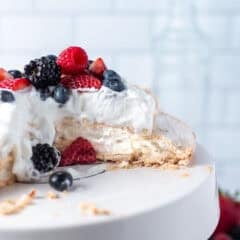
There is something a bit whimsical about bringing a pavlova to the table. With its billowy cloud-like appearance and a delicate crackle when you slice into the soft meringue center inside, it's the kind of dessert that turns an ordinary gathering into something special.

I love making pavlova for spring celebrations like Easter and Mother's Day. It's the perfect base for all your favorite toppings. Think a mountain of light whipped cream, piles of juicy fresh fruit, curls of chocolate, or a bright lemon curd. The decoration options are endless!
This recipe will guide you through making this meringue dessert, which hails from "Down Under". Giving you "oohs" and "aahs" as people slice into the crisp exterior to reveal the marshmallow-like soft center inside.
Here's Why You'll Love This Recipe
- Balance - The meringue bakes low and slow, giving it a beautiful crisp exterior while keeping the center soft and marshmallowy.
- Versatile - The sweetness of the pavlova pairs perfectly with whipped cream and whatever toppings you choose to decorate it with.
- Make ahead - The pavlova bakes for a few hours, then needs several hours to cool in the oven. This makes it perfect for baking ahead. All you have to do is decorate and serve when dessert time rolls around.
Ingredients You'll Need
The recipe card at the bottom of the post contains the full list with all of the amounts. Refer to that when you're cooking.
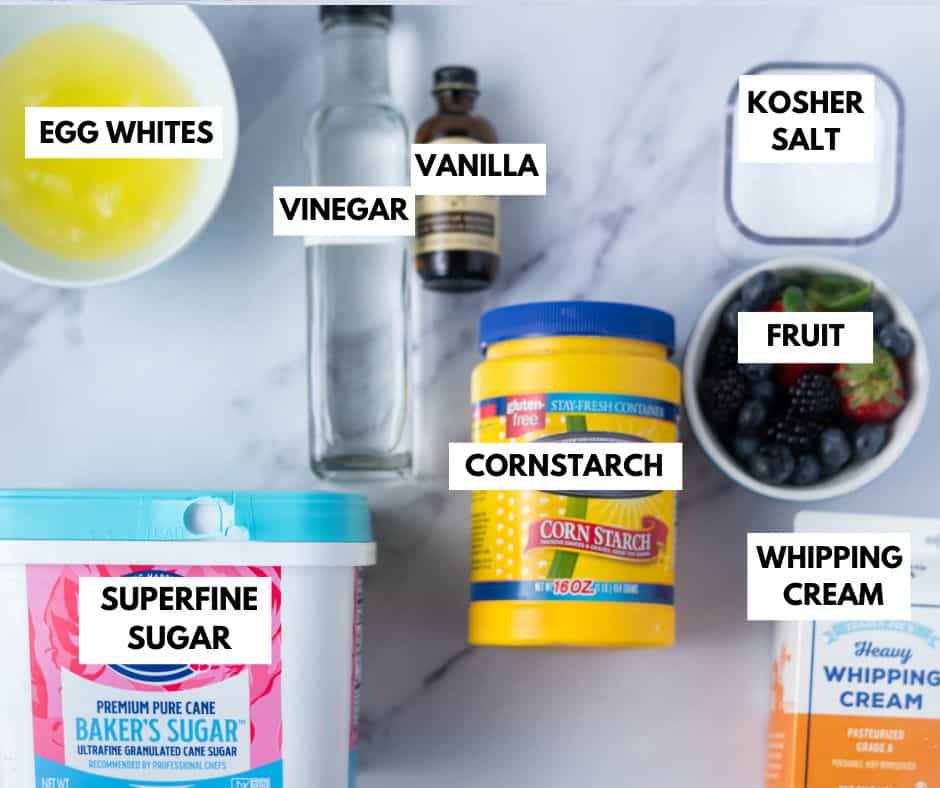
- Egg whites: Use fresh eggs, not egg whites from a carton. Eggs separate more easily when cold, but you want the whites at room temperature for maximum volume.
- Salt: Just a hint of kosher salt to balance the sweetness.
- Vinegar: Helps stabilize the egg whites and create those strong, stiff peaks. You can substitute with cream of tartar.
- Sugar: Look for Baker's sugar, superfine sugar, or caster sugar. The granules are finer (than, say, granulated sugar) and will dissolve more easily in the egg whites.
- Vanilla: A hint of this classic extract to bring flavor.
- Cornstarch: Helps to create the marshmallow-like texture in the center of the pavlova.
- Whipping cream: Used to create the homemade whipped cream topping.
- Fruit: Use your favorite berries for topping the pavlova. Strawberries, blueberries, raspberries, blackberries, and kiwi are all great options.
In Photos: How To Make Pavlova
Use white vinegar or lemon juice to wipe down the mixing bowl, whisk attachment, and spatula that you will be using. Grease is meringue's enemy, and you want to ensure your equipment is grease-free.
Step 1: Preheat, Prep, and Mix
Preheat the oven to 300°F. Use an 8 or 9-inch guide to trace a circle on a piece of parchment paper. Place the paper, pencil side down, on a baking sheet, then set it aside.
In the bowl of a stand mixer, add the egg whites and kosher salt. Mix on medium-low until they become frothy, about 2-3 minutes. Then add the vinegar.
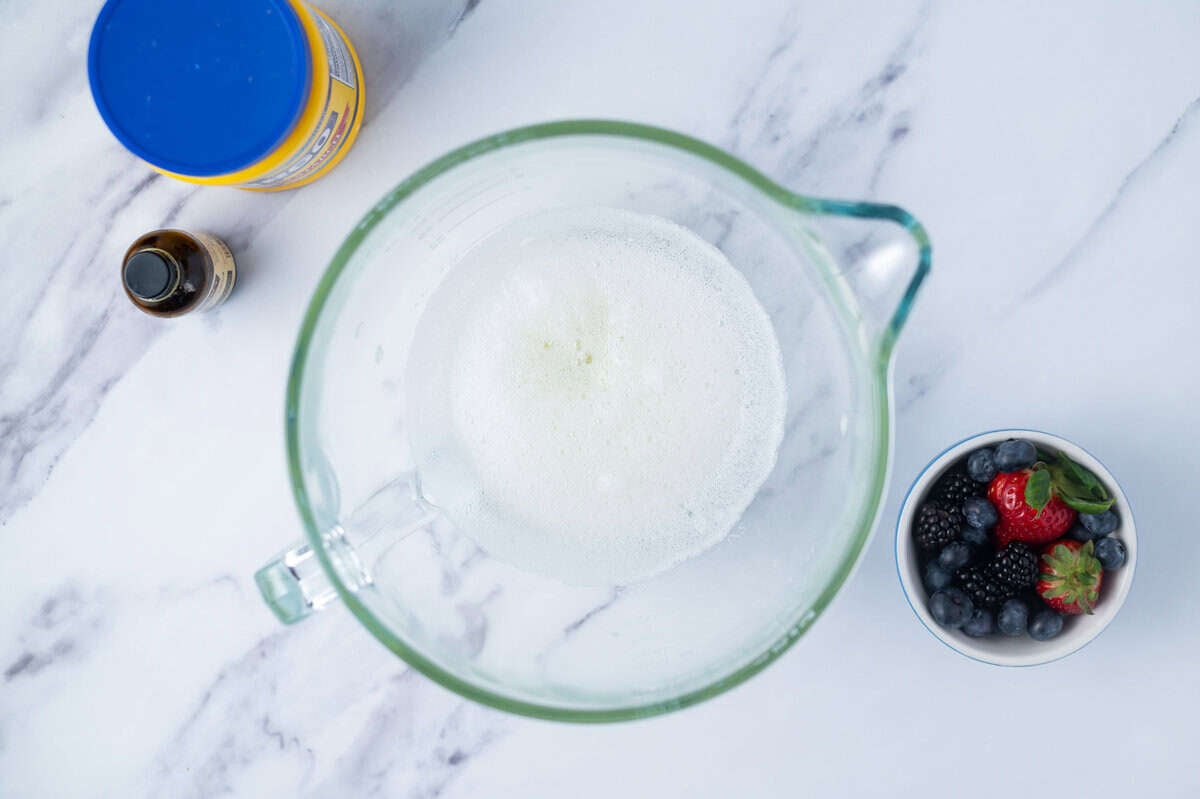
Step 2: Add Sugar
Now add the superfine sugar, one tablespoon at a time, lightly sprinkling it into the beating egg whites. It should take about 15 seconds of sprinkling per tablespoon; wait a few seconds after one tablespoon has been added before adding the next. (You want to add the sugar slowly to allow it to dissolve more easily.)

Step 3: Scrape & Add Vanilla
Once all the sugar has been added, stop the mixer and scrape the bowl. Then add the vanilla and beat on medium-high speed until the mixture is glossy and stiff peaks form, about 5-7 minutes.
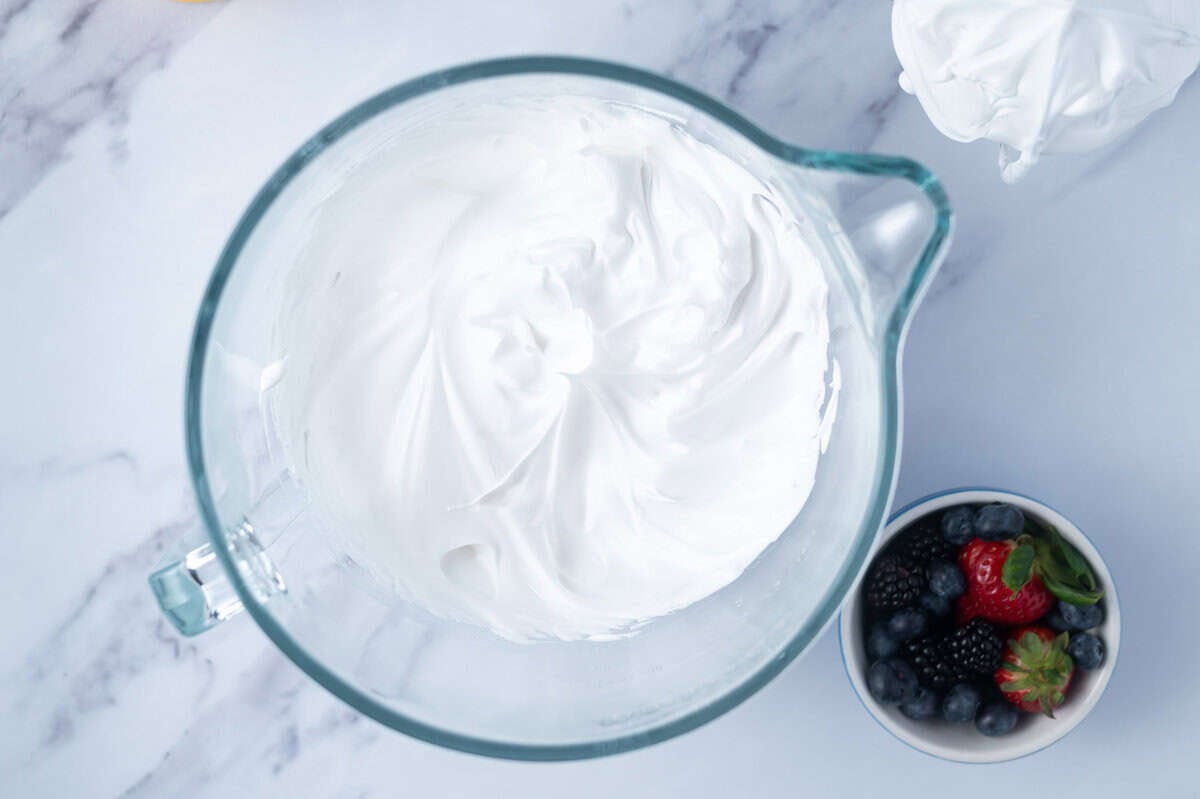
Step 4: Add Cornstarch
Then sift the cornstarch over the meringue and fold it in with a spatula.

Step 5: Form Pavlova & Bake
Use a spatula or a spoon to transfer the meringue to the center of the drawn circle on the parchment paper. Gently spread the meringue into a circular shape, using the drawn lines as a guide. Make a slight depression in the middle. If desired, lightly drag the spatula/spoon up the sides to create a pattern.
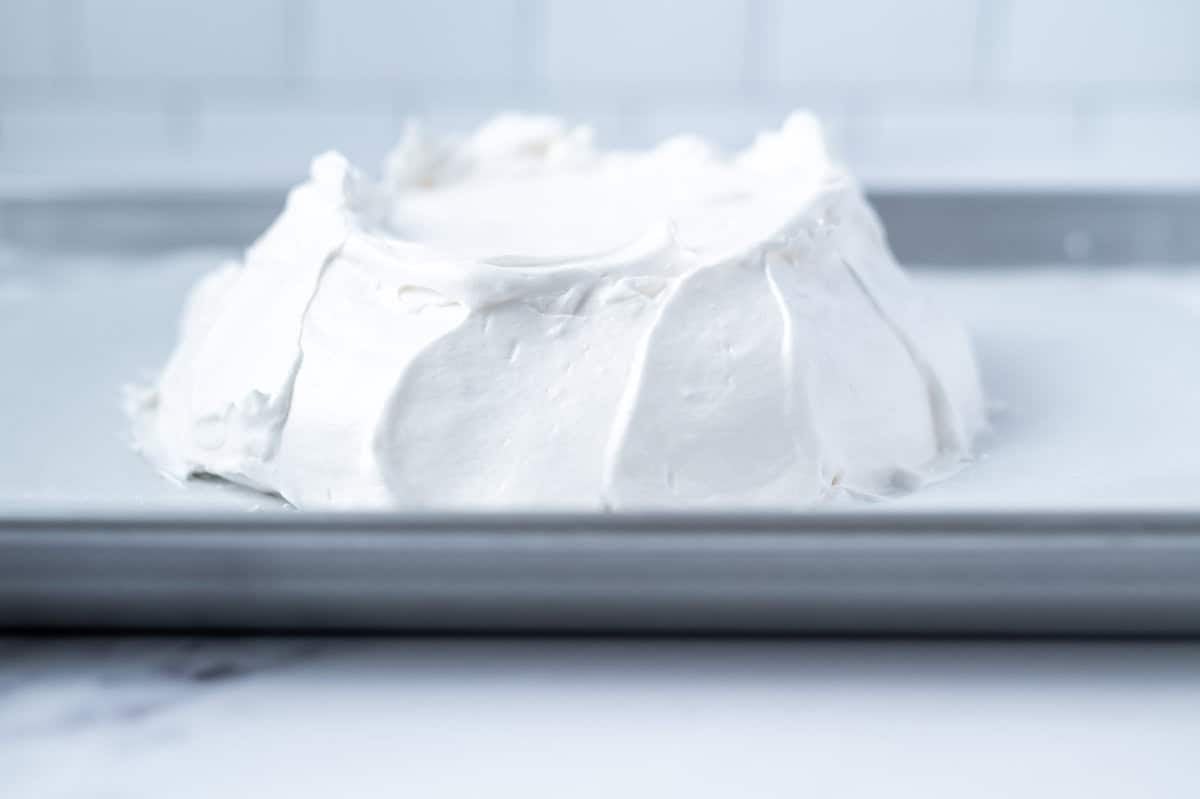
Place in the oven and REDUCE the temperature to 225°F. Bake for 2 - 2 ½ hours or until the meringue is slightly creamy in color and feels dry on the outside. You can start checking for doneness at the 2-hour mark.
Turn the oven off and leave the pavlova in the oven to cool completely, at least 3 hours. It can be left for multiple hours or overnight.
Helpful Tips and Tricks
- Make sure your equipment is grease-free to ensure the egg whites whip properly. Wipe down the bowl, whisk, and spatula with lemon juice or vinegar before beginning.
- Room-temperature egg whites will whip up better, so let them sit on the counter for 30-60 minutes before starting the recipe.
- Add the superfine sugar slowly! This helps it dissolve properly and will create the thick, glossy meringue.
- Whip the meringue until stiff peaks; it should be smooth and shiny. You can rub a little between your fingers; you shouldn't feel any sugar crystals.
- Let the pavlova cool completely in the oven. Sudden changes in temperature can cause cracking. If it cracks a little, it just adds to the whimsical charm of pavlova!
- Add the whipped cream and toppings right before serving.

More Meringue Recipes
Ingredients
- 5 large egg whites, room temperature*
- ⅛ teaspoon kosher salt
- 1 teaspoon white vinegar
- 1 ¼ cups superfine sugar, 275g
- ½ teaspoon vanilla
- 2 teaspoons cornstarch
Whipped Cream Topping
- ¾ cup heavy whipping cream, 180mL
- 2 tablespoons sugar, granulated, superfine or powdered
- 2 cups fresh fruit, strawberries, raspberries, blueberries, blackberries, kiwi, etc
- Mint, for garnish if desired
Instructions
- Use white vinegar or lemon juice to wipe down the mixing bowl, whisk attachment and spatula that you will be using. Grease is meringue's enemy and you want to ensure your equipment is grease free.
- Preheat the oven to 300°F. Use an 8 or 9-inch guide to trace a circle on a piece of parchment paper. Place the paper, pencil side down, on a baking sheet pan and set aside.
- In the bowl of a stand mixer, add the egg whites and kosher salt. Mix on medium-low until they become frothy, about 2-3 minutes. Then add the vinegar.
- Now add the superfine sugar, one tablespoon at a time, lightly sprinkling it into the beating egg whites. It should take about 15 seconds of sprinkling per tablespoon; wait a few seconds after one tablespoon has been added before adding the next. (you want to add the sugar slowly to allow it to dissolve easier).
- Once all the sugar has been added, stop the mixer and scrape the bowl. Then add the vanilla and beat on medium-high until the mixture becomes glossy and stiff peaks are formed, about 5-7 minutes.
- Then sift the cornstarch over the meringue and fold it in with a spatula.
- Use the spatula or a spoon to move the meringue to the middle of the drawn circle on the parchment paper. Gently spread the meringue into the shape of a circle, using the drawn lines as a guide. Make a slight depression in the middle. If desired, you can lightly drag the spatula/spoon up the sides to create a pattern along the sides.
- Place in the oven and REDUCE the temperature to 225°F bake for 2 - 2 ½** hours or until the meringue is slightly creamy in color and feels dry on the outside. (You can start checking for doneness at the 2 hour mark).
- Turn the oven off and leave the pavlova in the oven to cool completely, at least 3 hours. It can be left for multiple hours or overnight.
- When ready to serve, make the whip cream by combining the heavy whipping cream and sugar in a bowl and beat with a hand or stand mixer until medium-stiff peaks.
- Carefully move the pavlova to a serving plate. Spoon the whipped cream over the top and gently add the fruit to decorate, garnish with mint or a dusting of powdered sugar, if desired. Serve immediately.
Notes
More Desserts

Have a question about this recipe? Ask AI:
