

Traditional Pound Cake Recipe
As an amazon associate I earn from qualifying purchases.
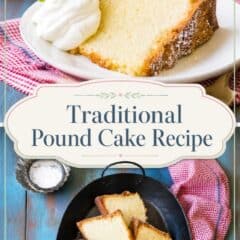
This Traditional Pound Cake is moist, buttery, and easy to make with just six simple ingredients. It's an old-fashioned favorite. It has a classic dense but tender crumb, a rich vanilla flavor, and a golden crust that makes each slice feel special. You can serve it plain, with fresh berries, a sprinkle of powdered sugar, or some whipped cream.
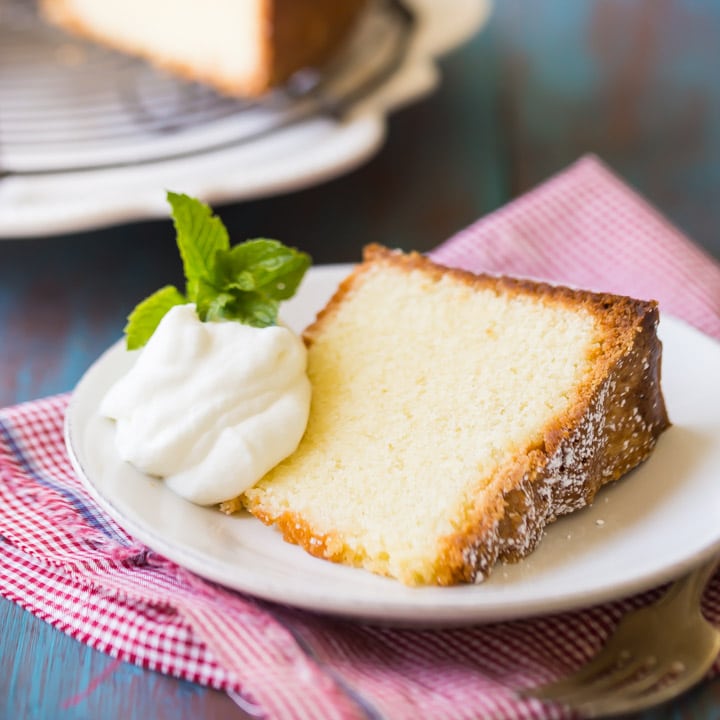
Sometimes simple is all you need.
There's just something so delicious about a perfect slice of pound cake, moist and delicate, and so buttery it melts in your mouth. It's the best!
Pound cake is a simple butter cake that cooks have been making and sharing for generations. It's old-fashioned and so, so good.
It's called pound cake because originally, it was made with a pound of flour, a pound of butter, a pound of sugar, and a pound of eggs. Over the generations, that ratio has been modified a bit for the best possible result.
Pound cake is buttery and moist, with a fine, delicate crumb, and a crackly, crumbly crust on top that's almost like a sugar cookie. Because there are so few ingredients, it's really easy to make.
I have a few pound cake recipes on this site (see Lemon Pound Cake, Marble Bundt Cake, and Brown Sugar Pound Cake), and every time I make a new one I fall in love with pound cake all over again!
Here's Why You'll Love This Recipe
- Pound cake has been enjoyed for generations because it's simple, reliable, and delicious.
- This recipe uses basic pantry staples, but the result is special.
- It's great for breakfast, brunch, dessert, or as a snack with coffee or tea.
Ingredients You'll Need
The recipe card at the bottom of the post contains the full list with all of the amounts. Refer to that when you're cooking.
- Unsalted butter: This is the key ingredient. It gives the cake a rich flavor and moist texture. Be sure it's softened so it mixes well with the sugar.
- Granulated sugar: Sweetens the cake and helps make the batter light and fluffy when mixed with the butter.
- Eggs: They add structure, richness, and moisture. Use large eggs and add them one at a time to keep the batter smooth.
- Cake flour: This makes the crumb softer and more delicate than all-purpose flour. For best results, spoon and level the flour instead of scooping.
- Vanilla extract: Adds a warm, classic flavor. Pure vanilla extract is best if you have it.
- Kosher salt: Balances the sweetness and brings out the buttery flavor.
In Photos: How To Make Traditional Pound Cake
When you're making something as simple as pound cake, it really becomes all about the technique.
Step 1: Preheat & Prep
First, preheat your oven to 350°F. Spray a 10-inch tube pan well with non-stick spray, making sure to cover all the curves and edges.
Step 2: Cream Butter
Place the softened butter and sugar in a large mixing bowl. Beat them together on medium-high speed until the mixture is very pale and fluffy. This should take at least 5 minutes.
Step 3: Add Eggs, Flour, Vanilla, & Salt
Add the eggs one at a time, mixing well after each. Take your time so the batter stays smooth and creamy.
Scrape down the bowl with a spatula. Add the flour in 3 additions, taking care to only mix until *just barely* combined. Once the flour goes in, you want to be really careful not to overwork the batter, or your cake could come out tough.
I like to use cake flour when I make pound cake. You can read more about that here: Why Use Cake Flour?
Fold in the vanilla extract and kosher salt. Transfer the batter to the prepared tube pan and smooth the top.
Step 4: Bake
Bake for 75 to 85 minutes, or until a skewer inserted into the thickest part of the cake comes out clean or with a few moist crumbs.
Let the cake cool in the pan for 30 minutes. Then remove it from the pan and transfer it to a wire rack to cool completely before slicing.
Helpful Tips and Tricks
- Make sure your butter is soft but not melted. It should give a little when you press it.
- Beat the butter and sugar for a full 5 minutes. This adds air to the batter and helps create the perfect texture.
- Add the eggs one at a time. This helps them mix in evenly and keeps the batter smooth.
- Don't overmix after adding the flour. Mix just until you no longer see flour to keep the cake tender.
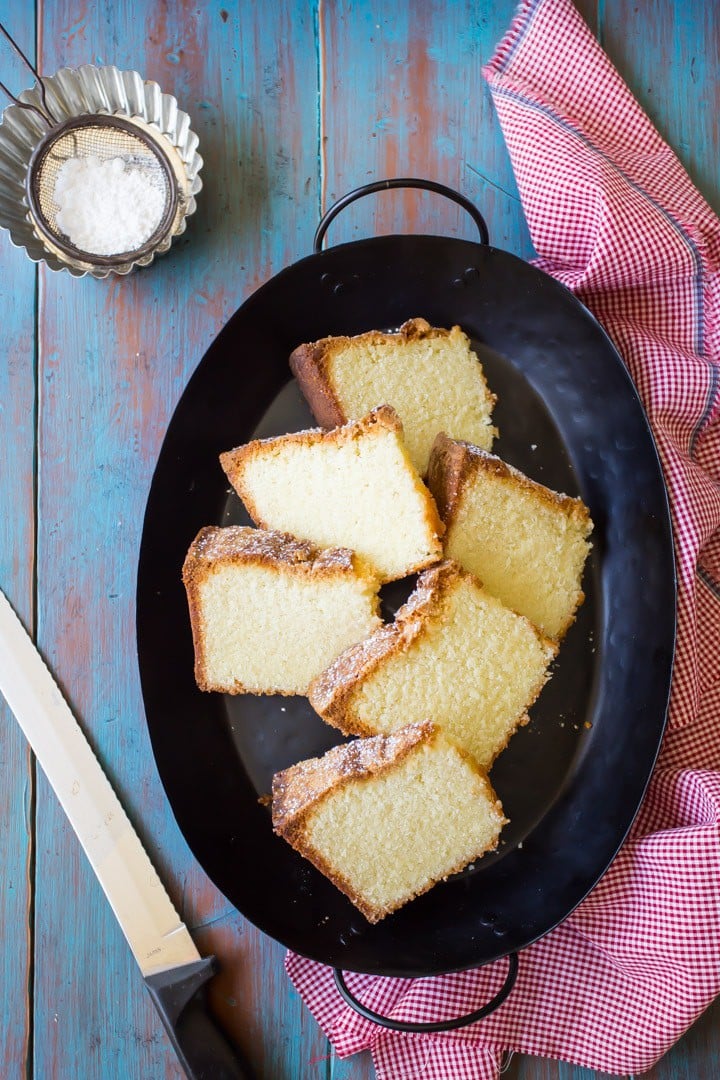
- Let the cake cool before slicing. It cuts best once it has had time to set.
Recipe FAQ
Does Pound Cake Rise?
You may notice this recipe has no baking powder or baking soda. This might seem strange for a cake recipe, but I promise it's not a mistake! Traditionally, pound cake is made without any chemical leavening.
It gets all its "lift" from that first, all-important stage of the recipe: creaming the butter and sugar together. This step incorporates lots of air so the cake comes out nice and light.
When you bake your pound cake, you'll notice it does rise in the oven. As everything heats up, it expands. It may fall a little bit as it cools, but it shouldn't completely cave in. If this happens to you, it's probably because you didn't bake it quite long enough. When a cake is under-baked, it will fall as it cools because the structure is weak and not fully set.
What kind of pan can this recipe be baked in?
This pound cake recipe can be baked in a 10-cup bundt pan or tube pan. You can also bake it in two 9-inch diameter cake pans. Or, you can halve it and bake it in a 5-cup loaf pan.
Just keep in mind that any time a cake recipe is made in a different sized pan, the bake time needs to be adjusted. Smaller or thinner cakes need less time to bake than bigger, thicker cakes do. You'll know your pound cake is done when a toothpick inserted in the thickest part of the cake comes out clean or with a few moist crumbs.
Can this recipe be made Gluten-Free, Dairy-Free, or Vegan?
You can make a gluten-free version of this traditional pound cake recipe, just by subbing the cake flour for a gluten-free flour blend. Make sure the product you're using can substitute 1:1 for regular flour. Here are a few good options:
- King Arthur Flour Gluten-Free Measure for Measure Flour
- Bob's Red Mill Gluten-Free All-Purpose Baking Flour
- Cup4Cup Multi-Purpose Gluten-Free Flour
I would not really recommend making a dairy-free or vegan pound cake. This cake recipe is all about the butter, and the eggs are really important too.
If you need a dairy-free cake, check out this White Cake Recipe. The dairy can be swapped for any kind of plant-based milk, just add a little lemon juice or white vinegar to activate the leavening. For a vegan version, just use your favorite egg substitute.
How do you store leftovers?
This pound cake will keep at room temperature for around 4 or 5 days. Just keep it tightly wrapped so it doesn't become dry or stale.
You can prolong the shelf life by keeping it in the refrigerator. It should last a week to 10 days, chilled.
Or you can freeze it. Pound cake keeps very well frozen. Wrap it tightly, seal it in a zip-top bag, and keep it in the freezer for a couple of months. Thaw it in the fridge or at room temperature, slice, and serve!
What Should You Serve With Pound Cake?
One of my favorite things about pound cake is how versatile it can be.
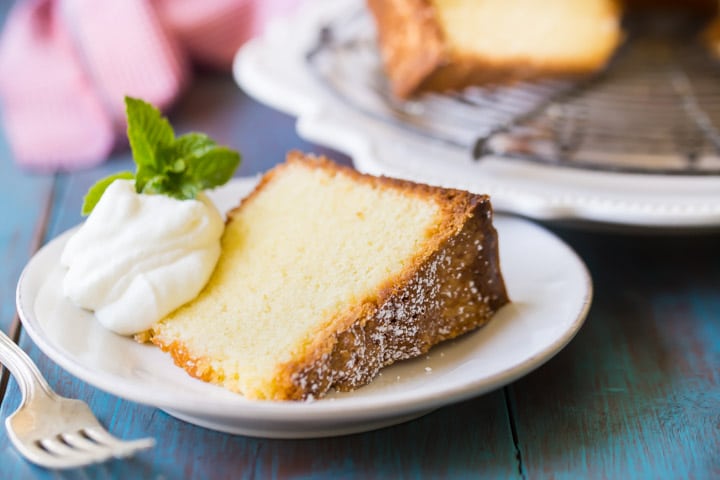
For the pictures and video you see here, I kept things simple and just gave it a little powdered sugar and a dollop of soft whipped cream.
But you can top this pound cake in all sorts of ways! Try it with peaches, berries, or any kind of fresh fruit. Or, drizzle it with caramel or chocolate sauce, or lemon or rhubarb curd. You can even make strawberry shortcake with it. Or, cut it into bite-sized pieces and layer it into a trifle. The possibilities are limitless!
Ingredients
- 2 ½ cups (567.5 g) unsalted butter, (5 sticks) softened
- 3 cups (600 g) granulated sugar
- 6 (g) eggs, large
- 3 cups (375 g) cake flour
- 2 teaspoons (8 g) vanilla extract
- 2 teaspoons (12 g) kosher salt
Instructions
- Preheat the oven to 350 degrees F, and mist a 10-inch tube pan generously with non-stick spray.
- Place the butter and sugar in a large mixing bowl, and cream together on medium-high speed until very pale and fluffy (at least 5 minutes).
- Add the eggs, one at a time, allowing each one to incorporate before adding the next.
- Scrape the bottom and sides of the bowl with a silicone spatula, then add the flour, a cup at a time, mixing until just barely combined.
- Fold in the vanilla and salt, and transfer the batter to the prepared pan.
- Bake until a skewer inserted in the thickest part of the cake comes out clean or with a few moist crumbs (approx. 75 to 85 minutes).
- Cool for 30 minutes, then remove from the pan and transfer to a wire rack to cool completely before slicing.
Notes
Author

More Cakes and Cupcakes
Have a question about this recipe? Ask AI:
I have been looking for a poundcake recipe that tastes like my grandma‘s. This may be it, although I haven’t made it yet. Could this go into a lamb cake mold?
Hey Melissa! I think you're going to love this recipe. It makes a very large cake. I typically make it in a 12-cup tube pan. I'm not sure what size or capacity your lamb cake mold is, but hopefully this gives you some idea of how it may work or how it may need to be modified.
This is the Traditional Pound Cake I have been searching trying to find for years. A true pound cake! The only thing added was salt. That wasn't in the original recipe I had.
Where’s the milk?
Not all cake recipes contain milk. Pound cake does not.
Mine does (1 cup) but only four eggs.
Just the recipe I've been looking for. Thank you.
Hey
I baked this pound cake last week and it turned out to be one deliciousness ❤❤❤
But the salt settled down and the bottom tasted saltish. Why would I know this happened?