

Crusty French Baguette Recipe
As an amazon associate I earn from qualifying purchases.
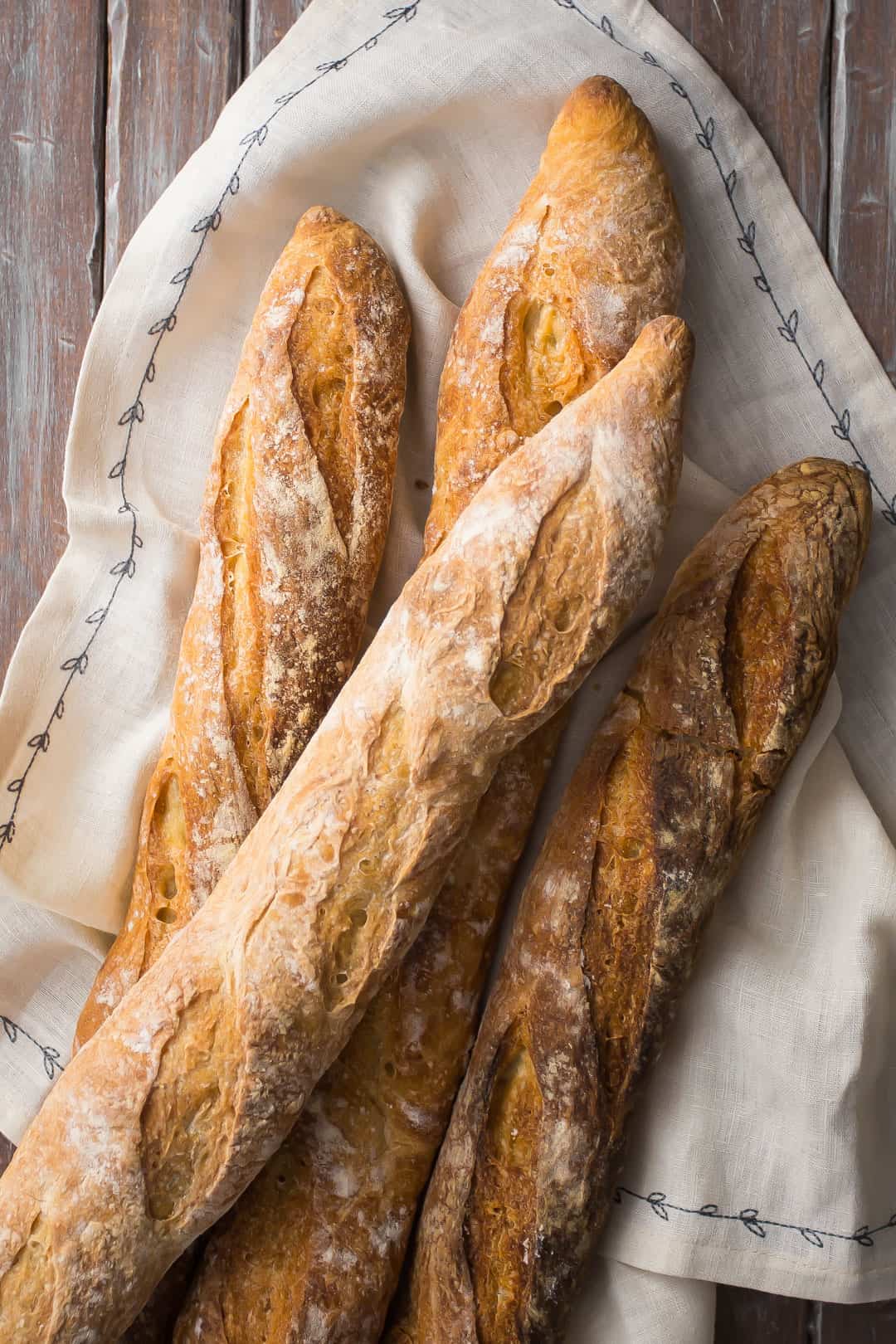
Few things compare to the magic of a crusty French Baguette fresh from the oven. With its golden, crackly crust and tender, airy interior, this bread is irresistible served alongside a bowl of hot soup, piled high with sandwich fillings, or torn off piece by piece to enjoy with butter.
The best part? This recipe is made with just four simple ingredients, and most of the work is hands-off. A little patience goes a long way here, and the results are so worth it.
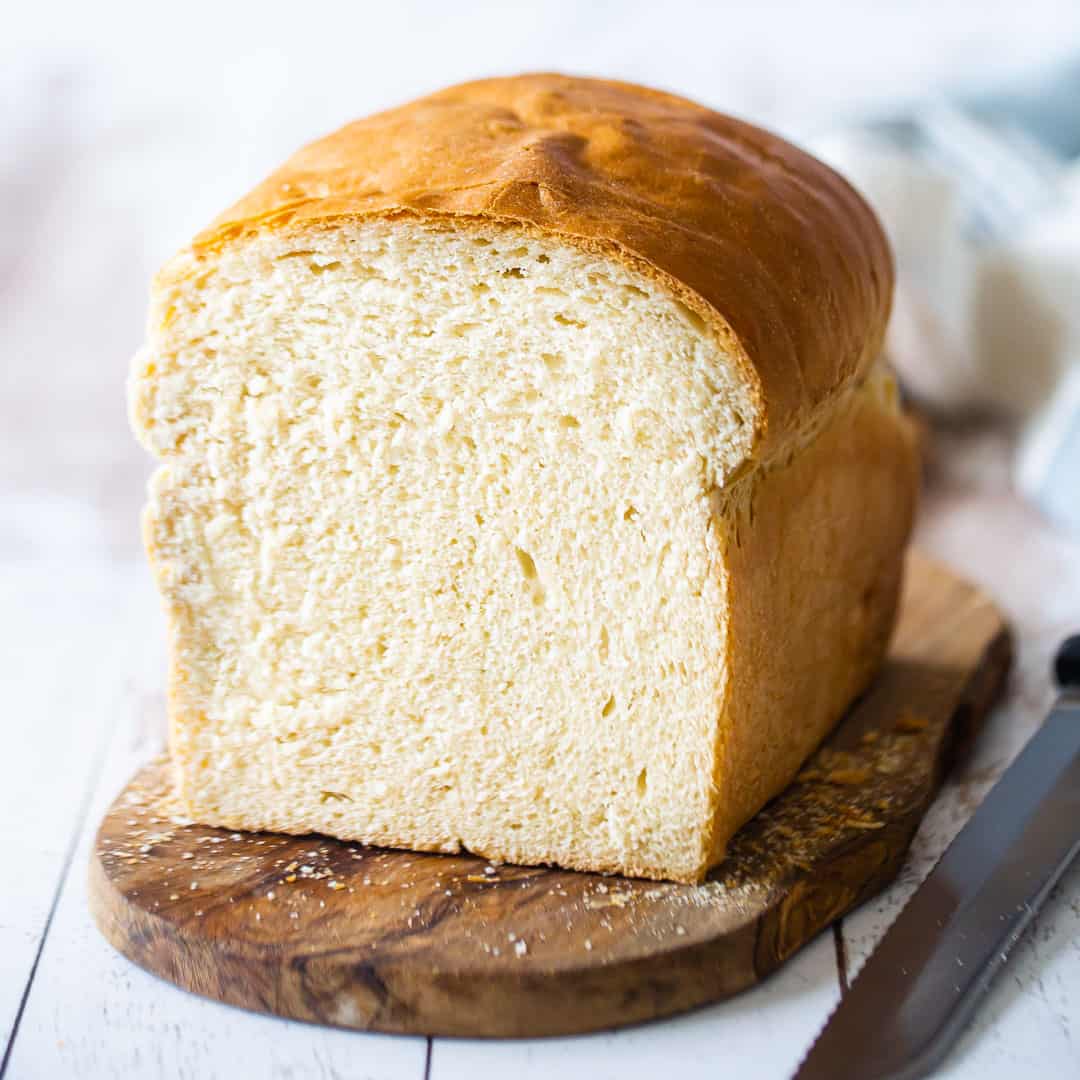
I am over the moon about that crunchy, splintery outer crust. See how it shatters? And the interior- soft, pillowy, and so airy. It's perfection.
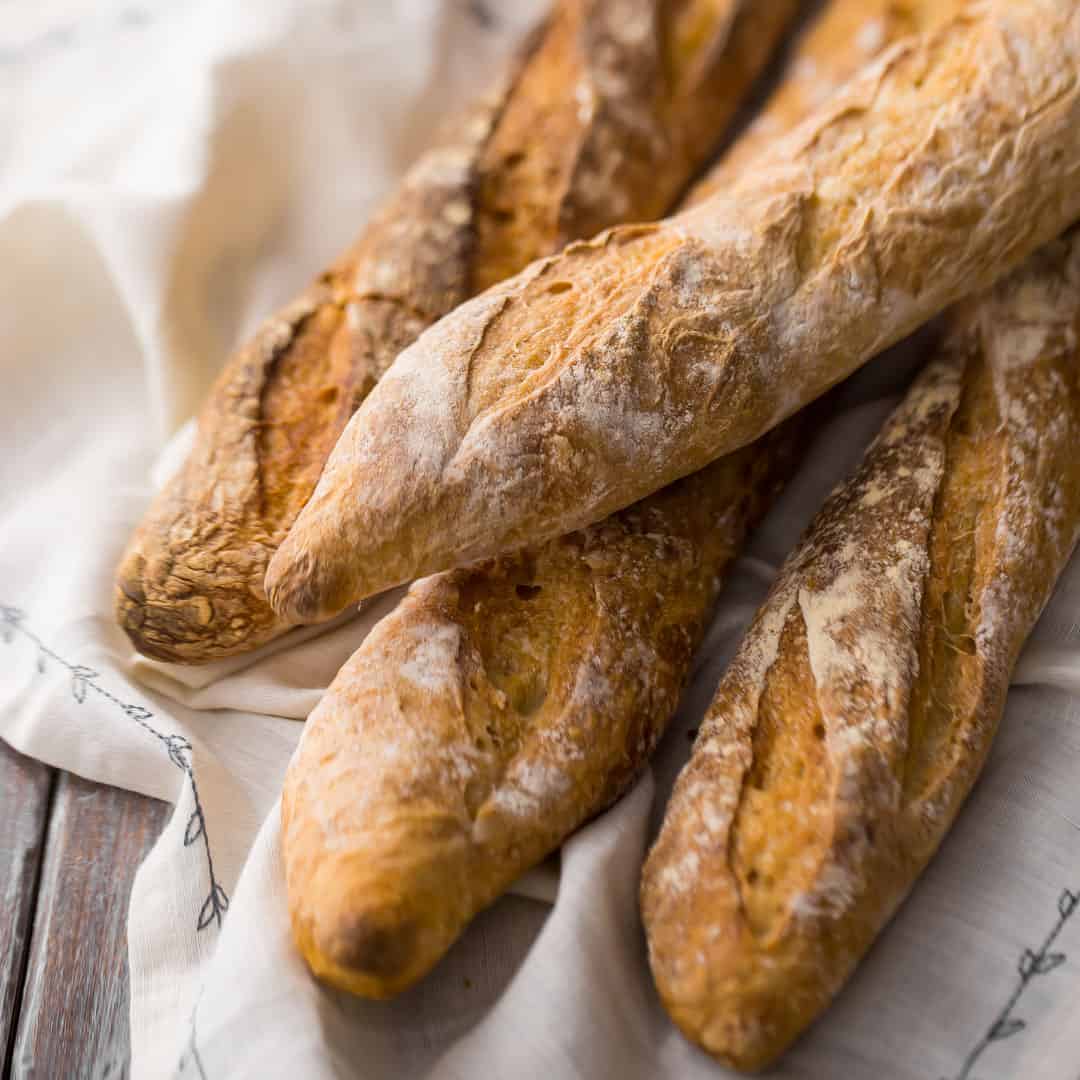
My family loves a good crusty French baguette. We eat this kind of bread with so many things! It's so chewy, yeasty, and good. I've always been a little afraid to try making it myself. Everything you hear suggests it's complicated and fussy, and only a French boulanger could ever get it right.
WRONG! Here's living proof that anyone can make a killer baguette.
Why You'll Love This Baguette
- Bakery-style at home: You don't need fancy equipment to get an artisan-quality loaf.
- Simple ingredients: Just flour, water, yeast, and salt.
- Crispy crust, tender crumb: For the perfect balance of crunch and softness.
- Versatile: Enjoy it as a snack, side dish, or as a base for sandwiches.
Ingredients You'll Need
The recipe card at the bottom of the post contains the full list with all of the amounts. Refer to that when you're cooking.
- Bread flour - Provides the higher protein content needed for that perfect chewy texture and airy interior.
- Kosher salt - Balances flavor and strengthens the gluten structure.
- Active dry yeast - The key to a good rise and light texture. Instant yeast can also be used.
- Water - Warm water helps activate the yeast, while cool water keeps the dough manageable.
- Additional flour - For dusting your work surface and shaping the loaves.
How To Make A Homemade French Baguette
Step 1: Start the Dough
Sprinkle the yeast over the warm water and let it sit until it becomes foamy. This ensures the yeast is active and ready to work.
In a large bowl, combine flour and salt. Make a well in the center and pour in the dissolved yeast. Slowly stir in cool water until you have a shaggy, stiff dough. You may not need all of the water. Cover and let the dough rest for 30 minutes.
Step 2: Fold and Rise
Turn the dough onto a lightly floured surface. Gently press it into a rectangle, then fold the sides into the center and flatten and rotate it. Repeat the process. Place the dough in an oiled bowl, cover it, and let it rise until it has doubled in size (about 1-2 hours).
Step 3: Shape the Loaves
Divide the dough into four equal portions. Shape each into a long, thin loaf, approximately 15 inches long, with tapered ends. Transfer to a parchment-lined baking sheet, cover loosely, and let it rise again until doubled in size (30-45 minutes).
Step 4: Bake with Steam
Preheat your oven to 450°F (230°C). Place a pan of water on the bottom rack to create steam, which helps form that signature crust.
Slash each loaf with a sharp blade, dust lightly with flour, and bake until golden brown and crusty, about 30-40 minutes. The baguettes should sound hollow when tapped.
Helpful Tips and Tricks
- Don't rush the rise: A slower rise develops more flavor and better texture.
- Use steam: That pan of water in the oven is the secret to a crisp, golden crust.
- Slash with confidence: Clean cuts help the bread expand properly in the oven.
- Cool before slicing: As tempting as it may be, let the loaves rest for at least 10 minutes to allow the crumb to set.

Classic French Baguette FAQ
This type of loaf is infinitely versatile! Slice it into ½-inch rounds and it's perfect as a base for bruschetta or crostini. Or it can be used as a dipper for your favorite party dip. And we love it toasted with garlic butter, for garlic bread. So good with a pasta dinner! Or just tear into it and eat it with a hot bowl of soup. So satisfying!
Baguettes are best when they're freshly baked, but they're still pretty darn great after a few days!
To store a French baguette, wrap it loosely and keep it at room temperature for 2 to 3 days. If you notice it's not as crusty after a while, just pop it in a warm oven (around 170 degrees-ish) for 5-10 minutes, and it should come out good as new.
A fancy French boulanger might not agree with me on this one, but I say go for it!
I do this a lot at my house. When the baguette is still fresh, slice it into thin rounds. I'll often cut on the diagonal so there is more surface area to spread yummy things on. Then, just slip the baguette slices into a zip-top freezer bag, and into the freezer they all go.
Whenever we want a slice of crusty French bread, we just pull out what we need.
The baguette slices thaw in just a few minutes at room temp. Alternatively, they can be warmed in the oven or toasted. It's super convenient!
Yes, but the texture won't be quite as chewy or airy. Bread flour is best.
No. A parchment-lined baking sheet works beautifully for this recipe.
This could be due to inactive yeast, cool rising conditions, or using too little water. Ensure your yeast is fresh and allow the dough plenty of time to rise.
Spritz the loaves with water right before baking, in addition to using a steam pan.
More Homemade Bread Recipes

Ingredients
- 3 ½ tablespoons (52.5 g) warm water
- 1 ½ teaspoons (4.67 g) active dry yeast*
- 3 ¾ cups (468.75 g) bread flour
- 2 teaspoons (12 g) kosher salt
- 1 ¼ cup (295.74 g) cool water, (you may not need all of the water)
- additional flour,, for dusting
Instructions
- Place the warm water in a small bowl and sprinkle the yeast on top. Set aside and allow the yeast to dissolve and become foamy.
- Place the bread flour into a large bowl and stir in the salt.
- Make a well in the center of the flour mixture, and stir in the dissolved yeast.
- Add the cool water, a little at a time, while stirring, just until a stiff, shaggy dough (watch the video below to see what this should look like) has formed (you may not need to use all of the water).
- Cover the bowl with plastic wrap and allow it to rest for 30 minutes.
- Transfer the dough to a lightly floured work surface, gently press it into a rectangle, and fold the short sides into the center. Flatten, turn 90 degrees, and repeat.
- Place the dough in a large oiled bowl, and cover with plastic wrap. Allow it to rise in a warm place until doubled in bulk (about 1 to 2 hours).
- Divide the dough into 4 equal portions, and shape each one into a long loaf (about 15-inches long and 1 ½-inches in diameter), with pointed ends.
- Place the loaves on a parchment-lined baking sheet, cover with oiled plastic wrap, and allow to rise until doubled in bulk (about 30 to 45 minutes).
- Preheat the oven to 450 degrees F, and place a pan of water on the bottom rack.
- Bake the breads until crusty and brown (approx. 30 to 40 minutes). The baguettes should give a hollow sound when tapped.
Notes
Author


Have a question about this recipe? Ask AI:
I'm a rubbish baker but I love this recipe. My baguettes turn out great every time. I've cut down the salt by 1/3 as the first try was a little salty for my taste. I have just made the dough for my 5th batch of these in 3 weeks. The true test of a recipe is if a novice can achieve success with it and with this one, even I can. My post lockdown party will have freshly made baguettes! Thanks for the recipe!
Thank you for sharing this recipe! I have not had success yet but even though they do not look like they should I can taste the classic french baguette flavor. I am struggling with the yeast and rising! The first attempt I over kneaded, the second attempt it hasn't doubled in size. Advice.
Thank you so much for this baguette recipe. I've tried others but they have never been as successful as this one. I will definitely be making them again!
Fantastic recipe. So simple to follow for a novice bread maker like myself. It takes a while elapsed time, but there's not that much effort involved. I have had great results both times I have tried this recipe.
Worst recipe I ever cooked.
I don’t know why. I’m using a baking stone, putting the water on bottom rack, cooking confection bake but it taste great and crispy but it’s very light color help and small loaf. In ur video it shows a lot of loafs. Are you doubling the recipe??
No. I'm baking the recipe exactly as written, dividing the dough into 4 equal portions before shaping into loaves.
Love these French baguettes! I've made these twice now - the first time I made them with bread flour, and the second time I made them with all purpose flour (since bread flour is tough to find right now!). Both turned out very tasty, but we preferred the ones made with bread flour as they were a bit chewier and rose more. Either way, these baguettes are wonderful! A few notes on the recipe: if you're using regular table salt (like Morton salt) instead of kosher, make sure to decrease the amount used. Table salt is finer than kosher, so there more "saltiness" in a teaspoon of table salt than there is in a teaspoon of kosher. I used table salt and cut the amount in half. Also, for the second rise, I form the loaves and then place them right onto a baking sheet rather than onto a floured towel. That allowed me to avoid the challenge of moving the loaves, and they still turned out great! Thanks again for this awesome recipe!
This was soooo easy! I would never have attempted it but the way you described it in the beginning of your post made me try! Never gonna buy one again!
This is consistently good results and almost no work/clean up.
I follow the recipe except unable to find bread flour & substitute All Purpose. Great results.
Question. I have a stone in the bottom of my oven. Should I cook on that? I can move it up to center rack to account for the water pan. Or should I put water pan on higher shelf.
Sounds like it should work!
We liked thses. The basic recipe is great. Very good description. They were difficult to transfer. And the cook time is too long. I baked two for 35 minutes and they were over done. I baked the second two for 22 minutes and that was right for my oven.
I think it's a matter of tweaking until you get it right for your oven and ingredients.
A very promising recipe. Thought that it would work well. But,
1. Only needed 10 of the 16 ounces of water. That was odd.
2. The next to very last instructions (No. 12) calls for one to transfer the soft, risen baguettes to a pan for baking. Of course, what happens is that they collapse. I did not take the time to let them rise again, and, of course, ended up with very tasty, and very crunchy bricks.
Gosh, and I was so hopeful.
Just wanted to point out that this recipe calls for 10 ounces of water, not 16. As stated in the notes, this should be measured by weight (not volume). Step 4 of the directions also states that you might not need all of the water.
I've been making bread for decades but I'm always interested in new recipes. I don't think transferring risen loaves is a great idea. Better to simply let them rise on the surface you intend to bake them on.
Turned out great! The recipe was easy to follow and produced excellent baguettes.
After decades of holidays in France and repeated attempts at baking baguettes, you provide this, the perfect recreation. I cannot tell you just how grateful I am,my mind is in France right now, whilst I sit at home during the Covid pandemic!
I used easy bake yeast, in warm water, with a quarter teaspoon of sugar.
Thank you so much
Hi I just made your French sticks, everything went well and the tops were brown and crunchy. The underneath was whit and quite raw. What might have caused this please?
I left the pan of water in oven for the duration as the re I’ve dudnt say to remove it, could this have caused it?
Thank you
Reg
How strange! Can you tell me a bit about what kind of pan you used?
Hey! Tried this out (albeit with half the recipe) and it worked amazing! The timings were perfect, and so was the recipe itself. At the start, before you really start to roll it out or make it a rectangle, it'll likely be quite sticky, but this got fixed when I floured the surface and my hands and let that incorporate into the dough. As for baking, it baked almost perfectly in my oven, with one little end slightly darker/blacker, but I believe it might be fixable by just turning the tray midway through the process.
Though, I do have a question for anyone who may have tried. Can I leave it for an overnight rise in the fridge and/or am I able to put it in the freezer and still have it usable the next day? Wanting to do this because I have to start quite early if it's for dinner, and my family gobbles them up pretty quickly.
Thank you for the excellent tips! Yes, you can keep the unbaked loaves in the fridge overnight (or up to 48 hours), let them come to room temp then proof a second time, and then bake. The dough will last for up to 2 months in the freezer as well. Hope this is helpful to you!