

Eggplant Parmesan Pizza
As an amazon associate I earn from qualifying purchases.
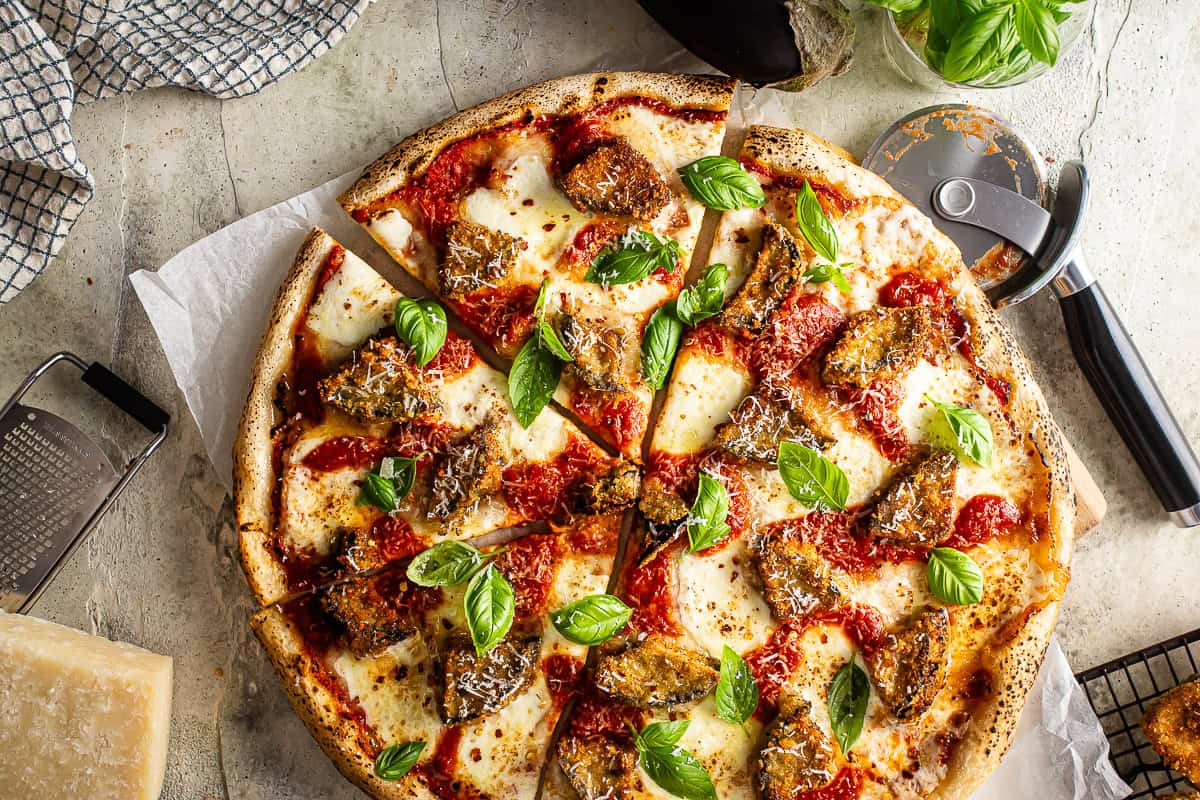
My Eggplant Parmesan Pizza brings together all the best parts of crispy eggplant parm, layered on a chewy homemade pizza crust and baked until it's bubbly, golden, and hard to resist.
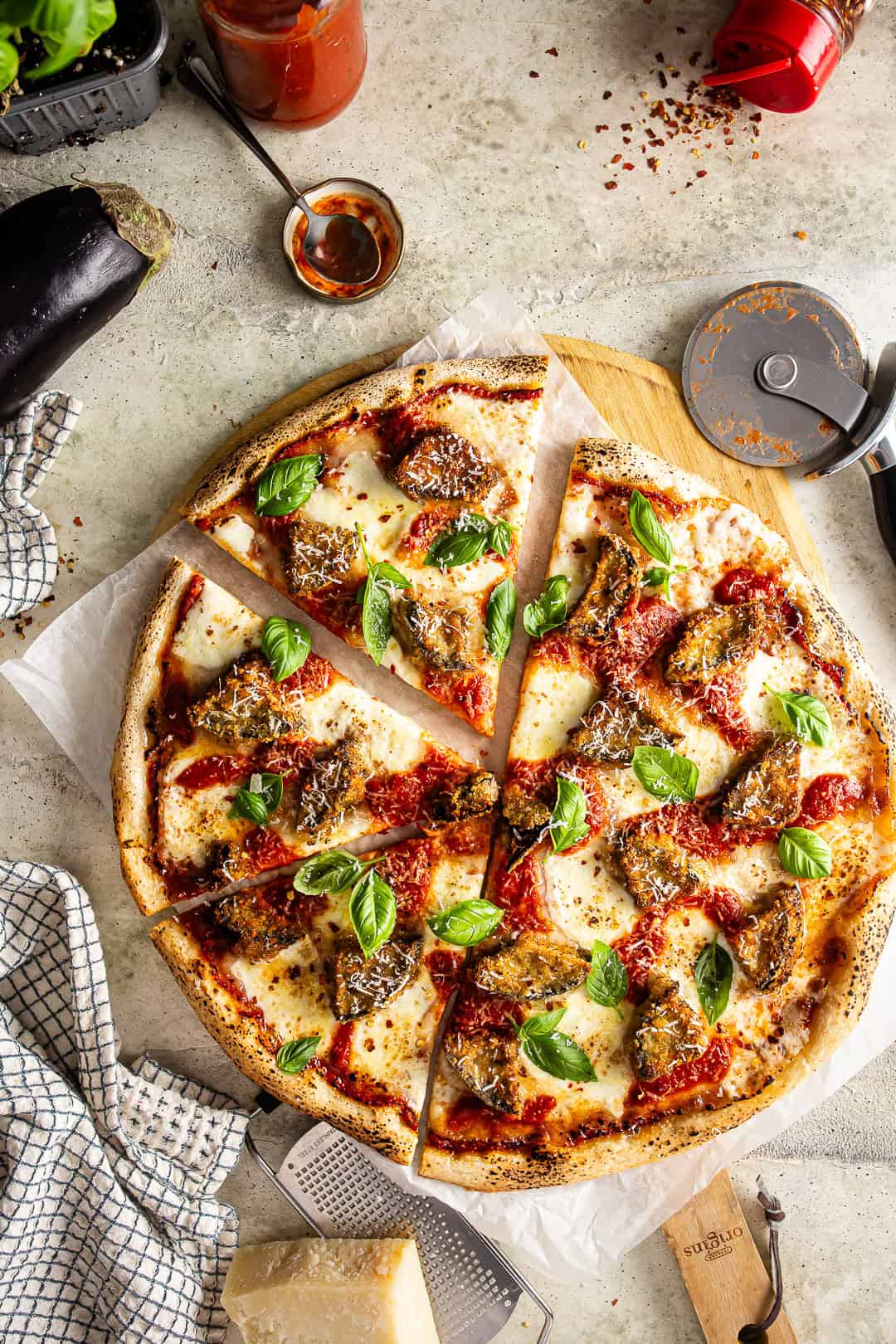
Eggplant parmesan pizza is a homemade pizza topped with tomato sauce, mozzarella, crispy breaded eggplant, fresh basil, and grated Parmigiano-Reggiano.
It's inspired by classic eggplant parmesan, but instead of layering everything in a casserole, the crispy eggplant is scattered over pizza dough and baked until the cheese melts and the crust turns golden brown.
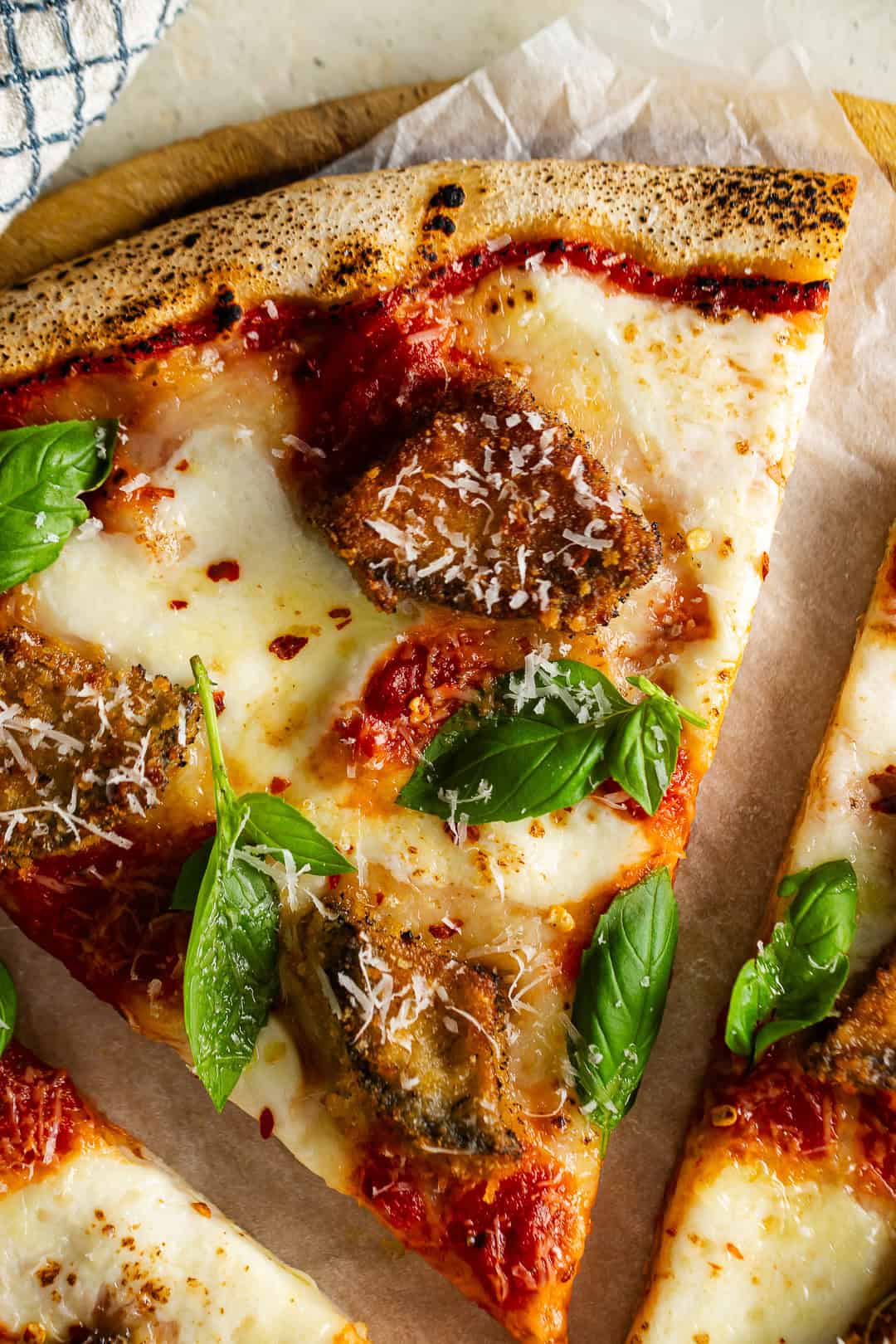
The result is savory, cheesy, crisp, and really satisfying! Each bite has crisp breaded eggplant, tomato sauce, melted mozzarella, fresh basil, and Parmigiano-Reggiano. It's cozy and comforting, but still fresh and full of flavor.
Here's Why You'll Love This Recipe
- This pizza brings together two favorites: homemade pizza and eggplant parmesan.
- The crust is soft and chewy with crisp edges, and there's a subtle hint of garlic that pairs perfectly with the toppings.
- The eggplant gets breaded and fried before going on the pizza, so it stays crisp and golden, not soggy.
- It's hearty enough for dinner, but also works well as an appetizer or party snack when cut into smaller pieces.
Ingredients You'll Need
The recipe card at the bottom of the post contains the full list with all of the amounts. Refer to that when you're cooking.
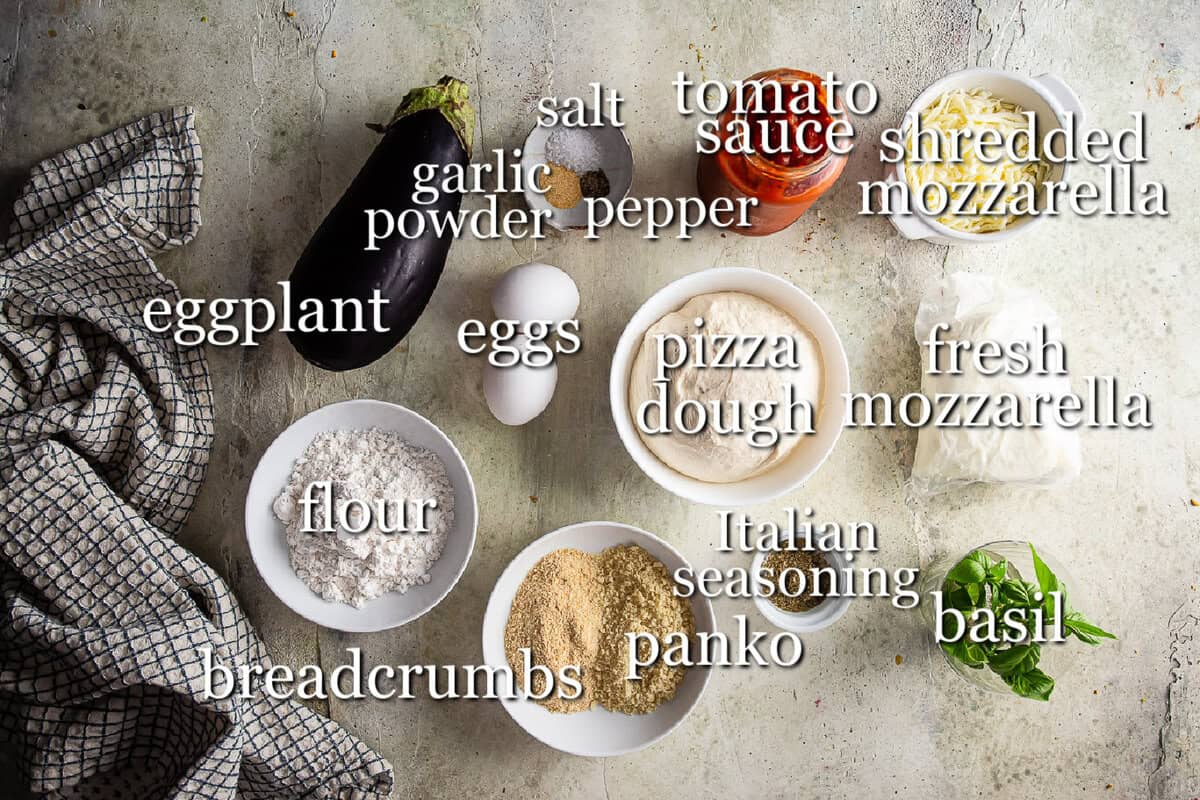
For the Crust
- Granulated sugar: Helps feed the yeast and encourages the dough to rise. It also adds a touch of balance to the savory crust.
- Warm water: Activates the yeast. It should feel warm but not hot, about 105 degrees F.
- Dry active yeast: Gives the pizza dough lift and creates that light, chewy texture. Be sure your yeast foams before continuing.
- Bread flour: Creates a chewier crust with good structure. All-purpose flour can be substituted, though the texture may be a little softer.
- Extra-virgin olive oil: Adds flavor and tenderness to the dough. It also helps the crust bake up beautifully.
- Kosher salt: Seasons the dough so the crust tastes flavorful on its own.
- Garlic powder: Adds a subtle, savory flavor to the crust.
For the Toppings
- Eggplant: A small eggplant works well because it cooks quickly and gives the pizza hearty, tender bites.
- Garlic powder: Seasons the eggplant and boosts the savory flavor.
- Ground black pepper: Adds a little warmth and balances the richness of the cheese and fried eggplant.
- All-purpose flour: Helps the egg stick to the eggplant, creating a base for the breadcrumb coating.
- Eggs: Help the breadcrumbs cling to the eggplant pieces.
- Plain dry breadcrumbs: Create an even coating around the eggplant.
- Panko breadcrumbs: Add extra crunch and texture. The combination of regular breadcrumbs and panko gives the best coating.
- Italian seasoning: Adds classic herb flavor to the breading.
- Oil: Used for frying the breaded eggplant until crisp and golden. Choose a neutral oil with a high smoke point.
- Tomato sauce: Adds bright, tangy flavor. Use your favorite pizza sauce, marinara, or simple tomato sauce.
- Shredded mozzarella cheese: Melts into an even, cheesy layer over the sauce. Whole-milk mozzarella yields a richer result, but part-skim works too.
- Fresh mozzarella cheese: Adds creamy, melty pockets throughout the pizza.
- Fresh basil leaves: Added after baking for a burst of color and flavor.
- Parmigiano-Reggiano: Finishes the pizza with a salty, nutty flavor. Parmesan can be used if that is what you have.
In Photos: How To Make Eggplant Parmesan Pizza
Step 1: Make the Pizza Dough
Start by stirring the sugar and warm water together in a large mixing bowl.
Sprinkle the yeast over the top and let it sit until the mixture looks foamy, about 5 to 10 minutes. This tells you the yeast is active.
Stir in part of the bread flour until incorporated, then mix in the olive oil, salt, and garlic powder.
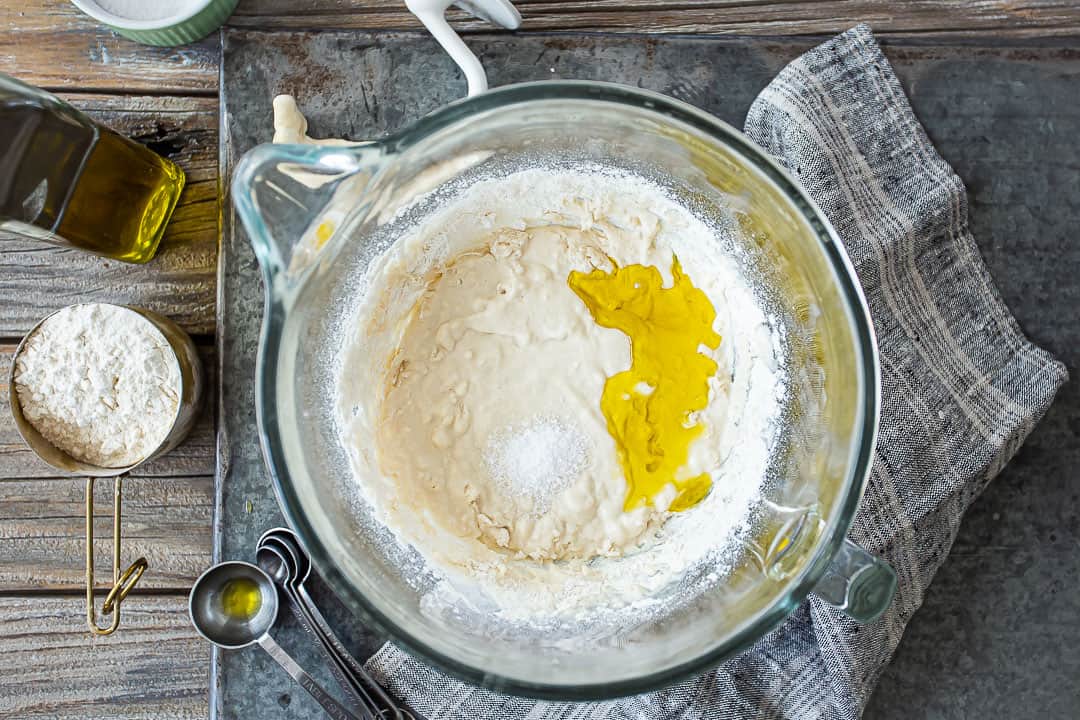
Continue adding flour a little at a time, just until the dough gathers into a ball and pulls cleanly away from the sides of the bowl. You may need slightly more or less flour depending on the humidity and how your dough feels.
Knead the dough until it becomes smooth and elastic, about 10 minutes. It should be able to pass the windowpane test, meaning a small piece can be stretched thin enough for light to pass through without tearing.
Lightly mist the bowl with nonstick spray, place the dough back in, and cover with plastic wrap or a damp towel.
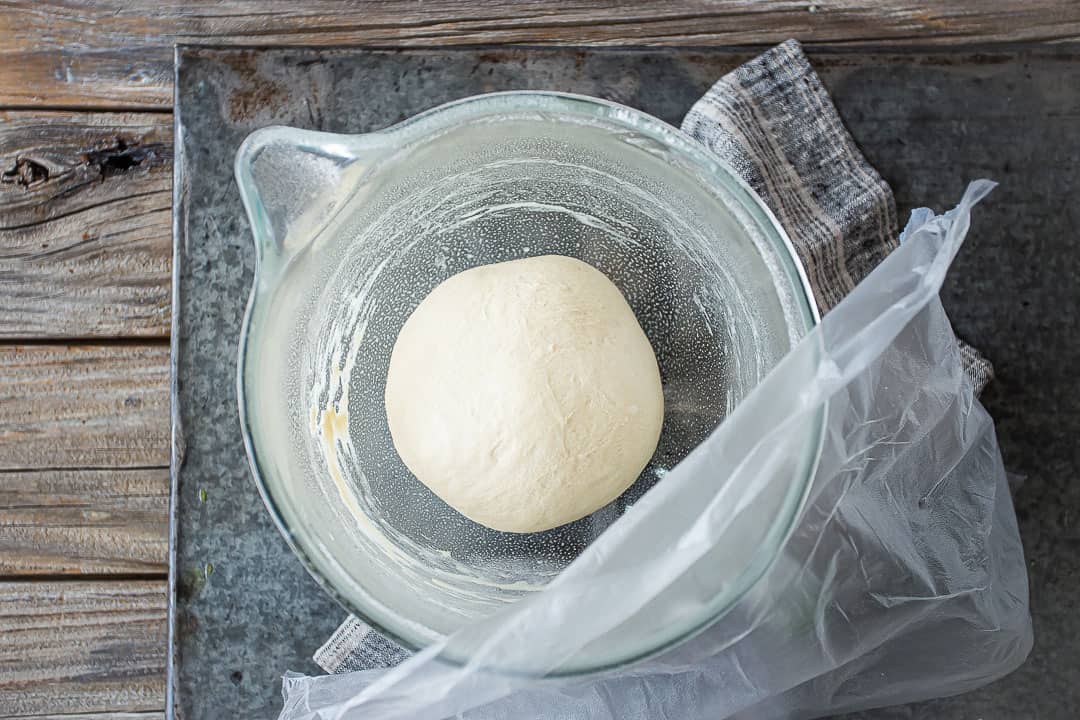
Let it rise in a warm place until doubled in size, about 45 to 90 minutes.
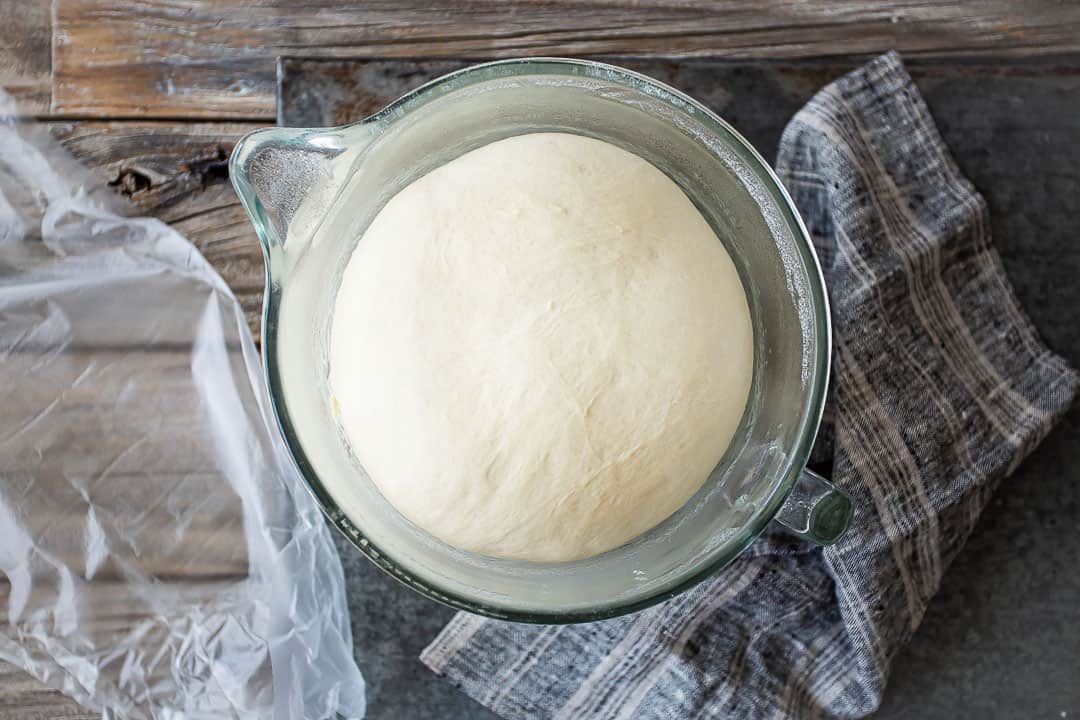
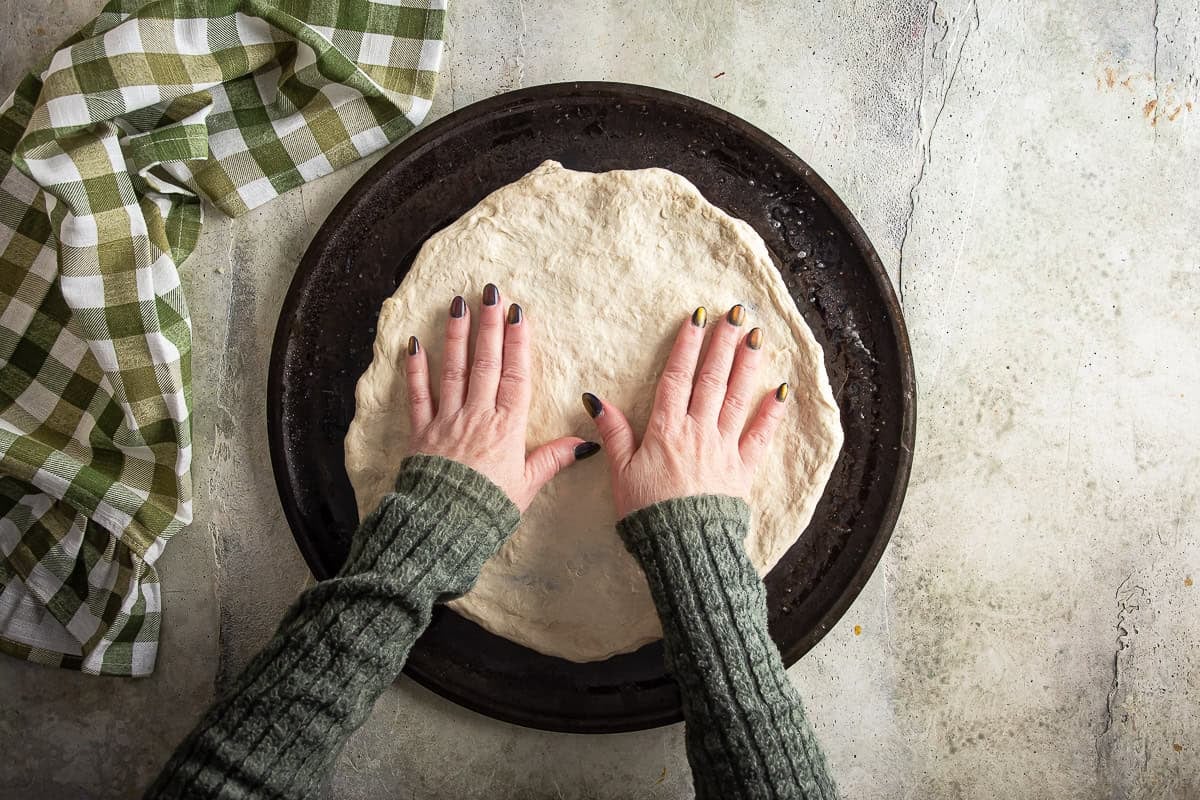
Once risen, punch the dough down, knead it a few times, then stretch, press, or roll it into a thin, wide circle.
Step 2: Prepare the Eggplant
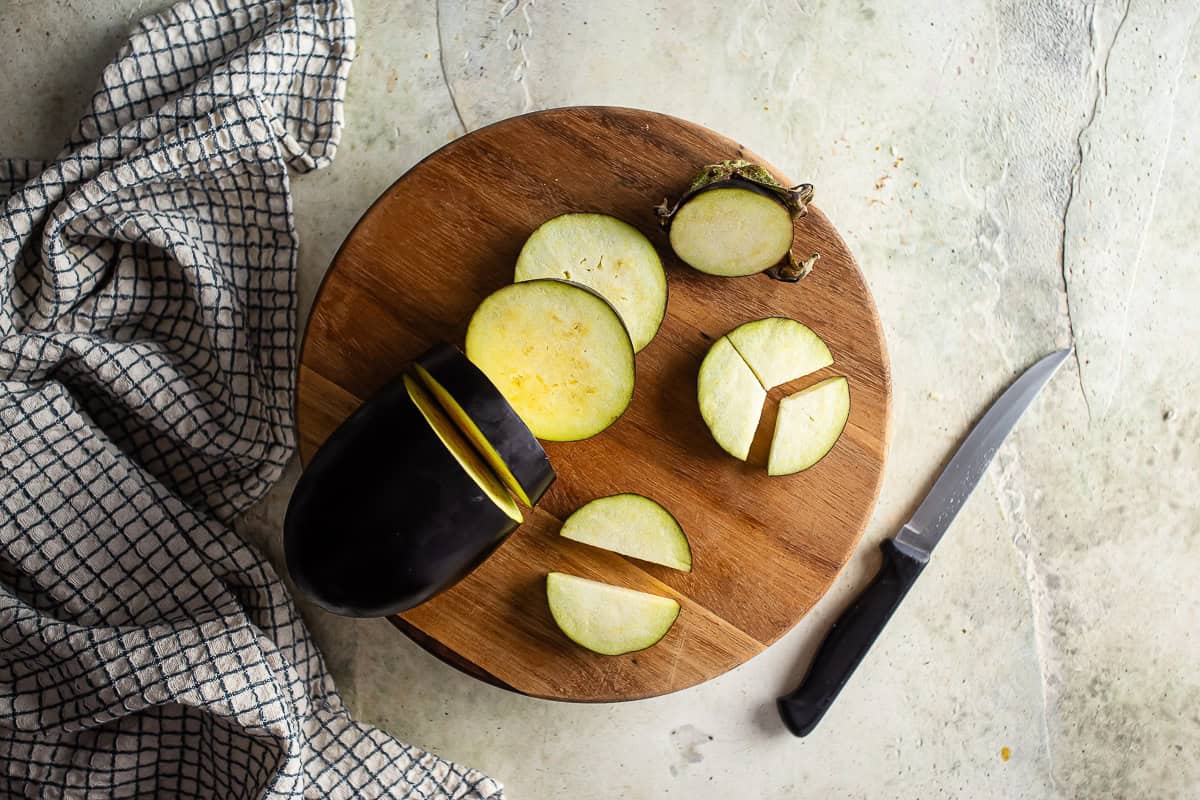
Cut the eggplant into thick slices, then chop it into bite-sized chunks.
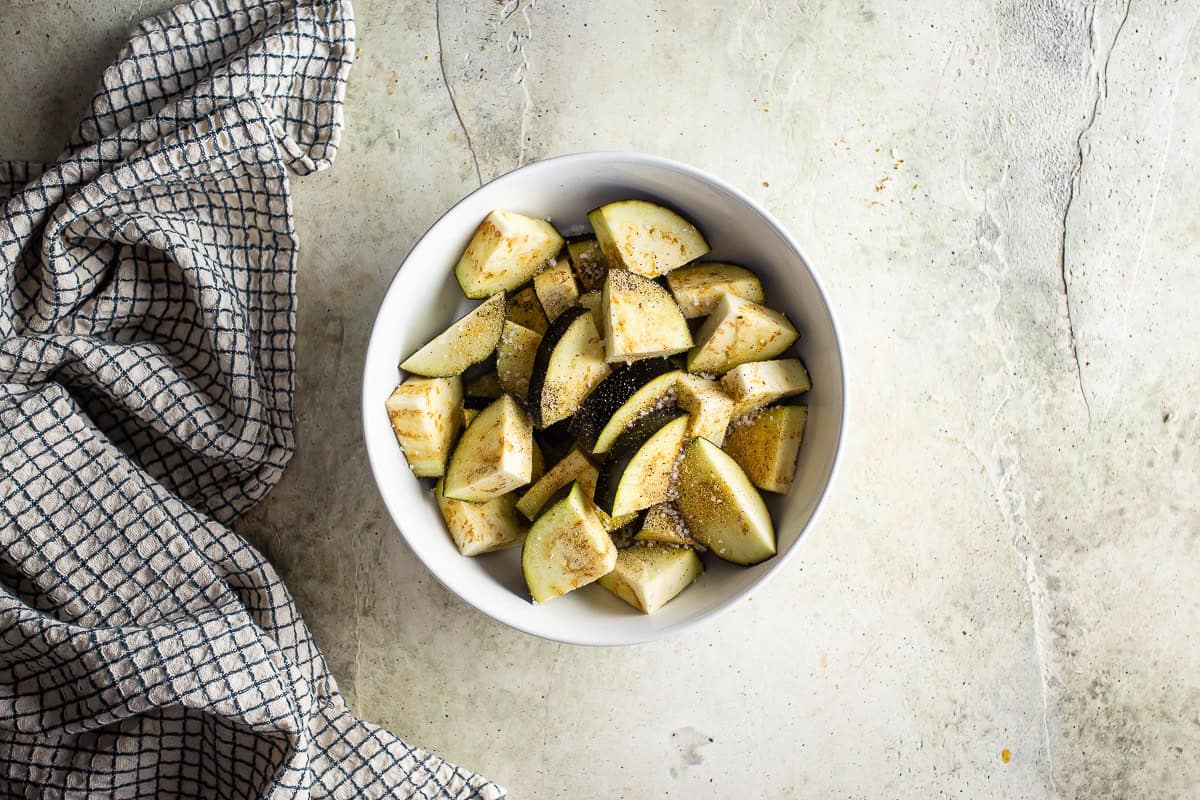
Season the eggplant with salt, garlic powder, and pepper.
Sprinkle with flour and toss until the pieces are lightly coated.
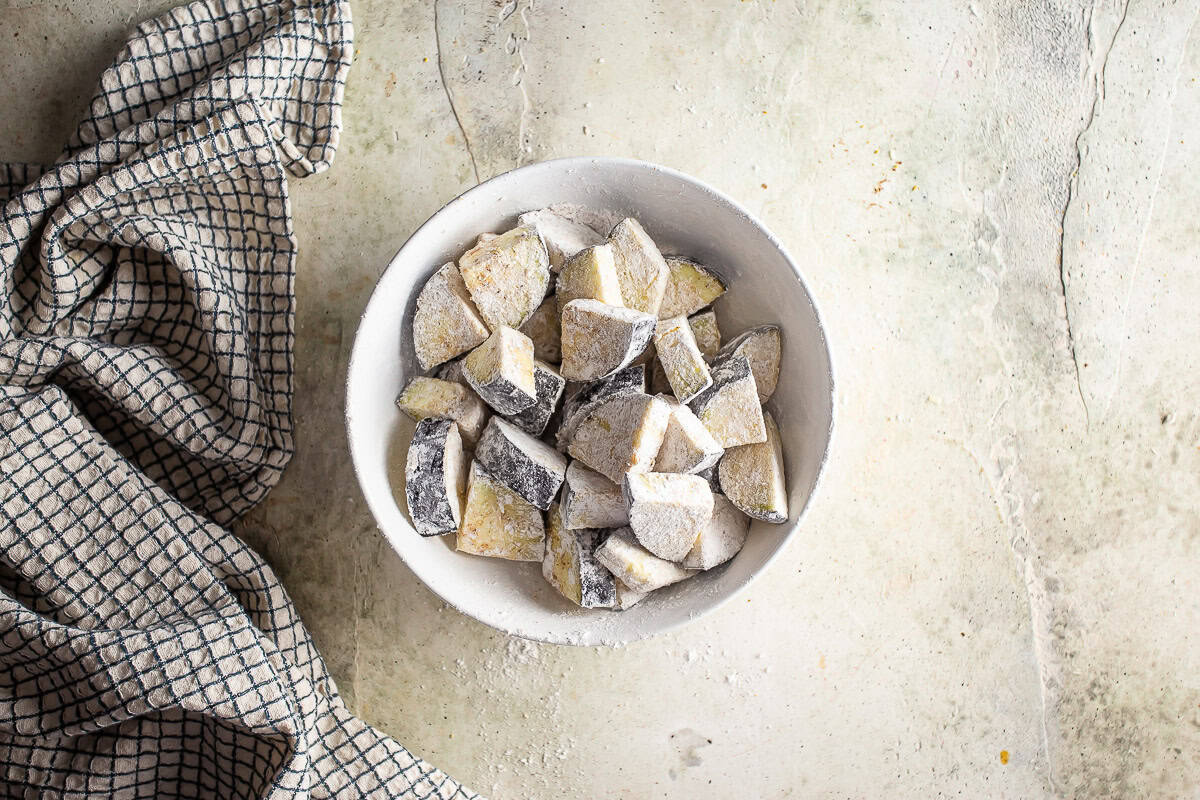
Beat the eggs in a shallow bowl. In another shallow bowl, combine the dry breadcrumbs, panko breadcrumbs, and Italian seasoning.
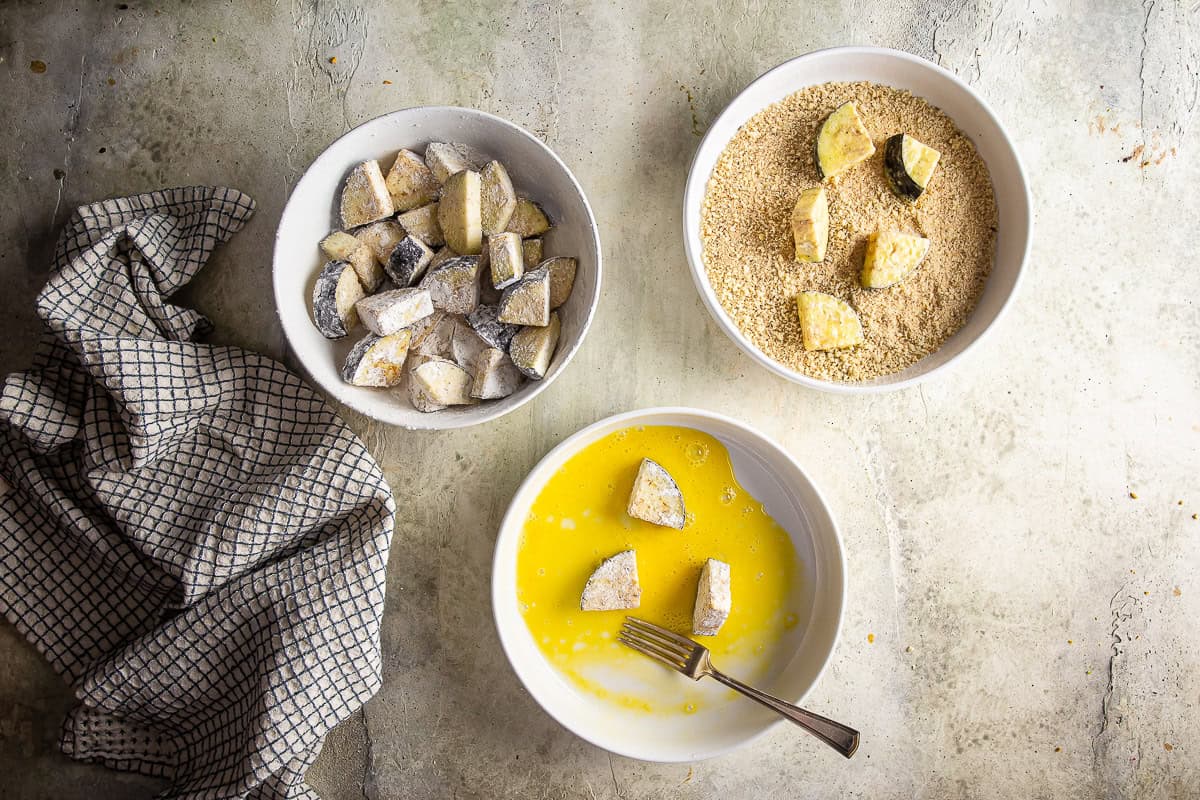
Working in small batches, dip the eggplant first into the egg, then coat with the breadcrumb mixture.
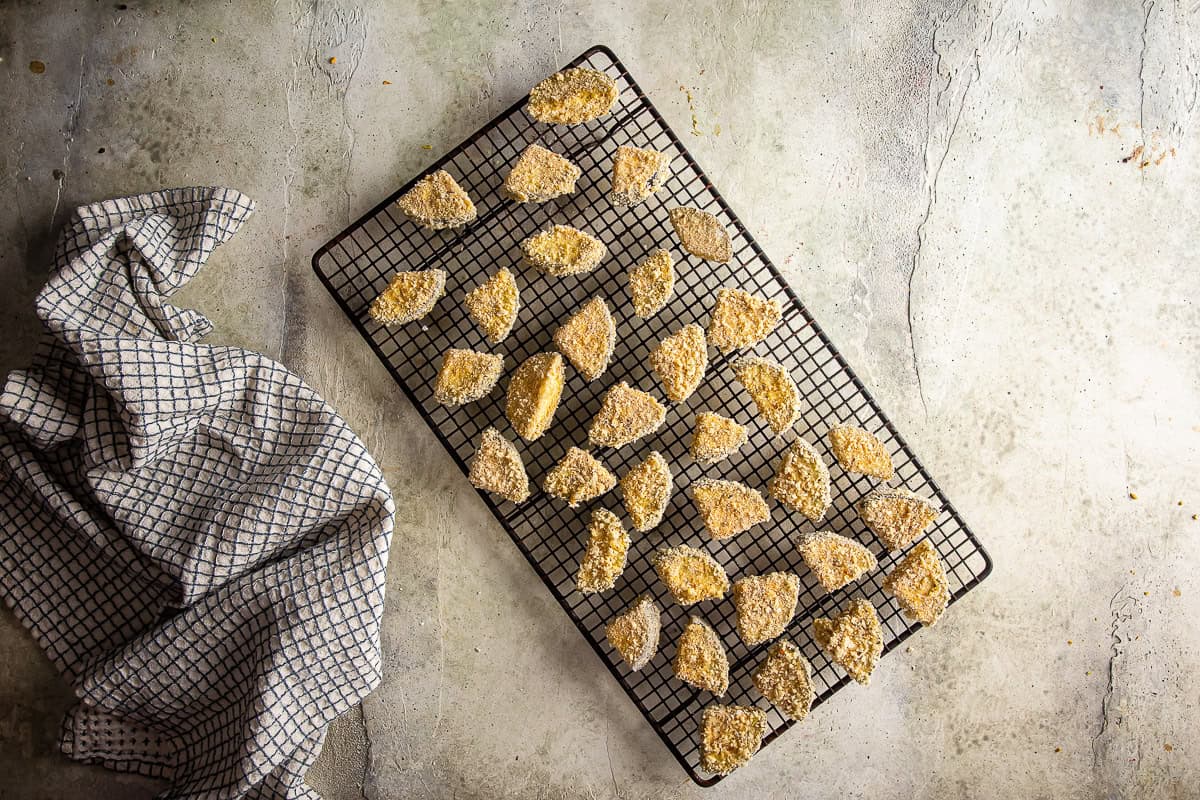
Place the coated eggplant pieces on a wire rack while you finish the rest.
Step 3: Fry the Eggplant
Heat about ½ inch of oil in a large, heavy-bottomed pot over medium heat.
The oil should be between 325 and 375 degrees F.
Fry the breaded eggplant in small batches until crisp and golden on both sides.
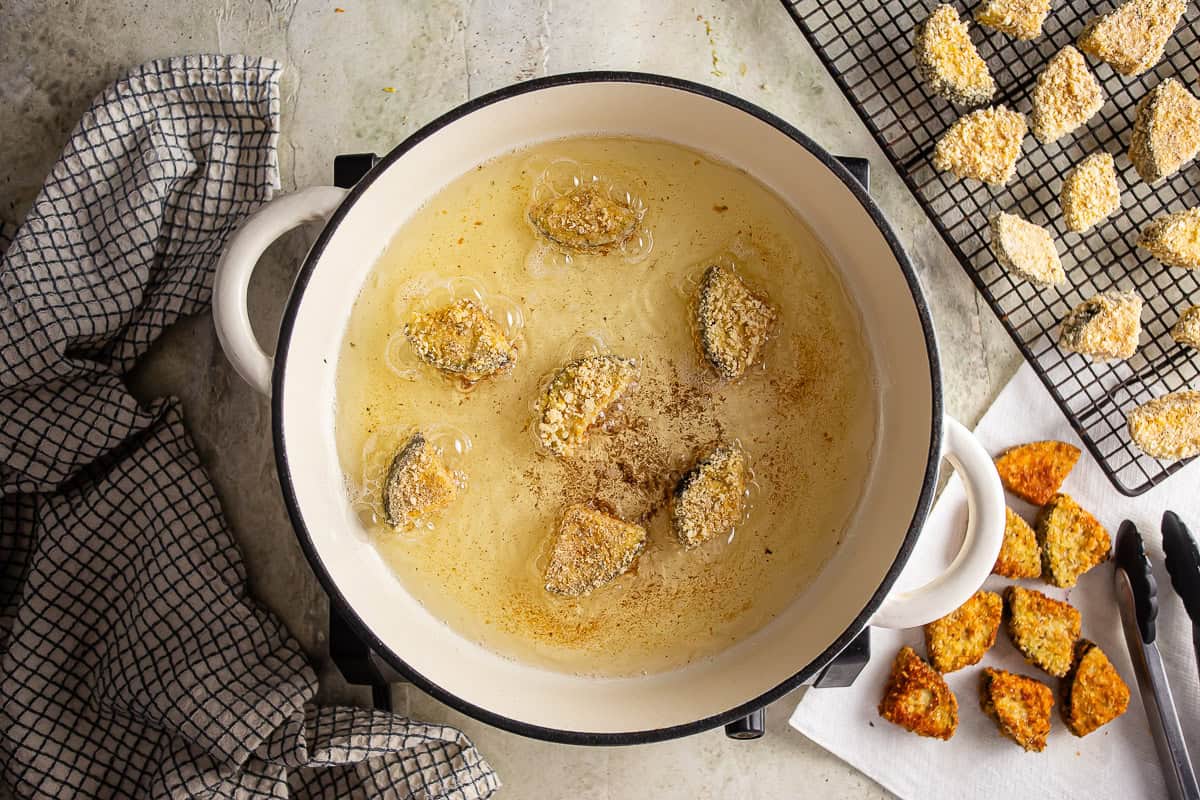
Transfer to paper towels to drain.
Step 4: Assemble and Bake
Preheat the oven to 500 degrees F.
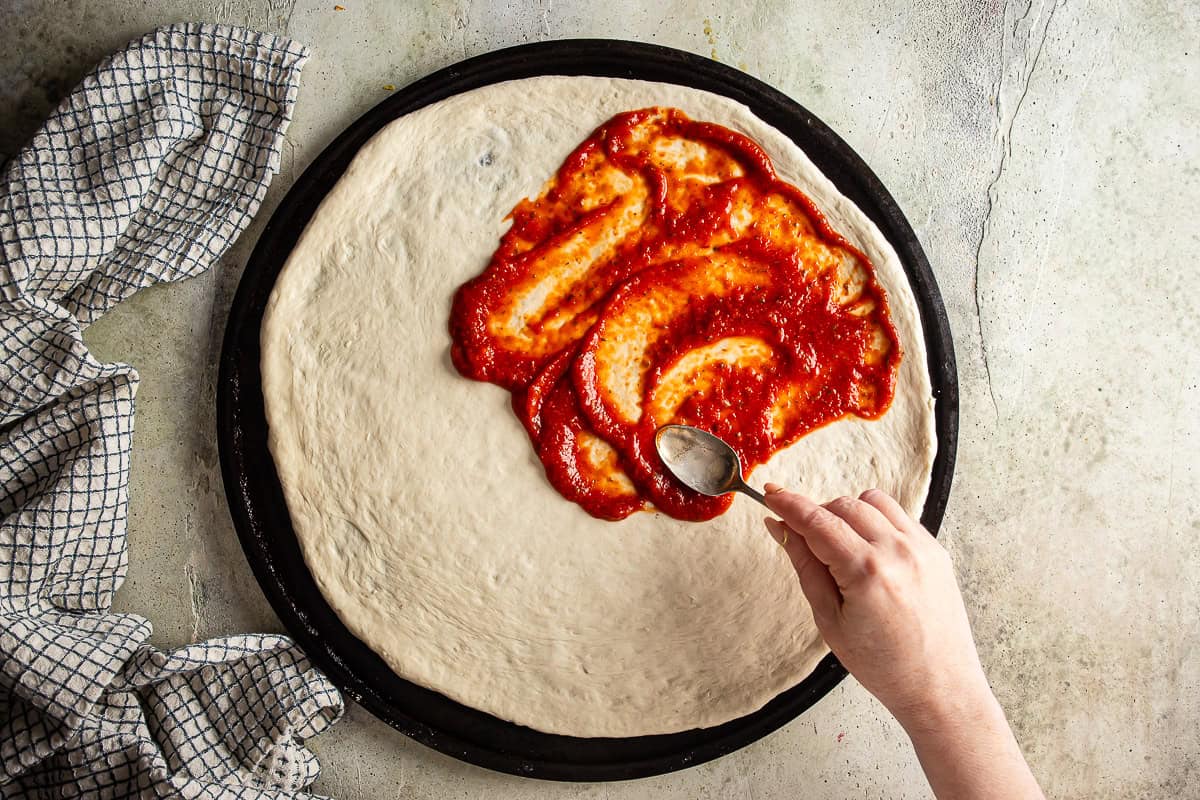
Spread a thin layer of tomato sauce over the unbaked crust, leaving about a ½-inch border around the edge.
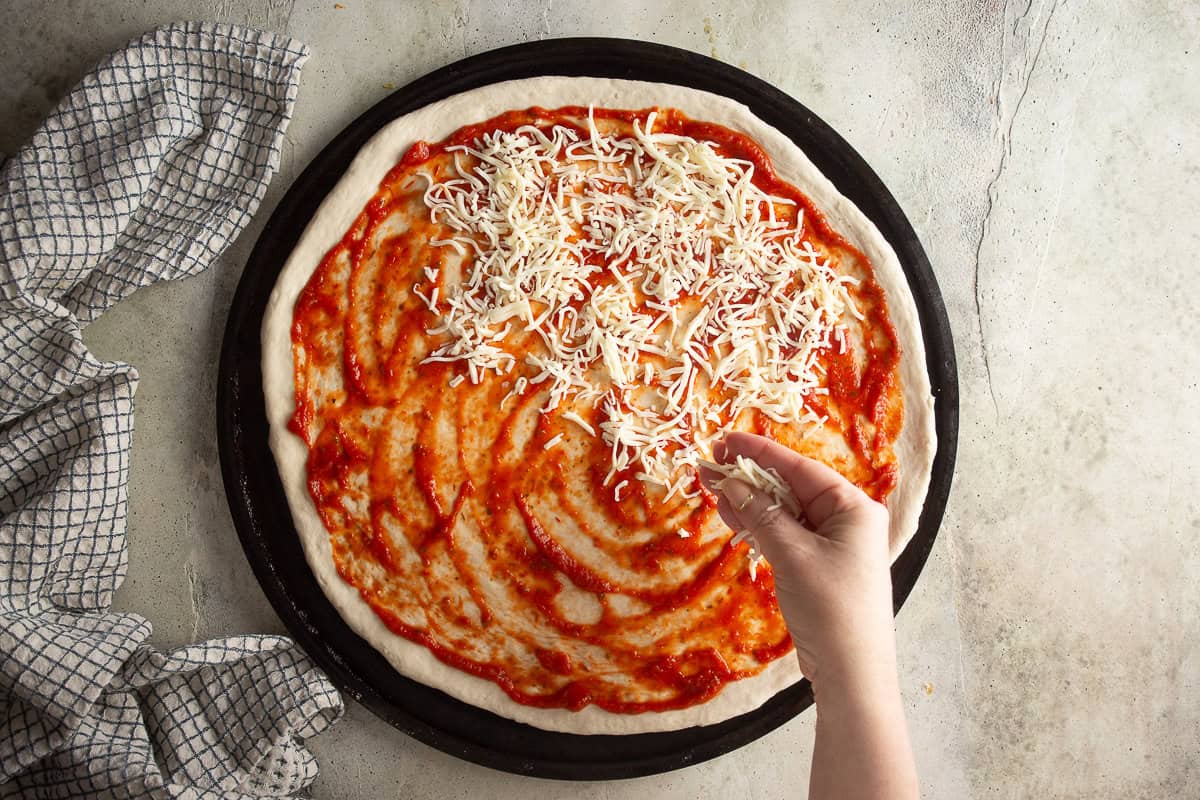
Sprinkle the shredded mozzarella evenly over the sauce.
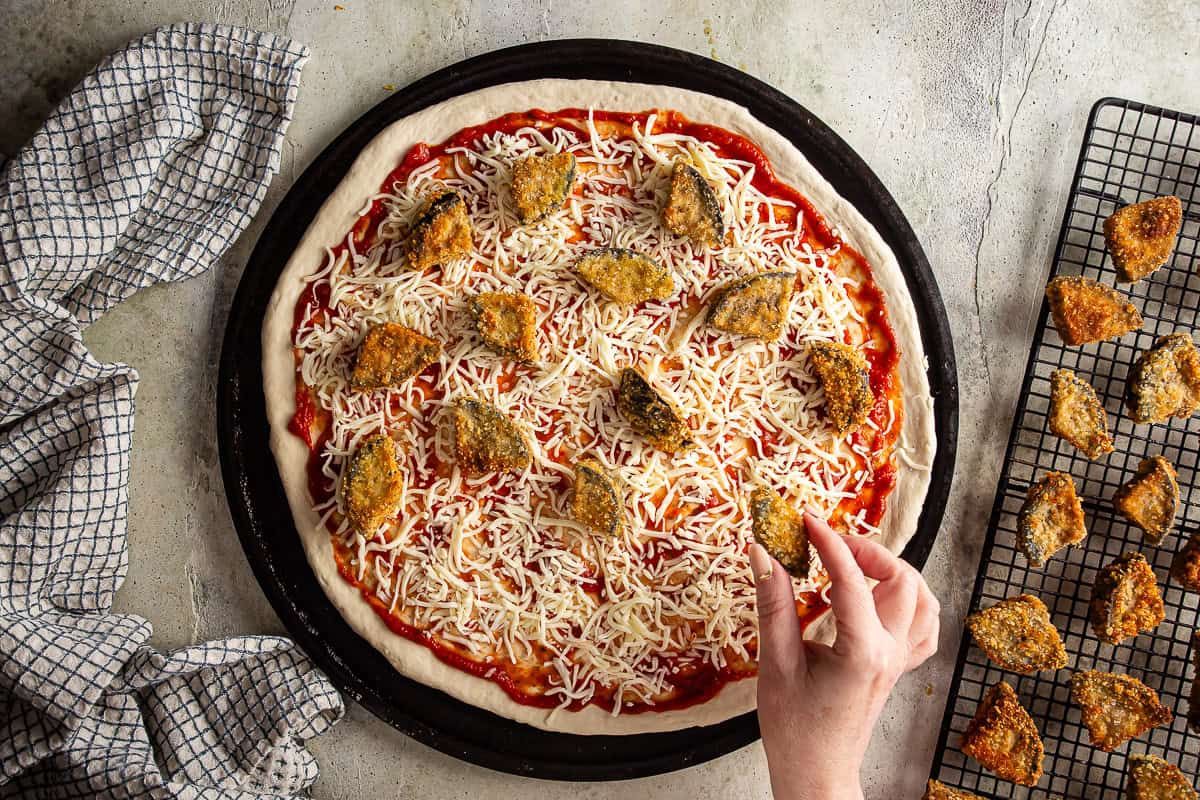
Add the crispy eggplant pieces.
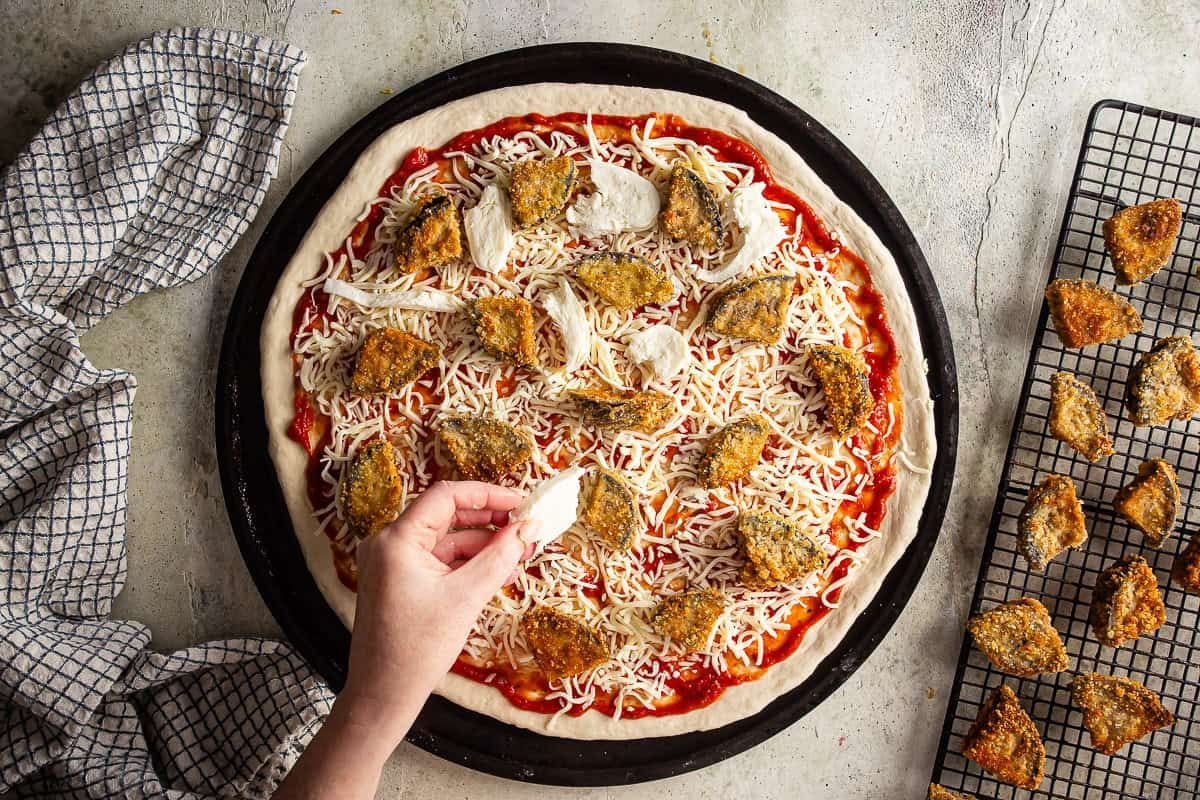
Next, tear the fresh mozzarella and tuck it into any empty spaces.
Bake until the crust is crisp and browned on the bottom and the cheese is melted, about 9 to 15 minutes.
Top with fresh basil leaves and grated Parmigiano-Reggiano.
Slice and serve hot.
Helpful Tips and Tricks
- Make sure the water for the yeast is warm, not hot. Water that is too hot can kill the yeast.
- Add the flour gradually. Pizza dough should feel soft and elastic, not dry or stiff.
- Fry the eggplant in batches so the oil temperature does not drop too much. This helps the coating become crisp instead of greasy.
- Use a wire rack after breading the eggplant. It helps the coating set and keeps the pieces from getting soggy before frying.
- Bake the pizza on a preheated pizza stone or steel for an extra-crisp crust.
- Add the basil after baking, so it stays bright and fresh.
More Pizza Recipes
- Jalapeno Popper Pizza
- Philadelphia Tomato Pie Pizza
- Margherita Pizza Recipe
- Corn Pizza
- Barbecue Chicken Pizza
- Chicken Bacon Ranch Pizza
- Detroit-Style Pizza

Ingredients
For the Crust
- 1 teaspoon (4 g) granulated sugar
- ¾ cup (177.44 g) warm water, (approx. 105 degrees F)
- 1 teaspoon (3.11 g) dry active yeast, (approx. ½ packet)
- 2 cups (250 g) bread flour*, (approx.; you may need slightly more or less)
- 1 ½ teaspoons (6 g) extra-virgin olive oil
- ½ teaspoon (3 g) kosher salt
- ¼ teaspoon (0.75 g) garlic powder
For the Toppings
- 1 (458 g) eggplant, small
- ¼ teaspoon (0.75 g) garlic powder
- ⅛ teaspoon (0.25 g) ground black pepper
- ¼ cup (31.25 g) all-purpose flour
- 2 (88 g) eggs, large
- ½ cup (54 g) plain dry breadcrumbs
- ½ cup (30 g) panko breadcrumbs
- 1 teaspoon (2 g) Italian seasoning
- oil, for frying
- ⅓ cup (81.67 g) tomato sauce
- 1 cup (112 g) shredded mozzarella cheese, (I use whole milk mozzarella but part-skim will work too)
- 4 ounces (113.4 g) fresh mozzarella cheese, sliced
- 1 bunch (8 g) fresh basil leaves
- Parmigiano-Reggiano, grated
Instructions
To Make the Dough
- Place the sugar and warm water in a large mixing bowl and stir together to combine.
- Sprinkle the yeast on top and allow it to dissolve.
- When the mixture looks foamy (after approx. 5 to 10 minutes), stir in 1 ½ cups of the flour until incorporated.
- Stir in the olive oil, salt, and garlic powder.
- While continuing to mix, add in more flour until the dough gathers itself into a ball and pulls away from the sides of the bowl cleanly. (You may need slightly more or less flour; use your judgement.)
- Knead the dough until it passes the windowpane test** (approx. 10 minutes).
- Lightly mist the bowl with non-stick spray, place the dough back in, and cover the bowl with plastic wrap or a damp towel.
- Place the bowl of dough in a warm place and allow it to rise until doubled in bulk (approx. 45 to 90 minutes).
- When the dough has grown to twice its original size, punch it down, knead it a few times, and stretch/press/roll it into a thin, wide circle.
- Layer with the toppings.
To Top the Pizza
- Cut the eggplant into ¾-inch thick slices, then chop into bite-sized chunks.
- Season with salt, garlic powder, and pepper.
- Sprinkle with flour and toss to coat.
- Beat the eggs in a large, shallow bowl.
- Combine the breadcrumbs, panko, and Italian seasoning in a large, shallow bowl.
- Working in small batches, coat the eggplant chunks first in egg and then in the breadcrumb mixture. Place on a wire rack.
- Heat about ½-inch of oil in a large, heavy-bottomed pot over medium heat until it reaches a temperature of 325 to 375 degrees F.
- Working in small batches, fry the breaded eggplant until crisp and golden on both sides. Drain on paper towels.
- Preheat the oven to 500 degrees F.
- Spread a thin layer of tomato sauce over the unbaked crust, leaving a clean margin of about ½-inch around the edge.
- Sprinkle on the shredded mozzarella in an even layer.
- Layer on the eggplant, then tear the fresh mozzarella into pieces and tuck it into any empty spaces.
- Bake until crisp and browned on the bottom (approx. 9 to 15 minutes).
- Top with fresh basil leaves and grated parmigiana reggiano, then slice and serve.
Notes
Author

More Italian Recipes
Have a question about this recipe? Ask AI:
Could you give metric measurements alongside your recipes …I find with ‘cups’ it’s easy to get the weights wrong but with grams you can’t go wrong.
I love your recipes but this would make them much easier to follow.
Maybe a toggle to switch from cups to grams?
??
Of course; happy to provide that info. The recipe has been updated as per your request. Thanks for reading!
How much mozzerella cheese is needed?
1 cup- so sorry for the omission!