

Soft Whole Wheat Bread
As an amazon associate I earn from qualifying purchases.
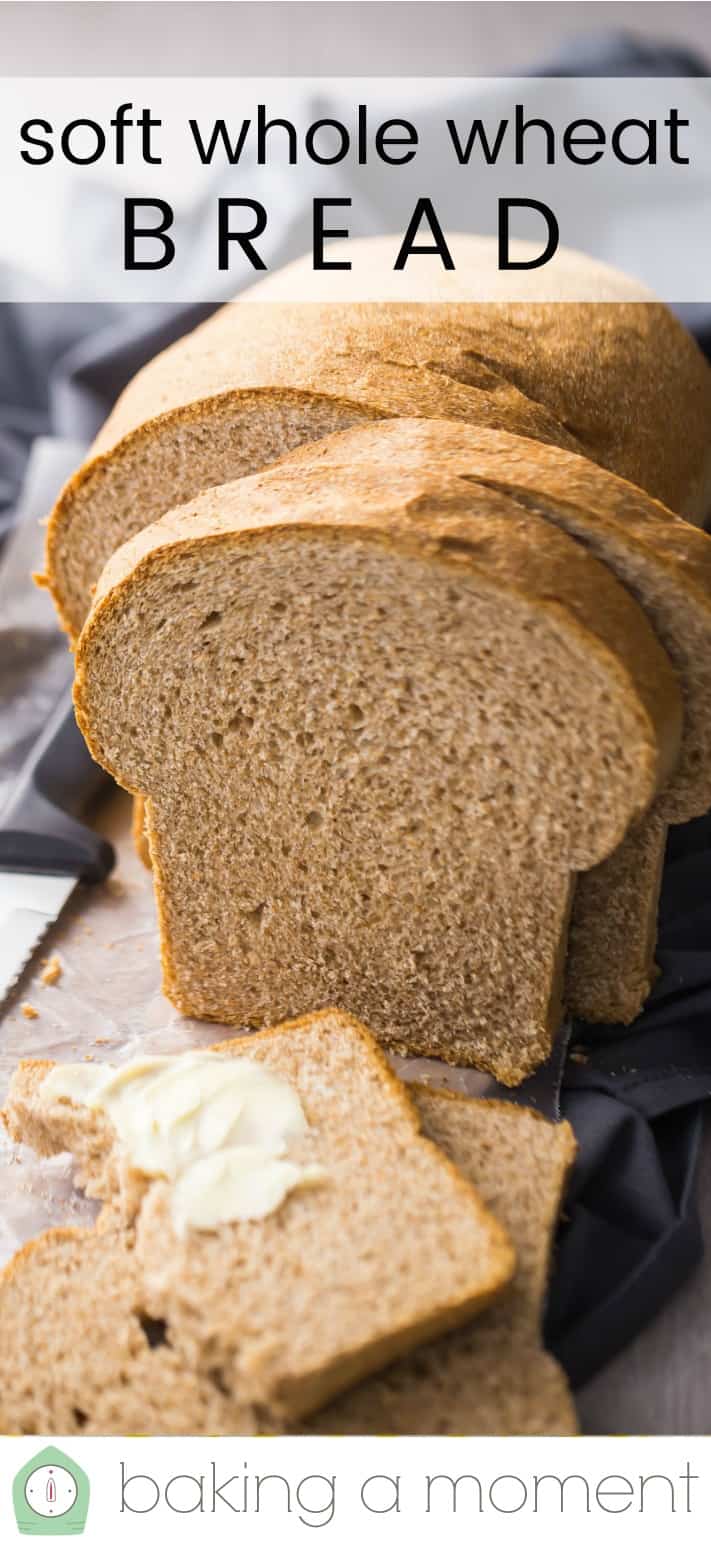
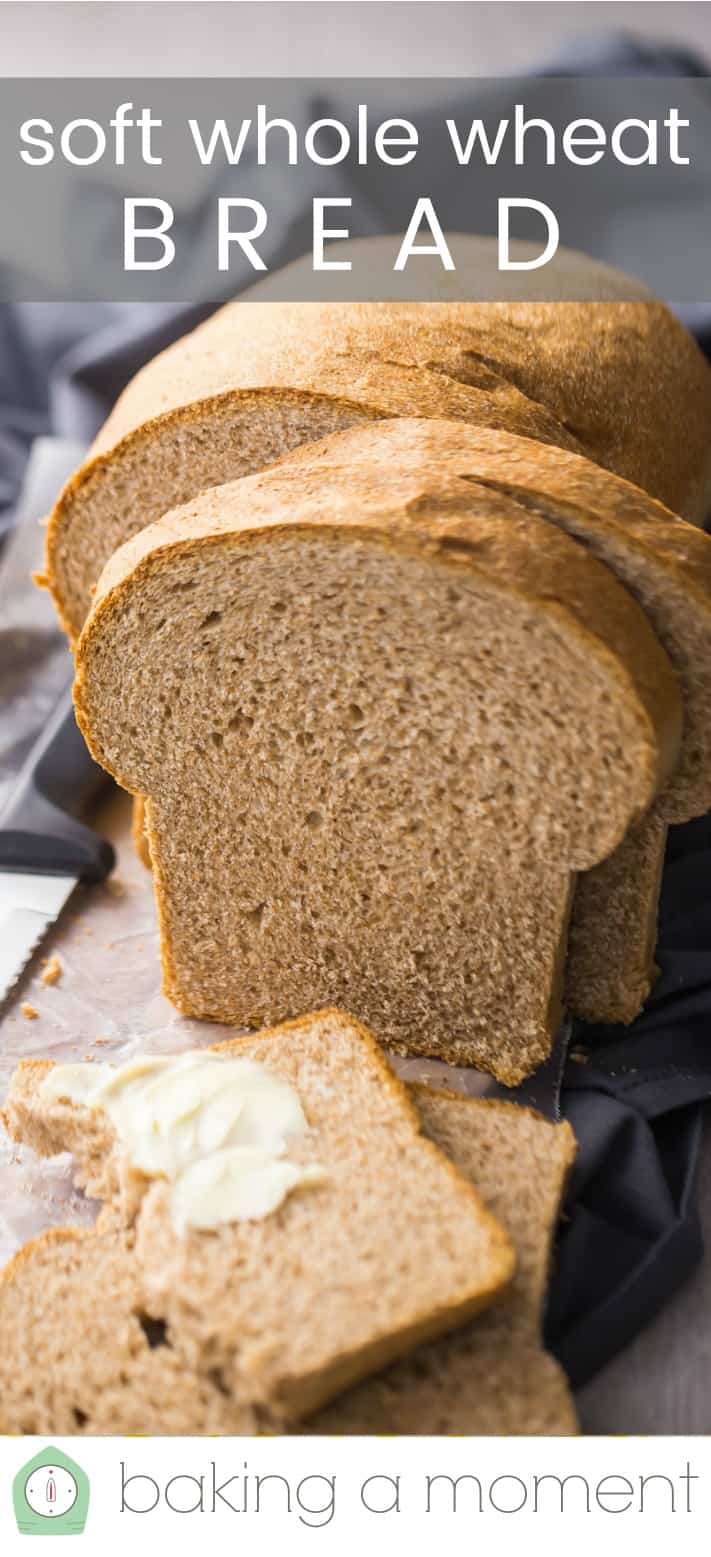
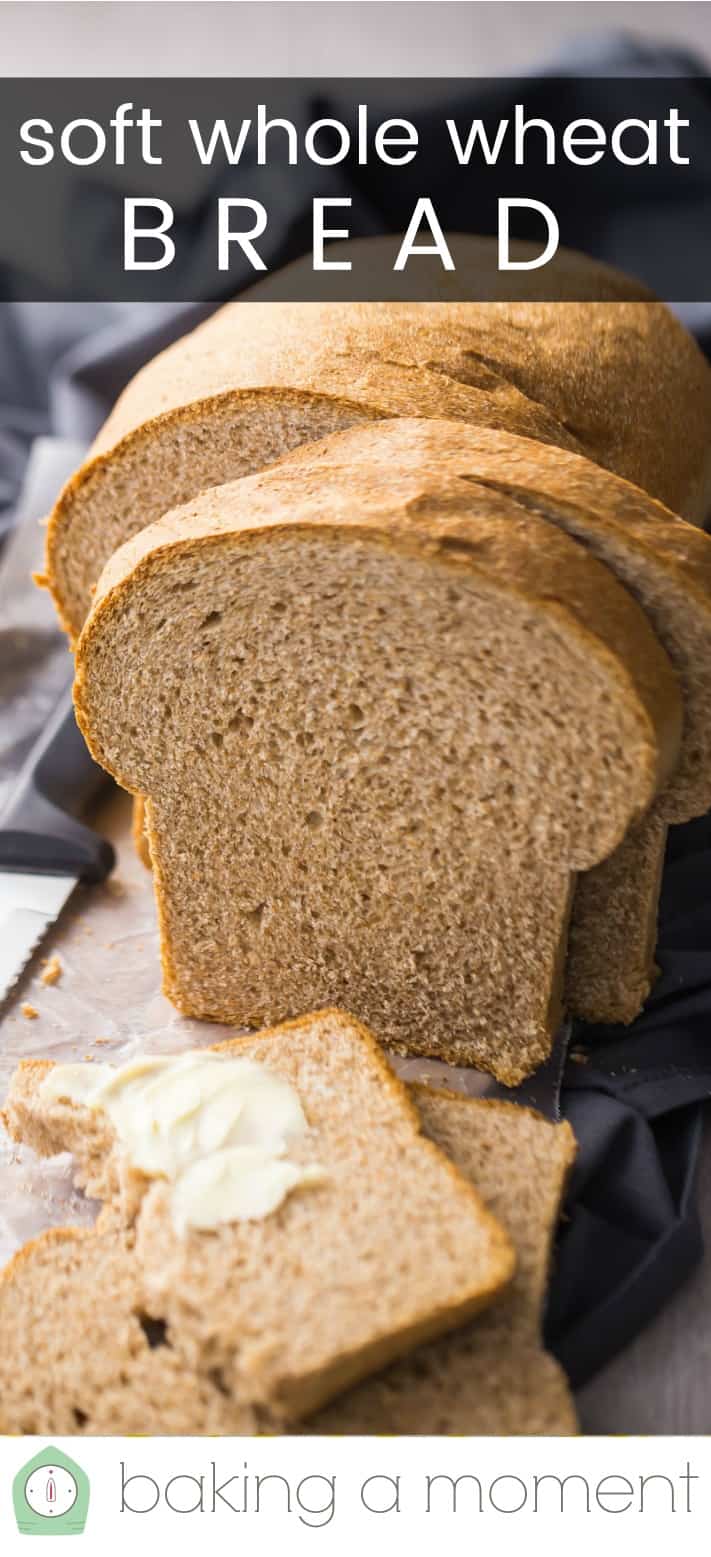
You won't believe how easy it is to make homemade whole-wheat bread! This recipe bakes up soft and is perfect for sandwiches.
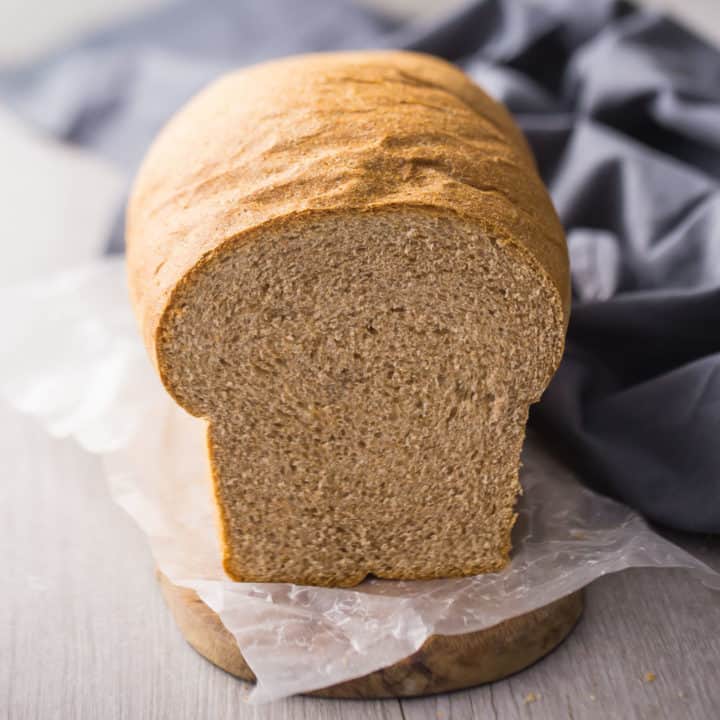
Have you ever made homemade bread?
I have to say I find it one of the most rewarding things to do. It can be a labor of love, but it is so satisfying. It's guaranteed to make you feel super proud of yourself!
And honestly, the taste can't be beaten. So much better than store-bought!
I have a handful of great bread recipes on this site, like these homemade crescent rolls, this cinnamon bread, and these soft overnight brioche buns.
But the most versatile, everyday recipe of all would have to be this soft whole wheat bread. In my family, it's our go-to!
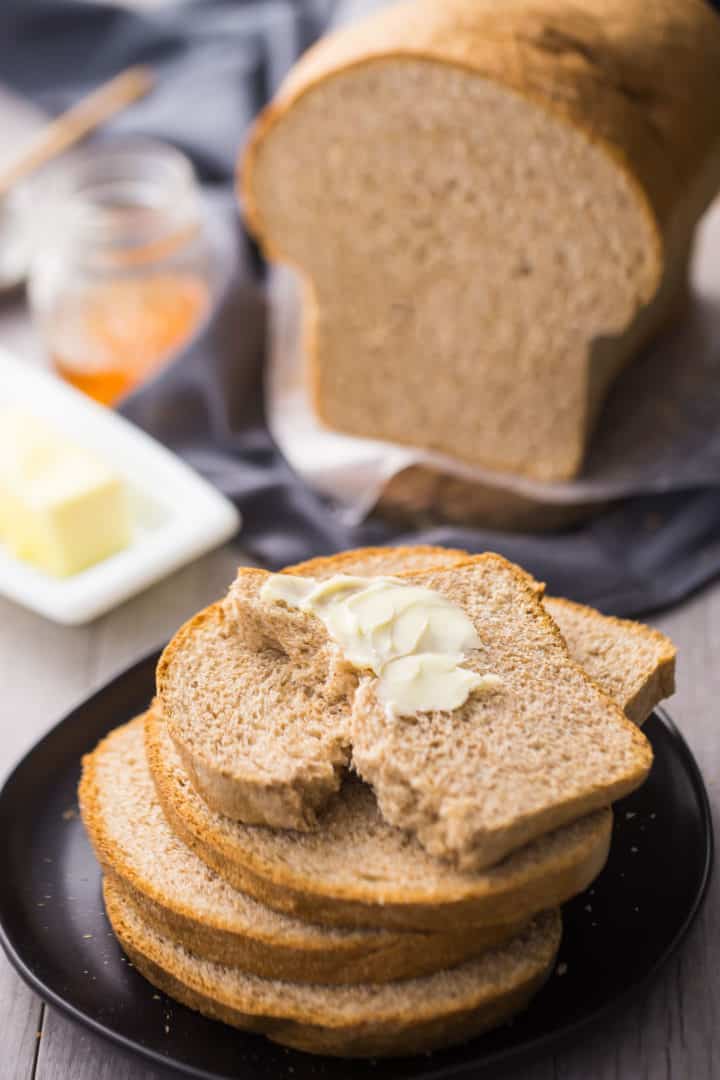
We love it because it's so soft, pillow-y, and moist, with just a bit of nuttiness from the whole grains. It's a perfect everyday loaf!
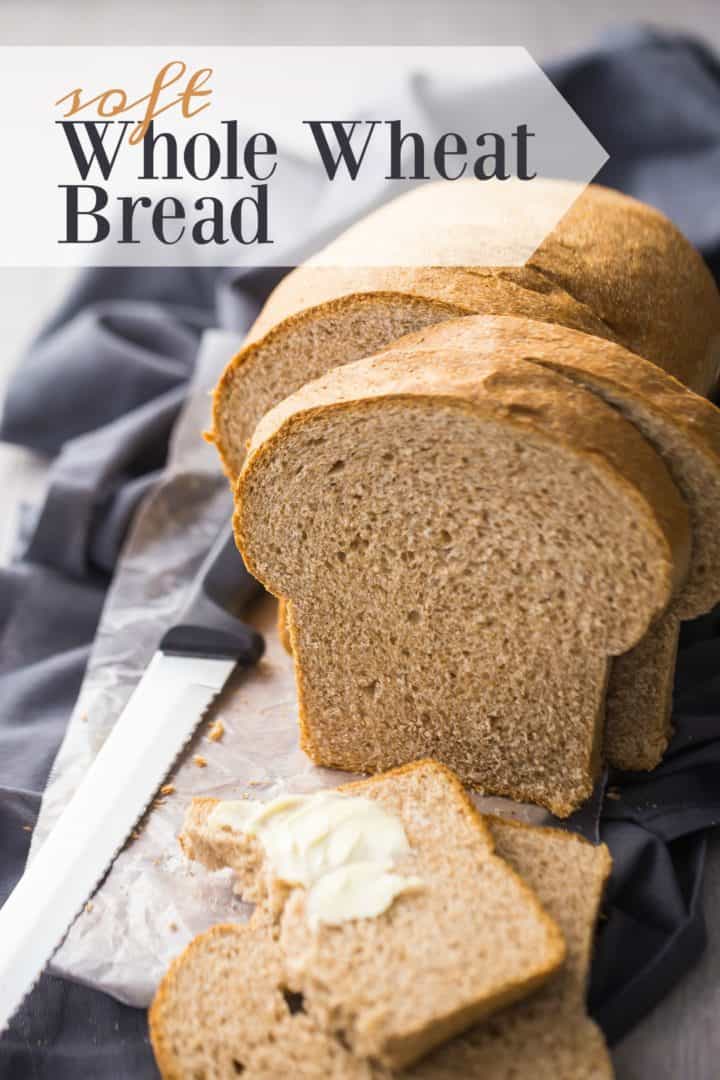
Is whole wheat bread healthy?
Bread is carbs; there's no way around that, even when it's 100% whole wheat!
But wheat bread is a much healthier alternative because whole wheat flour has a lot more fiber and nutrition than the more processed white flour bread.
Whole wheat bread ingredients
There are just 6 simple ingredients in this recipe.
Here's a quick rundown, with explanations and substitution recommendations:
Water: Water brings the yeast to life and hydrates the bread. You'll need warm water to dissolve the yeast.
It should be warm but not hot, like a baby's bath. Aim for around 105 degrees F.
If the water is too hot, it can kill the yeast.
Yeast: I prefer active dry yeast for bread baking. It allows a slow enough rise for the flavor to really develop, and it's easy and convenient to buy and store.
Instant yeast is another option. If you go this route, you'll only need 0.75x the amount, and you can cut the rise times down by 15 to 20 minutes.
Either way, be sure to check the expiration date on the packet and make sure it hasn't past. If it has, the yeast could be dead and your bread won't rise properly.
Honey: Honey is used to feed the yeast as well as to flavor the bread. You can use any type of honey that has a flavor you enjoy.
The final result won't taste sugary like a dessert, but it will have a slight sweetness to it.
Or, you can use a different kind of sweetener, such as white sugar, brown sugar, maple syrup, or agave nectar.
Butter: Butter provides a richer flavor to this bread.
I like to use unsalted butter because it lets me control the amount of salt in the dish. Different brands of butter contain different amounts of salt, so this way you get a more consistent result.
Flour: This recipe is made with 100% whole wheat flour.
To make white bread, check out this recipe: Soft White Bread.
If you'd like, you can play around with other types of flour. You may be able to find some good tips on that in the comments below.
Salt: Salt carries all the flavors and intensifies them. It adds a slightly savory taste as well as making everything so much more flavorful!
I like kosher salt best because it doesn't have any additives (table salt usually contains iodine and that can leave a bitter taste) so the flavor is pure, and it's very inexpensive and easy to find.
How to make soft whole wheat bread
Making homemade bread can often seem intimidating, but I promise you, this recipe is easy. It'll have you making homemade bread every week!
Start by dissolving your active dry yeast in a little warm water in a large bowl.

This usually takes about 5 minutes. Make sure the yeast hasn't passed its expiration date!
Once the yeast mixture looks frothy, throw in the honey and melted butter.

Then add just 2 cups of flour, along with the salt.
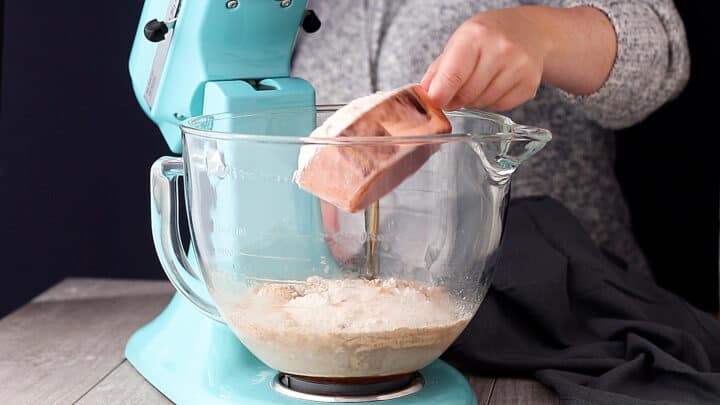
Beat that for about 3 minutes, then add more flour until you see the dough forming a ball.
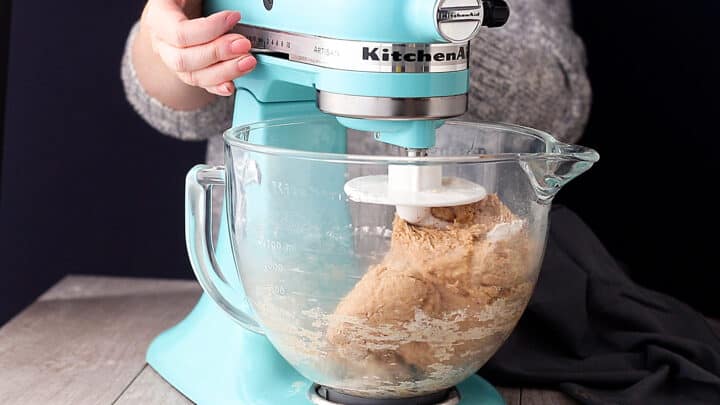
Once that ball of dough is pulling away from the sides of the bowl cleanly, it's time to knead.
You can knead this bread dough by hand or let your mixer do the work for you.
I kind of like kneading by hand. But sometimes I'm too busy, and I leave it in the mixer so I can do other things. Either way will work!
If you're kneading using the stand-mixer, keep it on low speed.
After about 10 minutes of kneading, you'll see that the dough looks smooth and elastic.
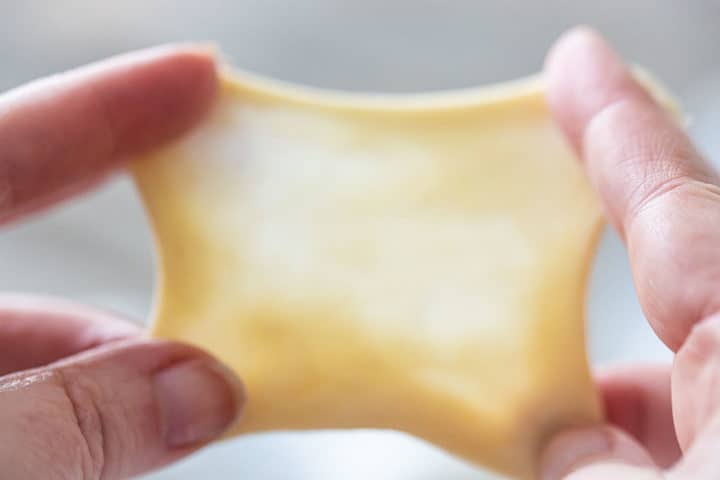
Perform the windowpane test: Pinch off a little piece of dough and using your fingertips, stretch it gently from the center outward. You should be able to pull it pretty thin without it tearing. If you can see light passing through it, just like a windowpane, you know you've done a good job kneading!
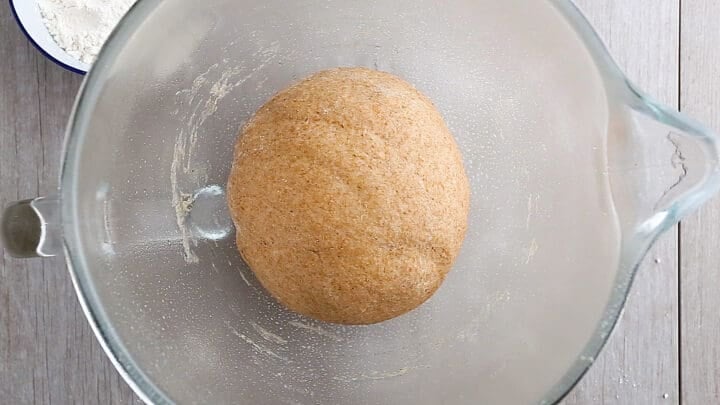
Mist your mixing bowl with non-stick spray, pop in the dough, mist the top of that too, cover with plastic wrap, and allow it to proof (aka: rise).
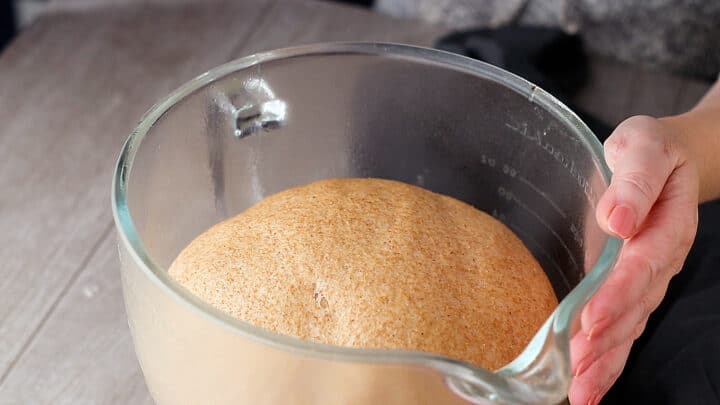
About 30 to 45 minutes later, you'll see that the dough has grown to double what it was before.
Punch it down, form it into a loaf shape, cover it, and let it rise a second time.
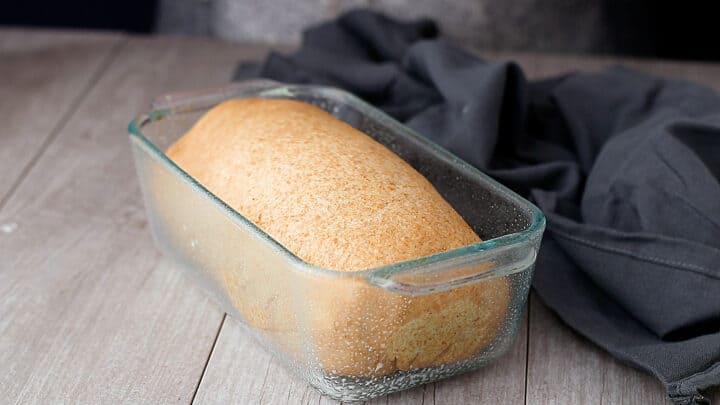
Once again, it should be double its original size.
Bake the bread until it's puffy, golden brown, and gives a hollow sound when tapped.
Expert tips
How Much Flour Do You Use
When making bread, the amount of flour to add is only an estimate. It can vary based on several different factors.
You'll probably need anywhere from 3 ¾ cups of flour to 4 ½ cups flour to make this bread. Start with 3 ¾ cups of flour, and add more, if needed up to 4 ½ cups.
You'll know you're done adding flour when the dough starts to pull away from the bowl. It should feel slightly sticky. If it's too sticky, keep adding more flour.
How Long to Knead The Bread Dough
Crumbly bread is a result of not enough kneading.
If you are using your hands to knead the dough, you will need to knead the dough for about 10 minutes or until the dough has an elastic feel. However, if you prefer a stand mixer, you can use the dough hook and knead for about 8 minutes.
Once the dough is smooth and elastic, and it passes the windowpane test, you have kneaded your dough enough. If it doesn't pass the windowpane test, keep kneading until it does.
This will produce that stretchy, elastic texture that's so satisfying.
How Long Does The Dough Need to Rise
This bread dough requires two rises.
The amount of time needed can vary based on the temperature in your kitchen. You'll want to look for the dough to double in bulk. It should get all puffed up with air.
Then you'll punch the dough down, place it in a bread pan, and proof it again until doubled.
If it doesn't get enough time to rise, it will have a tight, gummy texture. If it rises for too long, the gluten structure will weaken and the bread won't puff up as it bakes.
Either way, the bread will bake up smaller than it should, so just keep your eye on it and when it's twice its original size, it's time to move on to the next step.
How to know when the bread is done baking
This bread is ready when it looks golden brown and puffy. It should sound hollow when you give it a light tap.
The bake usually takes around 40-45 minutes in an oven preheated to 350 F, but keep in mind that this can vary and you should really look out for those sensory signs and not rely solely on the times given.
Frequently Asked Questions
What is the best type of flour to use?
There are lots of different flours available for bread baking.
You can use white whole wheat flour, all-purpose flour, and bread flour instead of whole wheat flour if you choose.
The best flour to use has a high vital wheat gluten content.
However, this recipe is for whole wheat bread. So the best flour to use for an authentic whole wheat bread recipe is (naturally!) whole wheat flour.
What type of pan is best for baking bread?
I used a 9x5 glass loaf pan to develop this recipe.
A 9x5 inch metal or silicone non-stick loaf panwill also work, but that could affect the baking time. You may want to increase the temperature by 25 degrees F and decrease the bake time by about 10 minutes if you use metal instead of glass.
How to serve 100% whole wheat bread
Besides just eating it warm from the oven, this homemade whole wheat bread can be enjoyed in many ways.
It's perfect for sandwiches because of its soft, pillow-y texture.
And it toasts beautifully! I love to slather it with butter and give it a sprinkling of cinnamon sugar or a swipe of jam or marmalade. That plus a cup of hot, milky tea, I'm in heaven.
You could also use it as a base for your avocado toast!
If you have leftovers and they're starting to get a bit dry, use them for French toast or bread pudding, or whiz them up in the food processor to make bread crumbs.
How to make vegan whole wheat bread
To make a vegan version of this soft wheat bread, substitute the butter for a vegan butter substitute. Look for one that swaps 1:1 for dairy butter.
And the honey can be replaced with an equal amount of brown sugar, agave nectar, or maple syrup.
How long does homemade wheat bread last?
Homemade bread doesn't last quite as long as store-bought, and that's because it doesn't have all those artificial preservatives to keep it shelf-stable.
Once this bread is completely cool, slip it into a plastic bag or airtight container to keep it from drying out. Then keep it in the fridge. It should last for at least a week.
You can also freeze it! I'd recommend slicing it first, so you can grab a slice or two from the freezer whenever you need it.
It thaws very quickly. Probably just a few minutes or so at room temperature. Or pop it into the microwave for around 10 or 15 seconds.
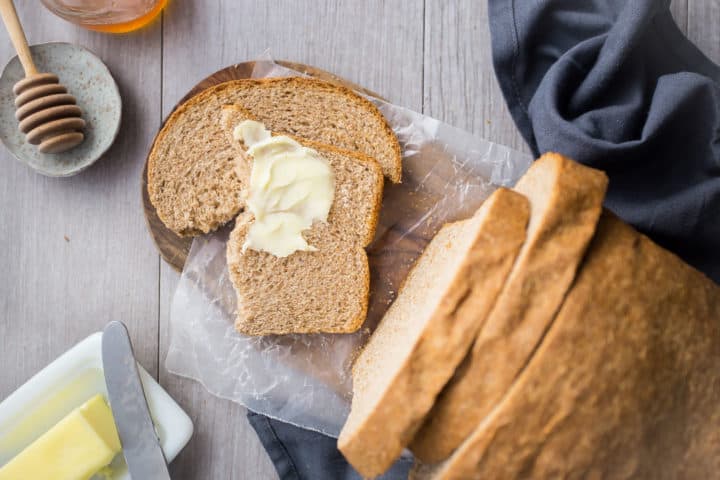
Treat your family to a homemade loaf this week! It's easy, fun, and so delicious!
As an amazon associate I earn from qualifying purchases..
Ingredients
- 1 ½ cups (354.88 g) warm water
- ¼ cup (84.75 g) honey
- ¼ ounce (7.09 g) active dry yeast* , (1 packet)
- 3 tablespoons (42 g) unsalted butter,, softened
- 3 ¾ cups (450 g) whole wheat flour, (you may need as much as 4 ½ cups)
- 1 teaspoon (3 g) kosher salt
Instructions
- Place the warm water and honey in a large bowl and sprinkle the yeast on top. Set aside for 5 minutes to allow the yeast to dissolve.
- Add the butter and blend in 2 cups of the flour and the salt until moistened.
- Beat on medium speed for 3 minutes.
- Stir in an additional 1 ¼ to 1 ¾ cups flour, until dough pulls away cleanly from the sides of the bowl.
- Knead on floured surface, adding ½ to ¾ cup additional flour, until dough is smooth and elastic, about 10 minutes.
- Place dough in large greased bowl and cover loosely with plastic wrap. Let rise in warm place until doubled in size, 30 to 45 minutes.
- Lightly mist a 9x5-inch loaf pan with non-stick spray.
- Punch down the dough and shape it into a loaf.
- Place in prepared pan, cover loosely with greased plastic wrap, and let rise in warm place until doubled in size, 30 to 45 minutes.
- Preheat the oven to 350°F.
- Uncover dough, and bake until the bread reaches an internal temperature of 190 degrees F (approx. 40 to 45 minutes).
Notes
Author

More Allergen Free




Have a question about this recipe? Ask AI:
This recipe makes just one loaf correct?
That is correct.
Can I make this bread in a Dutch oven? Thanks
I have not tried that myself so I can't say for sure, but feel free to experiment! Good luck!
So there are 2 times that you let the dough rise 30 to 45 minutes? I have never made homemade bread before. Also, is there a special thermometer to tell you how warm the water is that you sprinkle the yeast into? Thank you!
Hey Kathy! Yes this bread needs 2 rises, one before and one after shaping the dough. You could use a thermometer to test the water, but I usually just aim for a little above body temperature. When you feel it with the inside of your wrist, it should be slightly warm but not hot. Similar to the temperature of a baby's bath. Hope that's helpful! Good luck!
Can I substitute kosher salt with regular salt? If yes,will it be the same amount as Kosher salt?
This is the best wholemeal bread I have made to date! However, I find the bread a bit sweet. Is it possible to reduce the honey?
Very happy you enjoyed. Feel free to play around!
Do you need a mixer with a bread hook to make this?
Not at all! You can mix this dough by hand; it works very well. Good luck!
Made this today! Turned out great. Can’t wait to go through the rest of your blog and try more recipes!!
Awesome! So glad it worked well for you Kellie!
Hello. I just tried your recipe, and it turned out pretty dense and didn't rise much. I'm sure it was something that I did or didn't do. I don't have a standing mixer, so I used my hands to finish incorporating the flour. I did forget the salt but followed all of the other instructions. I used a 9x5 loaf pan. How do I make it so it'll turn out like it's supposed to? Thanks.
Hey there, so sorry to hear you had trouble. I just gave a quick skim through the comments and since almost all of them were positive, I can't help thinking the culprit must have been your yeast.
When making bread, it's important that the yeast is not past its expiration date.
Also, you want to be sure to keep everything at the proper temperature.
If the water is too warm, it can kill the yeast. If you don't see it foam up like it does in the video, that is your tip-off that it's dead.
If the environment is too cool, it will need a lot longer to rise and proof. Rising times listed are approximate, and can be impacted by temperature. Notice in the video how the dough has doubled in size after the first proof. If your dough has not doubled, it needs more time- don't proceed with the next step until you have the proper result.
Hopefully this info is helpful and you will have better luck the next time.
Hello there! I am eager to try making this recipe- the bread looks delicious and achievable for an amateur baker such as myself. I am wondering if there is a way to add oats to the top and/inside the bread? And if so, what measurement for the oats would you suggest? I imagine for the top, you could brush the top of the loaf with an egg wash and shake out your desired amount for the top. Yet I am curious about the amount in the loaf!
I'm afraid I have not tested this recipe with oats, so you'd have to play around and experiment. Good luck!
Hi ,will warm water will be enough to proof yeast...or should I add sugar as well...
Hey there! Just check out the recipe card at the bottom of the post- all that info is there.
Hi Allie ,your recipe is superb..my bread turned out fantastic..it was soft and fluffy..not dense at all..
So glad to hear it! Thanks so much for the 5-star review!
Do you know if this can be made in a bread machine?
I've never really used a bread machine, so I can't say for sure, but I would think so!
I went to peek at my bread when there was 20 mins left and it sunk in the middle a little bit. Is this normal? I'm new to making my own bread so I have no idea what I did wrong? Any suggestions for next time?
Hey Heather- so sorry you had trouble! When you peeked, did you open the oven door? If so that will let out a whoosh of heat and that can make things sink if the structure isn't fully set yet. If you need to check on something, I'd recommend waiting until closer to the end of the suggested bake time, or just flipping on the oven light and looking through the door, instead of opening it. Hopefully you'll have better luck next time!
I looked with the oven light. I'll try it again soon!
Breads that have 100% whole wheat flour (rather than a blend of whole wheat and white) have a tendency to sink in the middle part way through baking. There are 2 common reasons for this: not enough gluten development (ie. it isn't strong enough to hold in all of the CO2 from the yeast) and overproofing (ie. your 2nd rise was too long and it deflated).
Try reducing your 2nd rise so that the dough has increased in volume by 75% rather than 100% (ie. not quite double), since that will be the easiest change to make. Since I started doing this, my top crust has been getting less brown, too, since it's not getting as close to the heating element.
If you're using a stand mixer, its easier if you try a different mixing method for gluten development. Add water, honey, yeast, and 3/4 of the minimum amount of flour you're expecting to use and mix it until the flour is completely hydrated. Cover (a damp towel draped over the bowl is fine) and let it rest for 20 minutes (this is called 'autolyse', it's supposed to activate some of the gluten as it sits there and hydrates). Turn the mixer on the lowest setting and let it go until it gets really elasticy (about 10 minutes). When the hook grabs a bit of dough on the side of the bowl and see how long it goes before it breaks; the longer it goes, the more elasticy its getting. Add in the remaining flour and salt in 2-3 additions (to avoid a flour storm). Knead until the dough at the bottom pulls away from the bowl cleanly (I pull it off the hook a few times during this process to make sure its getting evenly worked). If it doesn't pull away cleanly after about 5 minutes, add in little extra flour (like < 5g per addition). You want the dough to feel moist but release fairly cleanly from your hands.
Great info! Thanks so much for sharing your knowledge!
I’m making this now and have a question. If I’m making I. The evening for fresh bed in the morning should I 1) put in fridge to finish in morning or 2) leave to rise overnight or 3) bake and leave out overnight?
You can bake it and leave it out overnight, or you can refrigerate it after step 8 and finish it within 48 hours. Good luck!
Is the serving size one slice or two?
I had one slice in mind when I wrote the recipe, but honestly it's not an exact science because the calorie count will really depend a lot on how thick you slice the bread. If you get 12 slices out of this loaf, then the nutrition info will be accurate for one slice.
What would be a good substitute for honey? I got all the ingredients yesterday and was sure I had honey at home but now can’t find any 🙁
You can just use the same amount of sugar. White or brown, either will work! Good luck and enjoy!
Do you need a standing mixer to make this bread? Is there some other way to "blend" the ingredients?
You do not need a stand mixer- you can mix the dough by hand if you like. Good luck!
I'm looking for a good sugar free or low sugar bread recipe. Could I omit the honey?
I think you could probably decrease it a bit, but yeast needs a little bit of sugar to feed on. Good luck!
If you want sugar free, use a white bread recipe. You literally only need 5 ingredients: water, yeast, fat (optional, but it helps the bread stay soft), flour, salt. It's a common myth that yeast needs sugar to feed on, but it can eat flour (carbs are just a complex sugar, that's why we like them so much!).
Recipes that use 100% whole wheat flour will taste very unpleasant without sugar.
I baked this yesterday. Absolutely loved it. How much salt would you add(and remove honey i guess?) if you wanted it salty? I want to try it salty too as it fits my taste better.
Hey there! So happy you liked the recipe! You can probably add more salt to taste, but I would not completely eliminate the honey because the yeast needs some sugar to feed off of. Maybe just try cutting it back a bit, and increasing the salt to your taste for a more savory flavor. Good luck!
You don't want to reduce honey very much because you'll probably find that the bread will have unpleasant taste without it. I tried cutting back to 2T of sugar as an experiment and the bread was borderline inedible. I found 3T to be a nice amount for a bread that uses 405g of whole wheat bread flour, so 1/4c might be just about right for the amount of flour this recipe calls for.
Also, you have to be careful about increasing salt in yeast breads because salt is a yeast inhibitor. Recipes will often call for it to be added as late as possible so that the yeast is well dispersed and has a bit of a head start before it comes in contact with the salt (even professional pastry chefs will stress this).
I never leave reviews, like legit this is my first one. But this bread is so freaking delicious, a little sweet and super soft. I’m so in love. I think mine could have cooked a bit longer, but I’m still working on learning how to make bread, so probably Just a noob error. I also made mine the vegan version with agave and butter sub. So good. THANK YOU For including what vegans can do to the recipe. As a new baker that is very much appreciated. ❤️
Thank you so much for reviewing the recipe Abigail! I appreciate it even more, knowing that is outside of your comfort zone. So, so thrilled you were happy with the recipe. It's one of my favorites!