

Soft Whole Wheat Bread
As an amazon associate I earn from qualifying purchases.
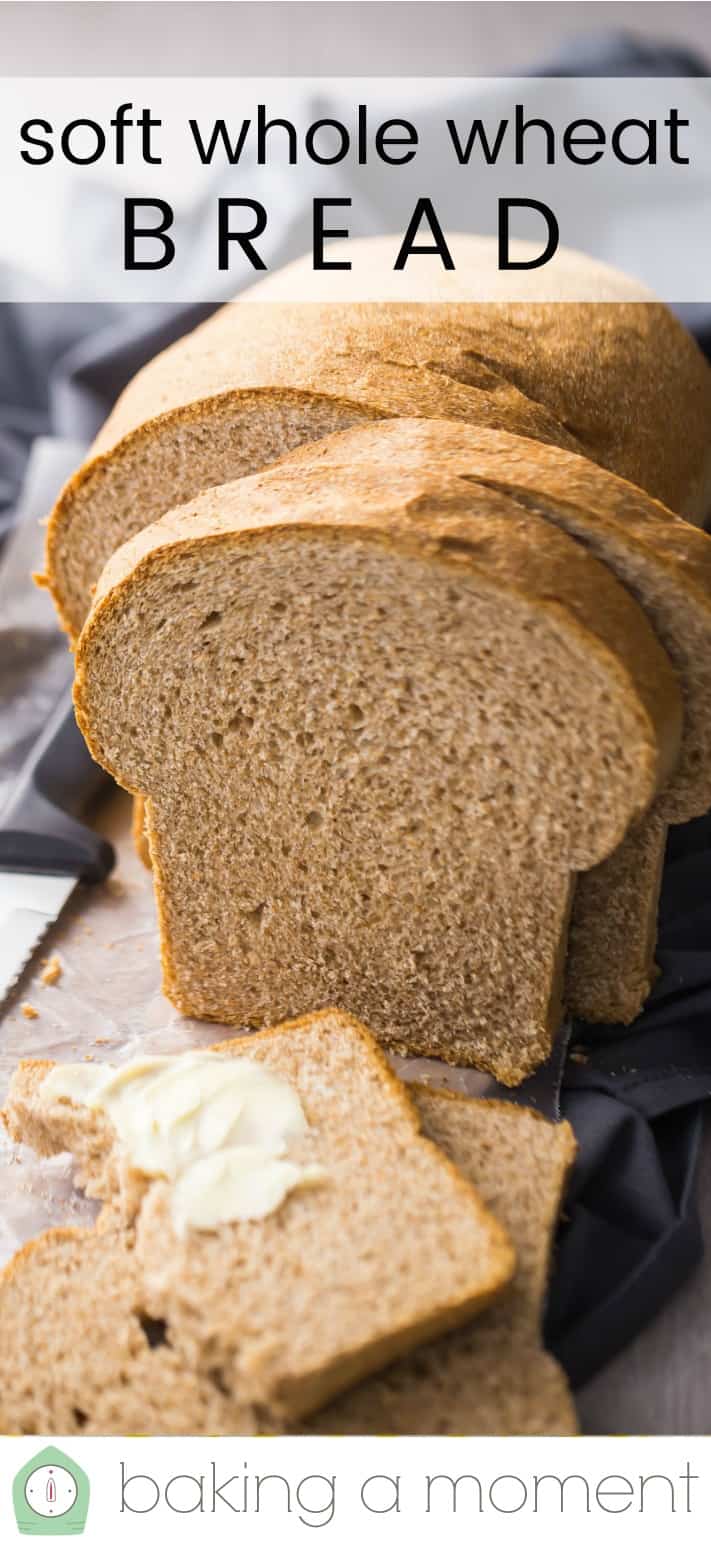
You won't believe how easy it is to make homemade whole-wheat bread! This recipe bakes up soft and is perfect for sandwiches.
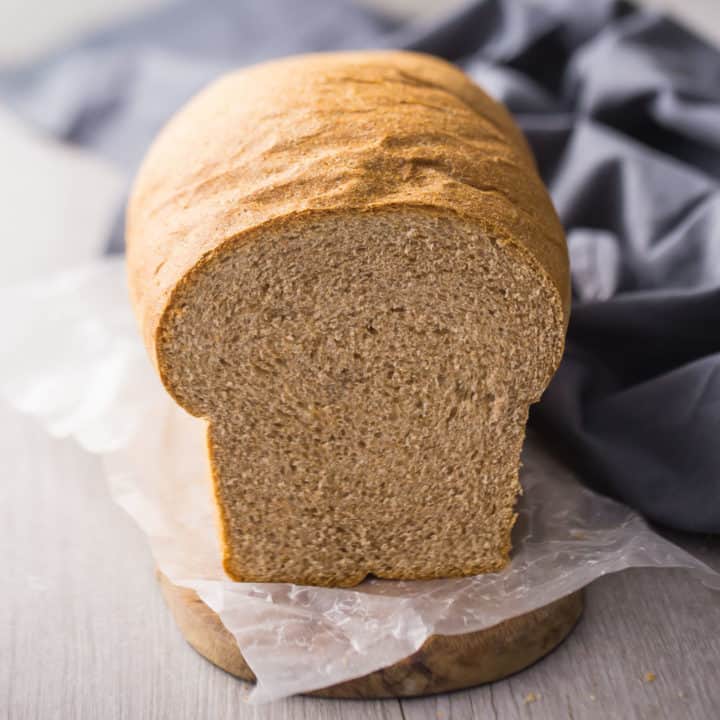
Have you ever made homemade bread?
I have to say I find it one of the most rewarding things to do. It can be a labor of love, but it is so satisfying. It's guaranteed to make you feel super proud of yourself!
And honestly, the taste can't be beaten. So much better than store-bought!
I have a handful of great bread recipes on this site, like these homemade crescent rolls, this cinnamon bread, and these soft overnight brioche buns.
But the most versatile, everyday recipe of all would have to be this soft whole wheat bread. In my family, it's our go-to!
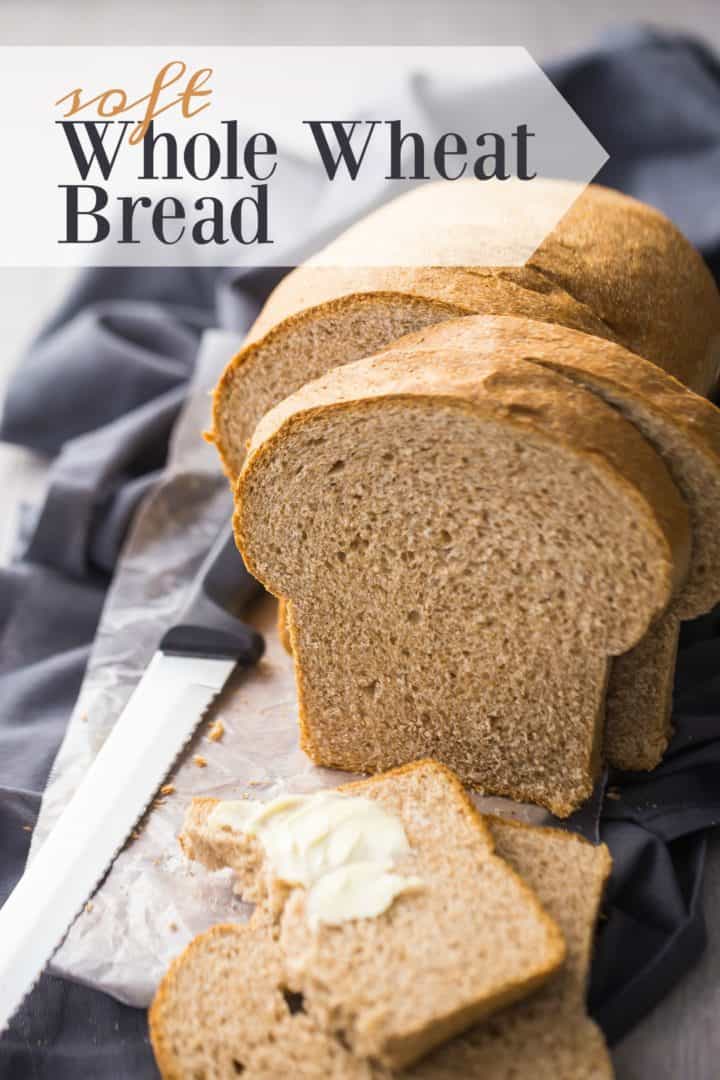
We love it because it's so soft, pillow-y, and moist, with just a bit of nuttiness from the whole grains. It's a perfect everyday loaf!
Is whole wheat bread healthy?
Bread is carbs; there's no way around that, even when it's 100% whole wheat!
But wheat bread is a much healthier alternative because whole wheat flour has a lot more fiber and nutrition than the more processed white flour bread.
Whole wheat bread ingredients
There are just 6 simple ingredients in this recipe.
Here's a quick rundown, with explanations and substitution recommendations:
Water: Water brings the yeast to life and hydrates the bread. You'll need warm water to dissolve the yeast.
It should be warm but not hot, like a baby's bath. Aim for around 105 degrees F.
If the water is too hot, it can kill the yeast.
Yeast: I prefer active dry yeast for bread baking. It allows a slow enough rise for the flavor to really develop, and it's easy and convenient to buy and store.
Instant yeast is another option. If you go this route, you'll only need 0.75x the amount, and you can cut the rise times down by 15 to 20 minutes.
Either way, be sure to check the expiration date on the packet and make sure it hasn't past. If it has, the yeast could be dead and your bread won't rise properly.
Honey: Honey is used to feed the yeast as well as to flavor the bread. You can use any type of honey that has a flavor you enjoy.
The final result won't taste sugary like a dessert, but it will have a slight sweetness to it.
Or, you can use a different kind of sweetener, such as white sugar, brown sugar, maple syrup, or agave nectar.
Butter: Butter provides a richer flavor to this bread.
I like to use unsalted butter because it lets me control the amount of salt in the dish. Different brands of butter contain different amounts of salt, so this way you get a more consistent result.
Flour: This recipe is made with 100% whole wheat flour.
To make white bread, check out this recipe: Soft White Bread.
If you'd like, you can play around with other types of flour. You may be able to find some good tips on that in the comments below.
Salt: Salt carries all the flavors and intensifies them. It adds a slightly savory taste as well as making everything so much more flavorful!
I like kosher salt best because it doesn't have any additives (table salt usually contains iodine and that can leave a bitter taste) so the flavor is pure, and it's very inexpensive and easy to find.
How to make soft whole wheat bread
Making homemade bread can often seem intimidating, but I promise you, this recipe is easy. It'll have you making homemade bread every week!
Start by dissolving your active dry yeast in a little warm water in a large bowl.
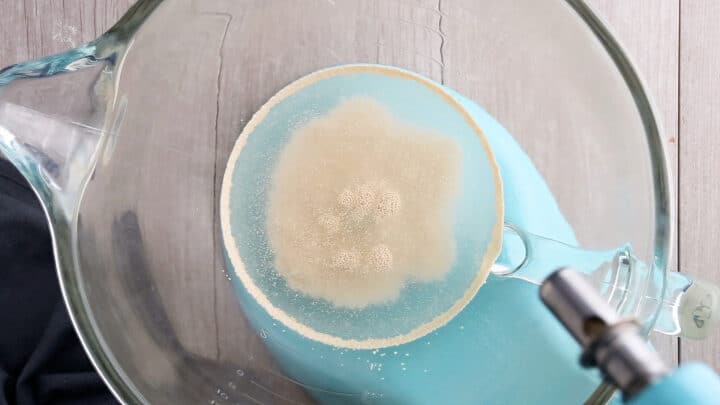
This usually takes about 5 minutes. Make sure the yeast hasn't passed its expiration date!
Once the yeast mixture looks frothy, throw in the honey and melted butter.

Then add just 2 cups of flour, along with the salt.
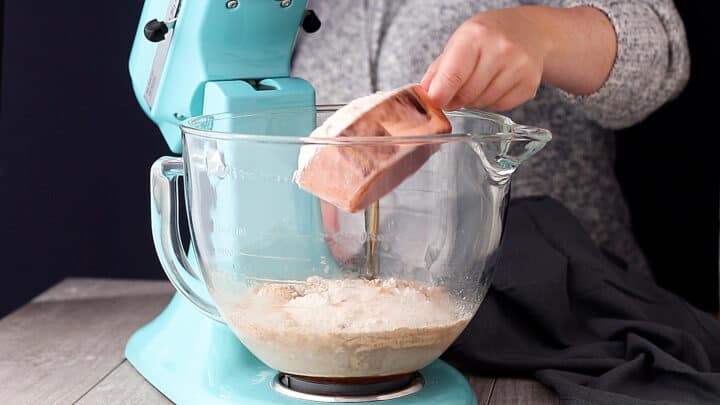
Beat that for about 3 minutes, then add more flour until you see the dough forming a ball.
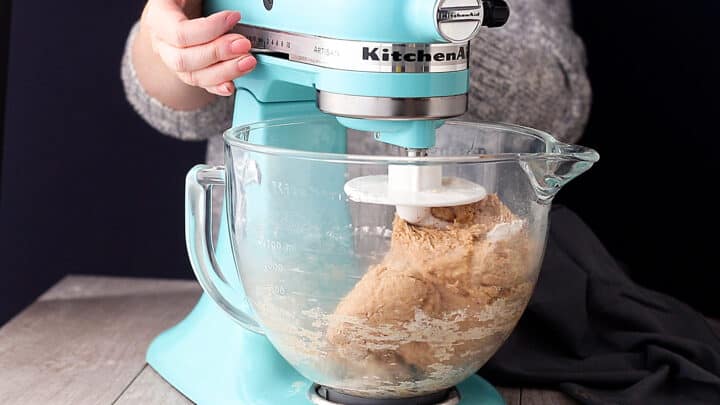
Once that ball of dough is pulling away from the sides of the bowl cleanly, it's time to knead.
You can knead this bread dough by hand or let your mixer do the work for you.
I kind of like kneading by hand. But sometimes I'm too busy, and I leave it in the mixer so I can do other things. Either way will work!
If you're kneading using the stand-mixer, keep it on low speed.
After about 10 minutes of kneading, you'll see that the dough looks smooth and elastic.
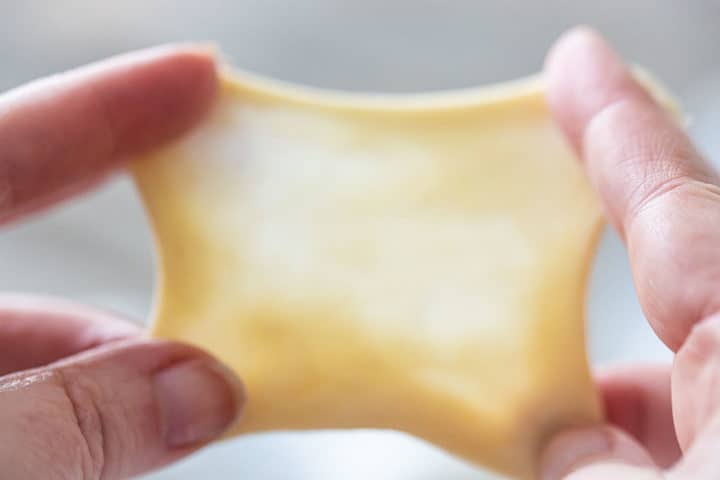
Perform the windowpane test: Pinch off a little piece of dough and using your fingertips, stretch it gently from the center outward. You should be able to pull it pretty thin without it tearing. If you can see light passing through it, just like a windowpane, you know you've done a good job kneading!
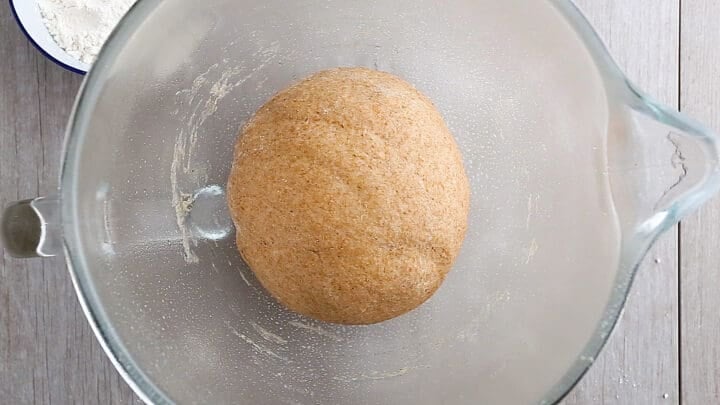
Mist your mixing bowl with non-stick spray, pop in the dough, mist the top of that too, cover with plastic wrap, and allow it to proof (aka: rise).
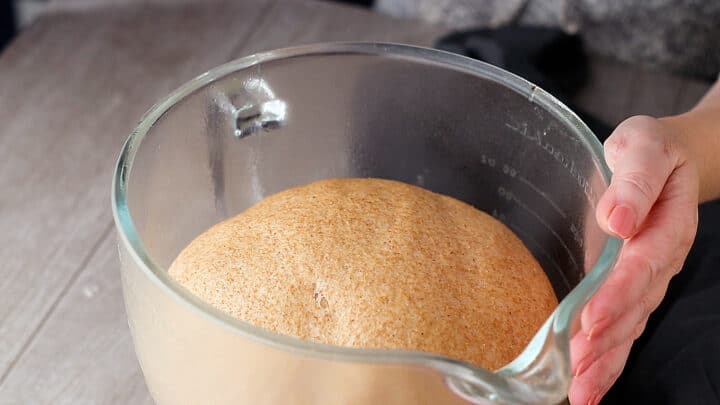
About 30 to 45 minutes later, you'll see that the dough has grown to double what it was before.
Punch it down, form it into a loaf shape, cover it, and let it rise a second time.
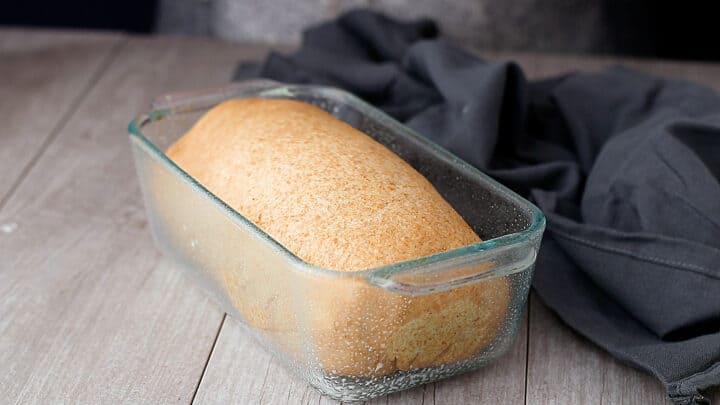
Once again, it should be double its original size.
Bake the bread until it's puffy, golden brown, and gives a hollow sound when tapped.
Expert tips
How Much Flour Do You Use
When making bread, the amount of flour to add is only an estimate. It can vary based on several different factors.
You'll probably need anywhere from 3 ¾ cups of flour to 4 ½ cups flour to make this bread. Start with 3 ¾ cups of flour, and add more, if needed up to 4 ½ cups.
You'll know you're done adding flour when the dough starts to pull away from the bowl. It should feel slightly sticky. If it's too sticky, keep adding more flour.
How Long to Knead The Bread Dough
Crumbly bread is a result of not enough kneading.
If you are using your hands to knead the dough, you will need to knead the dough for about 10 minutes or until the dough has an elastic feel. However, if you prefer a stand mixer, you can use the dough hook and knead for about 8 minutes.
Once the dough is smooth and elastic, and it passes the windowpane test, you have kneaded your dough enough. If it doesn't pass the windowpane test, keep kneading until it does.
This will produce that stretchy, elastic texture that's so satisfying.
How Long Does The Dough Need to Rise
This bread dough requires two rises.
The amount of time needed can vary based on the temperature in your kitchen. You'll want to look for the dough to double in bulk. It should get all puffed up with air.
Then you'll punch the dough down, place it in a bread pan, and proof it again until doubled.
If it doesn't get enough time to rise, it will have a tight, gummy texture. If it rises for too long, the gluten structure will weaken and the bread won't puff up as it bakes.
Either way, the bread will bake up smaller than it should, so just keep your eye on it and when it's twice its original size, it's time to move on to the next step.
How to know when the bread is done baking
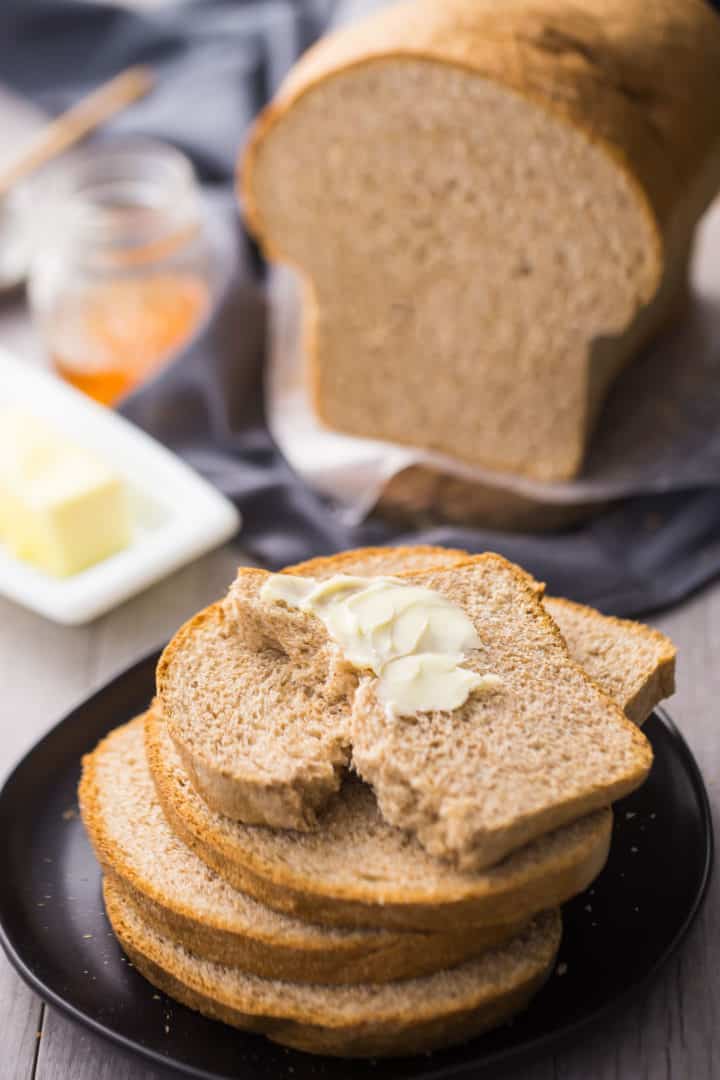
This bread is ready when it looks golden brown and puffy. It should sound hollow when you give it a light tap.
The bake usually takes around 40-45 minutes in an oven preheated to 350 F, but keep in mind that this can vary and you should really look out for those sensory signs and not rely solely on the times given.
Frequently Asked Questions
What is the best type of flour to use?
There are lots of different flours available for bread baking.
You can use white whole wheat flour, all-purpose flour, and bread flour instead of whole wheat flour if you choose.
The best flour to use has a high vital wheat gluten content.
However, this recipe is for whole wheat bread. So the best flour to use for an authentic whole wheat bread recipe is (naturally!) whole wheat flour.
What type of pan is best for baking bread?
I used a 9x5 glass loaf pan to develop this recipe.
A 9x5 inch metal or silicone non-stick loaf panwill also work, but that could affect the baking time. You may want to increase the temperature by 25 degrees F and decrease the bake time by about 10 minutes if you use metal instead of glass.
How to serve 100% whole wheat bread
Besides just eating it warm from the oven, this homemade whole wheat bread can be enjoyed in many ways.
It's perfect for sandwiches because of its soft, pillow-y texture.
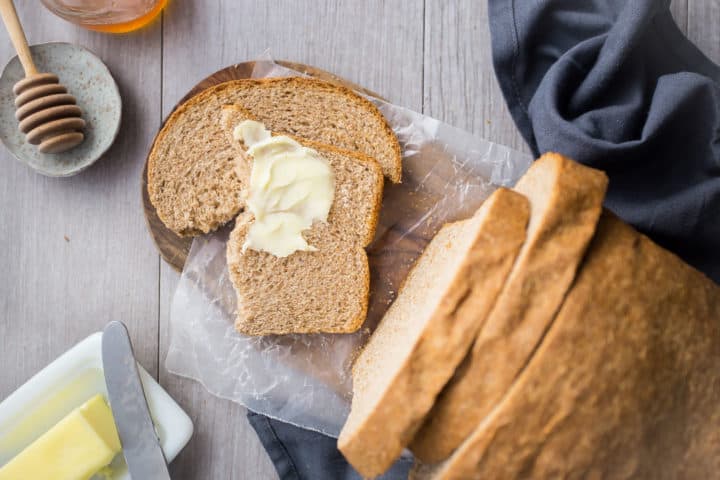
And it toasts beautifully! I love to slather it with butter and give it a sprinkling of cinnamon sugar or a swipe of jam or marmalade. That plus a cup of hot, milky tea, I'm in heaven.
You could also use it as a base for your avocado toast!
If you have leftovers and they're starting to get a bit dry, use them for French toast or bread pudding, or whiz them up in the food processor to make bread crumbs.
How to make vegan whole wheat bread
To make a vegan version of this soft wheat bread, substitute the butter for a vegan butter substitute. Look for one that swaps 1:1 for dairy butter.
And the honey can be replaced with an equal amount of brown sugar, agave nectar, or maple syrup.
How long does homemade wheat bread last?
Homemade bread doesn't last quite as long as store-bought, and that's because it doesn't have all those artificial preservatives to keep it shelf-stable.
Once this bread is completely cool, slip it into a plastic bag or airtight container to keep it from drying out. Then keep it in the fridge. It should last for at least a week.
You can also freeze it! I'd recommend slicing it first, so you can grab a slice or two from the freezer whenever you need it.
It thaws very quickly. Probably just a few minutes or so at room temperature. Or pop it into the microwave for around 10 or 15 seconds.
Treat your family to a homemade loaf this week! It's easy, fun, and so delicious!
As an amazon associate I earn from qualifying purchases..
Ingredients
- 1 ½ cups (354.88 g) warm water
- ¼ cup (84.75 g) honey
- ¼ ounce (7.09 g) active dry yeast* , (1 packet)
- 3 tablespoons (42 g) unsalted butter,, softened
- 3 ¾ cups (450 g) whole wheat flour, (you may need as much as 4 ½ cups)
- 1 teaspoon (3 g) kosher salt
Instructions
- Place the warm water and honey in a large bowl and sprinkle the yeast on top. Set aside for 5 minutes to allow the yeast to dissolve.
- Add the butter and blend in 2 cups of the flour and the salt until moistened.
- Beat on medium speed for 3 minutes.
- Stir in an additional 1 ¼ to 1 ¾ cups flour, until dough pulls away cleanly from the sides of the bowl.
- Knead on floured surface, adding ½ to ¾ cup additional flour, until dough is smooth and elastic, about 10 minutes.
- Place dough in large greased bowl and cover loosely with plastic wrap. Let rise in warm place until doubled in size, 30 to 45 minutes.
- Lightly mist a 9x5-inch loaf pan with non-stick spray.
- Punch down the dough and shape it into a loaf.
- Place in prepared pan, cover loosely with greased plastic wrap, and let rise in warm place until doubled in size, 30 to 45 minutes.
- Preheat the oven to 350°F.
- Uncover dough, and bake until the bread reaches an internal temperature of 190 degrees F (approx. 40 to 45 minutes).
Notes
Author

More Allergen Free



Have a question about this recipe? Ask AI:
I found this easy to make but it came out a bit dense and cakey (like banana bread) in its texture. This is likely down to the flour I used (a rustically-milled wholegrain flour that I had to use up), so I'm wondering if the ratio of moisture to flour would need rethinking in my case. I also halved the honey in it as 1/4 cup seemed too much.
I don't know if you can really evaluate the recipe if you're making those kinds of significant changes to it, but I would also suggest kneading it for longer to help to develop the glutens. A dense and cakey bread is often due to underdeveloped glutens. After 10 minutes, see if it passes the windowpane test, and if not, knead for longer until it does. You can learn more about the windowpane test here: https://bakingamoment.com/hawaiian-rolls/. Good luck!
I made a vegan version using date syrup instead of honey and olive oil instead of butter and it came out perfect, just as described. Thank you for sharing this recipe!
So great to know, thank you so much for sharing Danae! I'm so happy it worked well for you!
Hi!
I have tried this twice and have had no luck. Flavour is good but it is not rising well. I do not have a stand mixer so I'm not sure if that has something to do with it. I mix it by hand with a spoon and then knead. My yeast isn't expired but after watching your video, it doesnt rise nearly as much as yours. I can't have any dairy, so I'm using 2tbsps oil and one tablespoon apple sauce. I don't have vegan butter. Any suggestions would be greatly appreciated! Do you put your loaf somewhere warm (like a low temp oven) to get it to rise like that?
Hi there! So sorry you're having difficulty. Yes, I always put my dough in a warm (not hot!) place to rise. It will rise much more quickly if it's kept warm. My oven has a "proof" setting which is 170 degrees F, but if you don't have that you can just put it in the oven with the oven light on. The light alone is enough to keep it warm. I know that oil will work just fine because there have been several other readers that have commented that they've made that substitution. But one tablespoon of applesauce is not going to give the same level of sweetness as a quarter cup of honey. If you're looking to make a vegan bread, maybe substitute sugar for the honey. The yeast is going to need some form of sugar to feed off of, and I'm not sure a tablespoon of applesauce is quite enough. Hope this is helpful!
Hi there, is there any way to use instant yeast rather than traditional?
Yes, just follow this guide: https://www.thekitchn.com/whats-the-difference-between-active-dry-yeast-and-instant-yeast-54252.
Excellent bread, I've also made buns with this recipe and they were great.
So glad to hear that CJ! Thanks so much for the 5-star review!
Hi, my bread proof beautifully on the 2nd proof but alas, I could not bake it immediately and left the pan with dough in the fridge. When I returned and removed the pan from the fridge, the dough had sunk! What should I do? Can the dough be prepared in advance and placed in the fridge? Thanks!
It can but that should happen before the second rise, not after. So sorry you had trouble.
Thank you, Allie. I reknead it a little after removing from fridge and the dough did rise again but not as much as during the 2nd proof. Bread tasted good. Will certainly bake this bread again and see the difference. I believe it would have been fluffier and lighter if I had not placed the dough in the fridge. Thank you for a wonderful recipe!
You're very welcome Susanna! I'm glad you were able to salvage it somewhat!
I’m going to try this soon! I don’t have a loaf pan, though; will that be problematic?
I'm not sure how you'd make it without a loaf pan...? Did you have something specific in mind?
Oh my gosh...I feel so silly. My husband found our pans; I thought we’d tossed them years ago! I’m all set now 🙂
No worries at all Lindsay! I'm glad you found them!
This bread is delicious, thank you for sharing. ?
My pleasure Maggie! I'm so happy you enjoyed.
I’d like to try this but I only have instant yeast, the kind out don’t need to proof would you change anything to accommodate that change? And why do you prefer that yeast, just wondering. Thanks?
The only change I can think of would be perhaps in the rise time. I believe instant yeast might work a little faster, so just keep your eye on it as it proofs, and when you see that it's doubled in size you can move on to the next steps. Good luck!
This is an awesome recipe! I’m in quarantine after travelling and had to make my own bread.... this was a lifesaver for me as an inexperienced baker. It smelled like heaven in my house and the bread is so good I may never buy another loaf again. What a treat it was to eat too! I doubled it today and it worked beautifully. Thanks so much...
This is so great to hear! I'm so happy you enjoyed it Wendy!
Your soft whole wheat bread turned out perfect. I double the recipe to make 2 loaves . One for a gift and the other one for my family. Thanks for sharing your recipe!
You're welcome Nancy! I'm so happy you enjoyed. So nice of you to gift a loaf! Thanks for the great feedback 🙂
Can I use instant yeast
First time ever making bread. I added seeds to the mixture. The outcome was good but the bread was a little bit crumbly with an air pocket in the middle. Maybe I didn't knead it enough? I know I did something wrong just not sure what. Bread turned out great otherwise. Would love to hopefully use it for sandwiches but I'm not sure if the consistency would work well enough.
Hey there! So sorry you had a crumbly texture but I'm pretty sure that would be due to not kneading enough. It's important to knead for the full amount of time given because that is what develops the glutens and creates a stretchy, elastic texture. Hopefully you'll have better luck next time!
Has anyone tried this with a starter? Would this work if so how would I substitute my starter for yeast? Any ideas?
First time making bread and OMG it was a success! Thank you for sharing an easy and tasty recipe
You're welcome! I'm so happy it worked well for you. Thanks for the 5-star review!
Haven't made this yet, so don't want to give a rating just yet. Just had a question: I love the breads in stores that sometimes have oats, sunflower seeds, etc added. I love the crunch and added fiber. Any suggestions on how much of something like that should be added, and, if you ever do add those types of things, what has been your favorite/liked by others? Thanks!
Hi Helen! That sounds like a fantastic idea, and seeds are the type of thing you can add to your own taste. Oats often act a little like flour in that they dry out the dough more, so if you're adding those you may want to hold back on some of the flour. I would suggest adding anywhere from a half cup to a cup, depending upon how hearty you'd like your finished bread to come out. Good luck!
Hi! Can I use instant yeast instead of active dry yeast?If so would I still add water?
Yes, I've answered this question quite a few times already in the comments here. Look for the link to an article on thekitchn that explains how to make the conversion.
Here's the link again: https://www.thekitchn.com/whats-the-difference-between-active-dry-yeast-and-instant-yeast-54252.