

Swiss Meringue Buttercream
As an amazon associate I earn from qualifying purchases.
Swiss Meringue Buttercream might seem a bit intimidating at first, but once you try it, you'll discover a whole new world of cake decorating and desserts. It's light, silky, buttery, and less sweet than traditional American buttercream, with a smooth, luxurious texture.
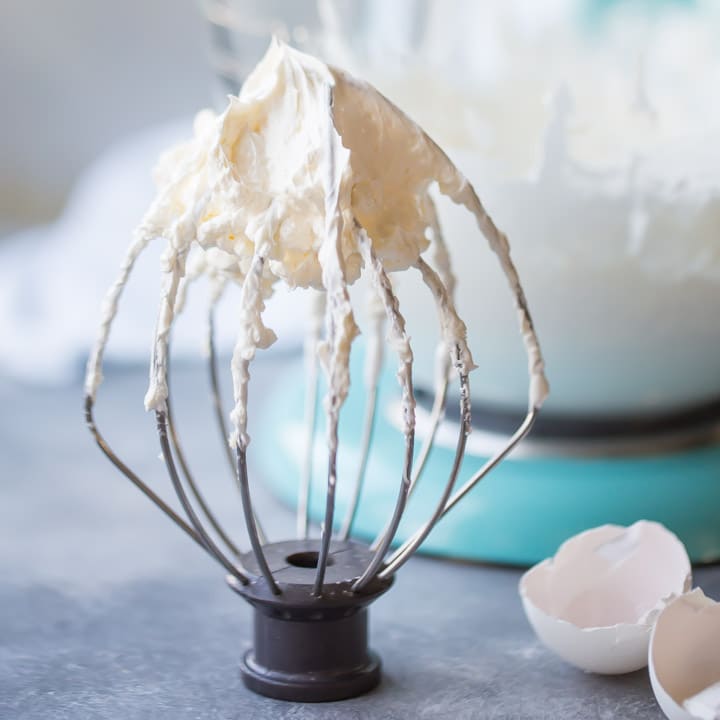
Swiss meringue buttercream is a frosting used to top and fill cakes, cupcakes, and macarons. It's incredibly light and airy, yet rich and buttery.
What I love most about it is its silky texture. It's made by first dissolving sugar in egg whites; it has an incredibly smooth texture that you just don't get with regular powdered sugar (aka American-style) buttercreams.
When you take a taste, you'll be struck by its subtle sweetness and how it melts on your tongue.
I tried Swiss meringue buttercream for the first time about 15 years ago, and it was a total "a-ha moment!" The light, silky texture and perfectly sweet flavor blew me away. I had never tasted anything quite so delicate before. Right away, I realized that this was the BEST way to take my cakes and cupcakes to the next level, and I have never looked back!
It also works very well under fondant! It gives you a perfectly smooth surface with no lumps or bumps, so it's ideal. When I worked as a pastry chef, it was all we used for fondant-topped cakes.
There are so many recipes here on Baking a Moment that utilize Swiss Meringue Buttercream. I'll share some examples below. But first, I'd like to take the opportunity to answer any and every question you've ever had about this unique and delicious frosting!
Here's Why You'll Love This Recipe
- Light, silky, and smooth!
- Less sweet than powdered sugar-based frostings.
- Perfect for frosting, filling, and piping.
- Easy to flavor in lots of different ways!
- Beautiful texture and glossy finish.
- Great for layer cakes, cupcakes, and celebration bakes.
Ingredients You'll Need
The recipe card at the bottom of the post contains the full list with all of the amounts. Refer to that when you're cooking.
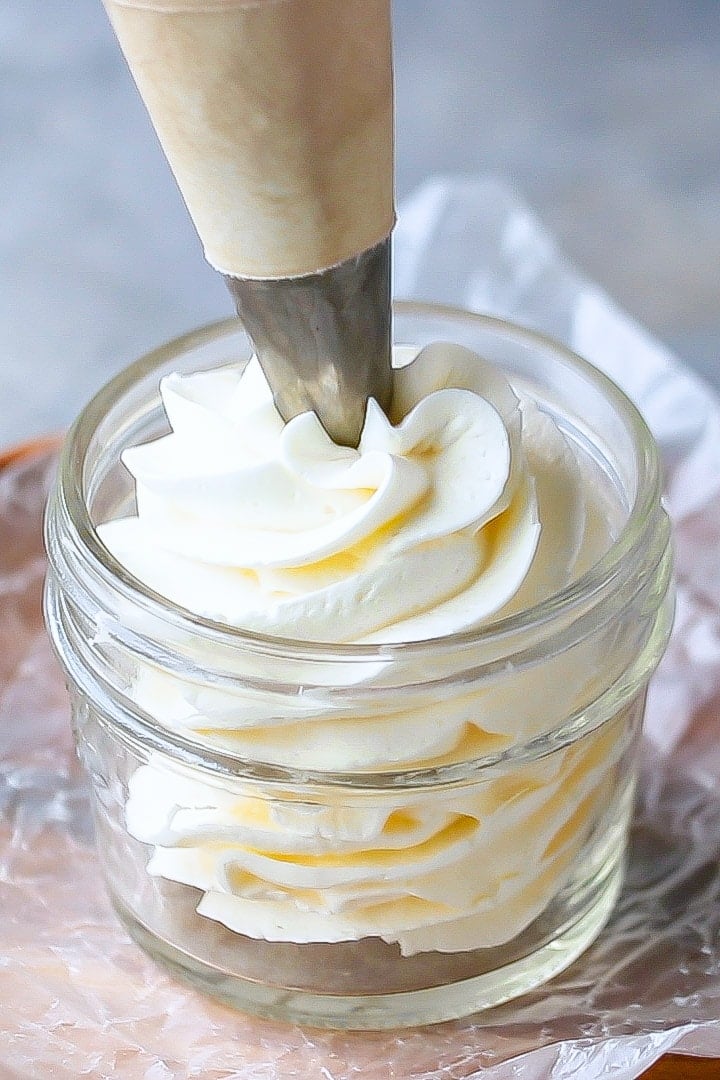
- Egg whites: These form the base of the meringue and give the buttercream its light, airy texture.
- Granulated sugar: This dissolves into the egg whites to make a smooth, glossy base and adds sweetness.
- Unsalted butter: Softened butter turns the meringue into a rich, silky frosting with a luxurious texture.
- Kosher salt: A small pinch balances the sweetness and brings out the flavor.
In Photos: How To Make Swiss Meringue Buttercream
A Few Things to Know Before You Start
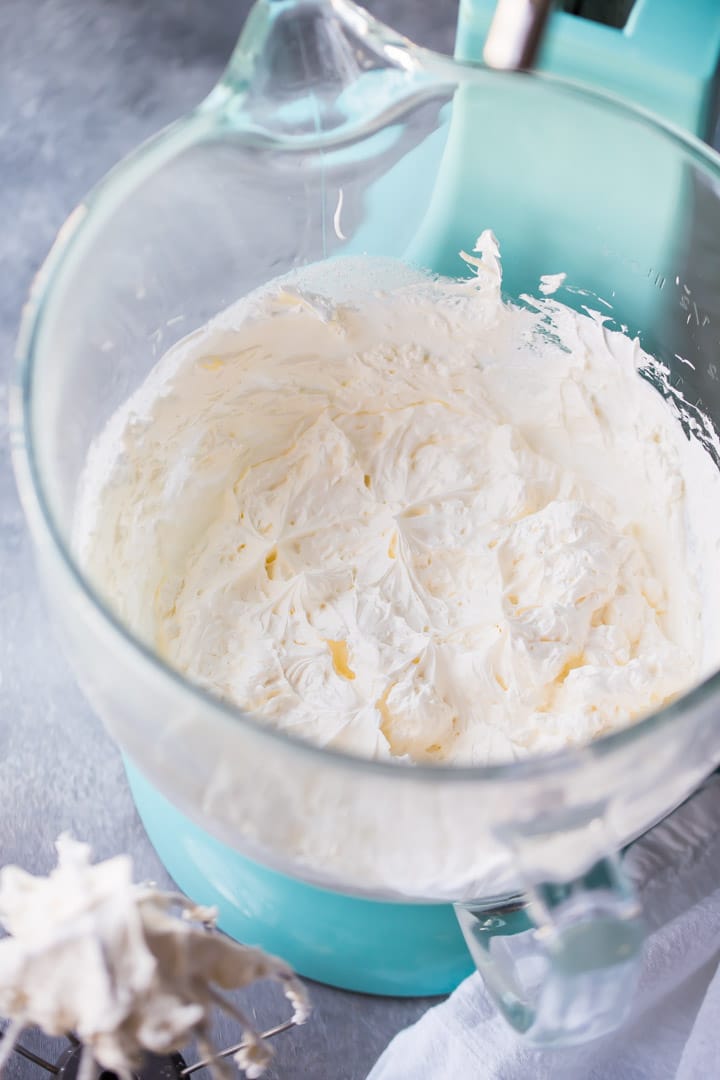
Swiss meringue buttercream can look messy partway through. Sometimes it seems soupy, curdled, or separated after you add the butter. This is normal.
Usually, it just needs more mixing. Keep beating, and it will come together into a smooth, fluffy frosting. The meringue should be fully cooled before adding the butter, and the butter should be softened but not greasy or melted.
Step 1: Heat the egg whites and sugar
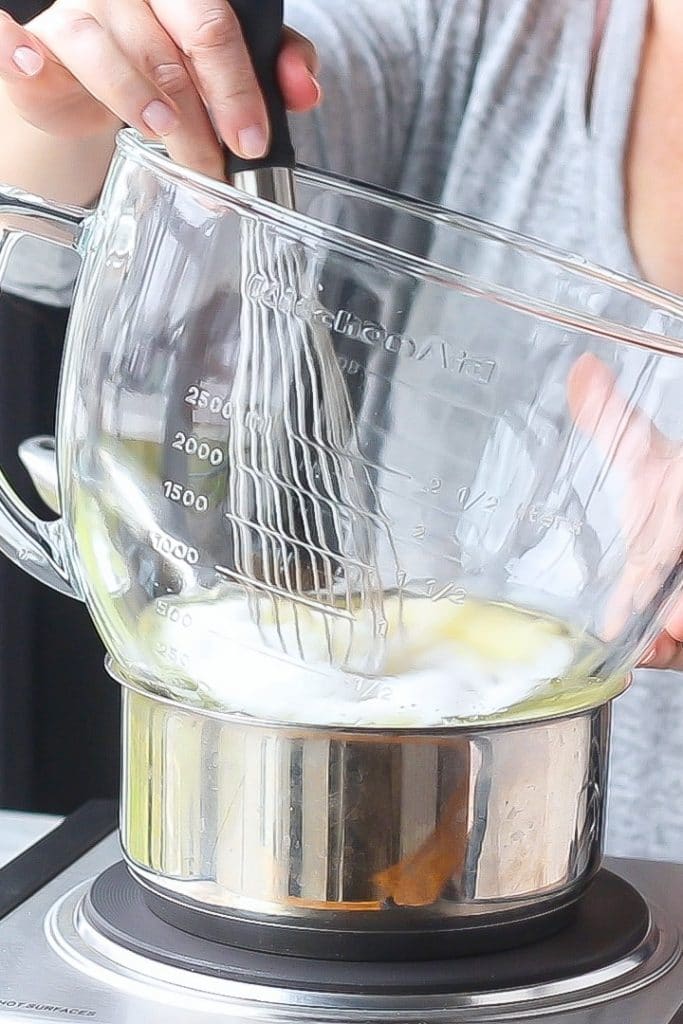
Put the egg whites and sugar in a large heatproof bowl over gently simmering water. Stir continuously until the sugar dissolves and the mixture feels hot and smooth when rubbed between your fingers.
Pro Tips: I usually cook my whites/sugar for around 10 minutes, whisking occasionally. You'll notice the mixture goes from thick and transparent to thinner and more opaque.
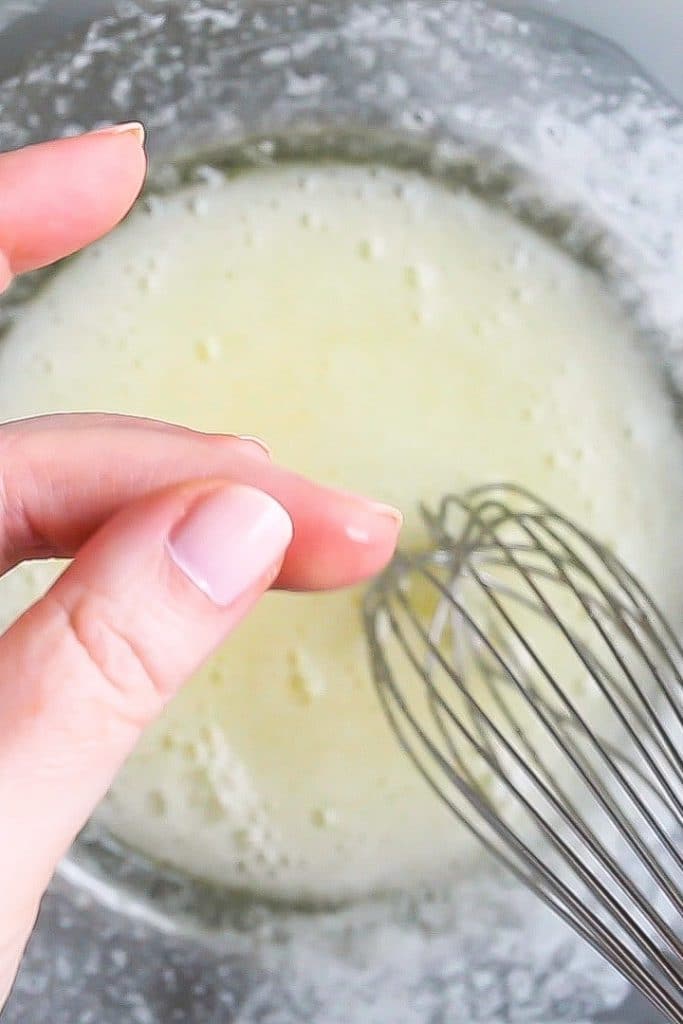
The best way to know if it's really ready is to place a drop on your finger and rub it together with your thumb. If you feel any grit at all, keep cooking. When it's smooth as can be, you're ready for the next step.
You'll also notice that the mixture feels hot to the touch. You can gauge it with a candy thermometer (it should register 140 degrees F), but I don't really find that necessary. If it feels hot and the sugar is fully dissolved, you should be good to go.

Step 2: Whip into a meringue
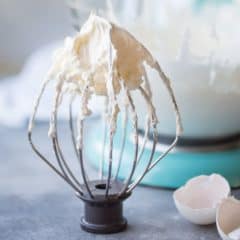
Take the bowl off the heat and whip the mixture on high speed until it's thick, bright white, and glossy. It should hold stiff peaks and feel cool before you continue.

Step 3: Add the butter
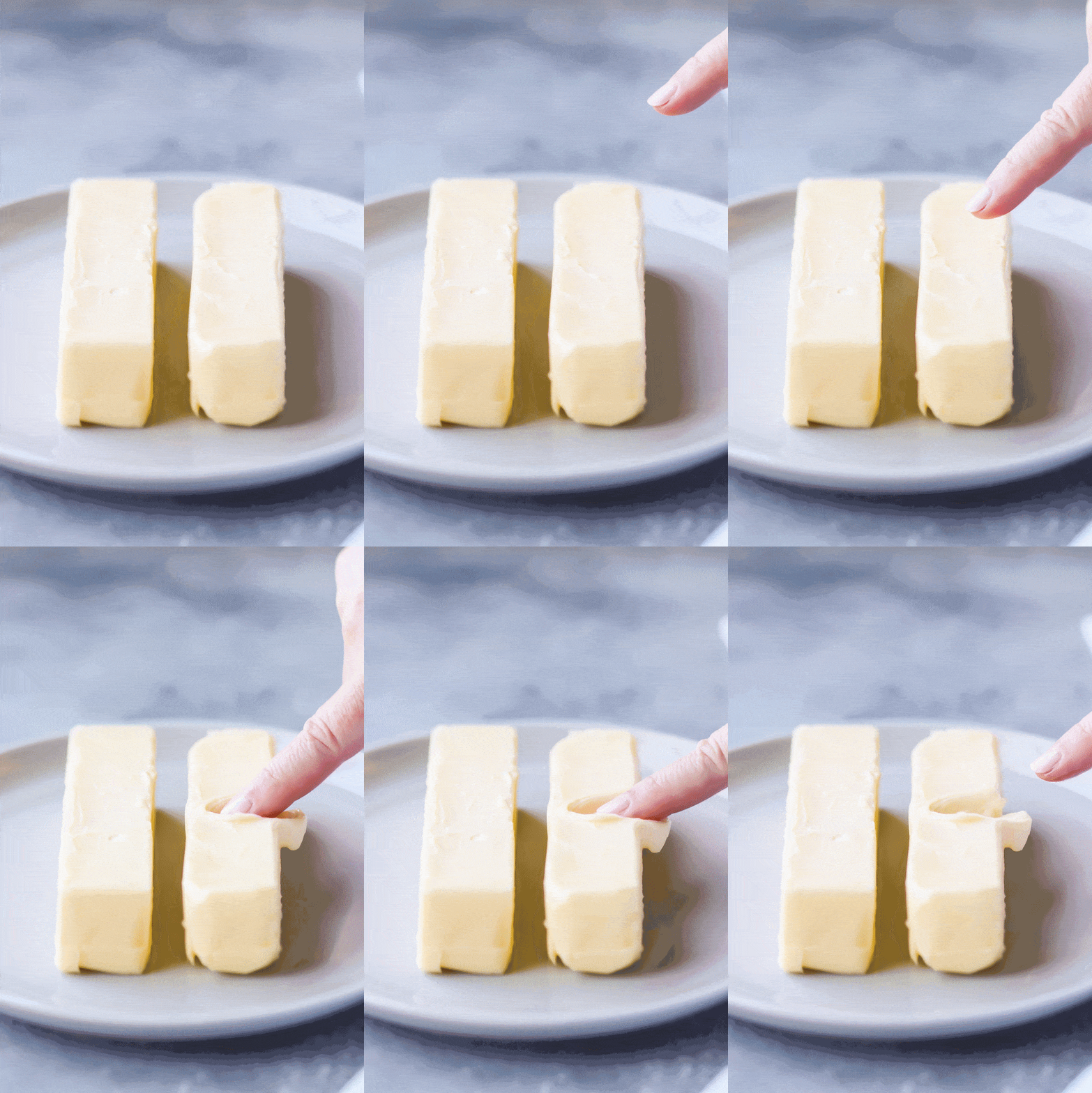
Add the softened butter one tablespoon at a time, beating well after each addition. This step takes some patience, but it's what gives the buttercream its smooth, velvety texture.
Pro Tips: Your buttercream might start to look funky and curdled at this stage. Be sure to add the butter slowly (a tablespoon at a time) and let each addition fully incorporate before adding the next. Just keep on whipping, and I promise, it will come back together!
I have found that if I soften my butter in the microwave (while still wrapped in sticks) for 10 seconds at 30% power, then flip it over and do another 8 seconds at 30% power, it comes out perfect!
Just bear in mind that all microwaves are not exactly the same, so you might have to experiment a little to find that perfect sweet spot.
Step 4: Finish with salt and flavorings
Once the buttercream is smooth and cohesive, fold in the salt and any flavorings you would like to use.
Helpful Tips and Tricks
- Use a clean bowl: Even a little grease can stop the egg whites from whipping up properly.
- Dissolve the sugar fully: Rub a bit of the mixture between your fingers to check that it feels smooth, not gritty.
- Cool the meringue completely: If it's still warm, it can melt the butter, making the frosting soupy.
- Add butter slowly: Adding it one tablespoon at a time helps everything blend smoothly.
- Don't worry if it looks curdled: Just keep mixing. It usually comes together nicely.
- Re-whip before using: After storing, let it warm up to room temperature and beat it again until it's smooth and fluffy.
- If you want to serve it on a very hot day, just keep your cake or cupcakes refrigerated until ready to serve.
Add-In Options
- Fold in the seeds of a vanilla bean, 1 ½ teaspoons of vanilla bean paste, or 2 teaspoons of vanilla extract to make Vanilla Swiss Meringue Buttercream.
- Add melted chocolate to make Chocolate Swiss Meringue Buttercream.
- Add melted white chocolate to make White Chocolate Swiss Meringue Buttercream.
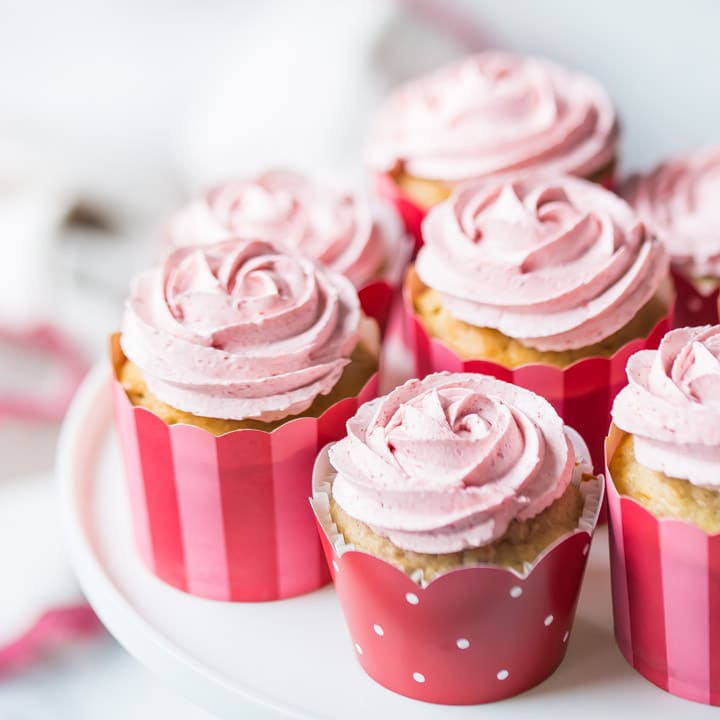
- Place freeze-dried strawberries in the food processor, grind them to a fine powder, and stir them in to make Strawberry Swiss Meringue Buttercream.
- Whip in the zest and juice of a lemon, lime, or orange for a citrus Swiss Meringue Buttercream.
- Stir a tablespoon of instant espresso powder into 3 tablespoons of hot water, then stir the cooled mixture to make Coffee Swiss Meringue Buttercream.
- Puree a couple of cups of raspberries, then cook them down until thickened and stir in to make Raspberry Swiss Meringue Buttercream.
- Reduce sparkling wine to a thick syrup and add it to make Champagne Swiss Meringue Buttercream.
Recipe FAQ
While there is slightly more to it than just creaming butter and powdered sugar together, the payoff is huge! You'll definitely find that it's worth that little bit of extra effort. And once you get the hang of it, it will seem like second nature!
When making Swiss meringue buttercream, the first step is to melt sugar and egg whites together over a pot of steaming water. When the sugar is completely dissolved, you get that incredibly silky-smooth texture in your final product.
But if you don't heat the mixture long enough, you might feel gritty sugar crystals between your teeth.
Believe it or not, you are doing it right! Swiss meringue buttercream almost always goes through a stage where it looks curdled, broken, or split. This often happens just before it fully comes together!
Temperature is everything when making this recipe. The whites and sugar need to get hot enough to dissolve the sugar, but then they need to cool down a lot before the butter goes in.
It's easy to get impatient at this stage! I've done it plenty of times myself and ended up with a runny mess.
But you do not have to pitch it! It's totally salvageable. Just put the entire thing (mixing bowl, whisk, and runny buttercream) into the fridge for about 20 minutes and then re-whip. It works like magic!
It's also a good idea to pay attention to your butter's temperature. You want it softened, but it should still be somewhat cool to the touch. You don't want it so slippery and nearly melted!in the fridge for about 20 minutes,
Swiss meringue buttercream will not crust, as American-style buttercream does. This makes it really easy to work with, especially if you're trying to get a perfectly smooth finish on your cakes.
Swiss meringue buttercream is super versatile! It can be colored with gel paste food coloring (aka: icing colors), and flavored in TONS of different ways.
I often make it the night before I need it, and let it sit out at room temperature. This is fine to do if you plan to use it early the following day.
If you'd like to get even more ahead of schedule, it can be refrigerated for up to a week. But you may find that it comes out a bit hard, and loses some of its airy lightness. Just scoop it out of the container and re-whip it (after it's come back to room temp). It will be just like new!
I honestly think it's one of the most stable buttercreams out there. It works really well for piping, and it holds up beautifully.
It can be frozen as well; just thaw overnight in the fridge, then follow the method above.
Recipes Using Swiss Meringue Buttercream
Ingredients
- 6 large egg whites
- 2 cups (400 g) granulated sugar
- 2 cups (454 g) unsalted butter, , softened
- ⅛ teaspoon (0.13 teaspoon) kosher salt
Instructions
- In a large glass or metal bowl, combine the egg whites and sugar.
- Set the bowl over a pot of barely simmering water, and stir continuously, until the sugar is completely dissolved. (Check by rubbing a small amount between your thumb and forefinger; it should be hot to the touch, and feel smooth, not gritty.)
- Remove the bowl from the simmering water and whip on high speed until the meringue is thick, white, glossy, and can hold stiff peaks. (It should be cooled completely. There should be no hint of warmth when you place your hand on the side of the bowl. Refrigerate the meringue for 15 to 20 minutes if necessary.)
- Add the butter in, a tablespoon at a time, beating well after each addition. (If the mixture begins to look curdled, continue to beat until it comes back together, before adding the remaining butter.)
- Fold in the salt and any other flavorings you may be using.
Notes
Author

More Frostings, Icings and Fillings
Have a question about this recipe? Ask AI:
Hello Allie,
I also love Swiss meringue and... it’s buttercream version.
I’d like to make a shelf safe version. One that would last on the countertop for a few days.
Do you have any recommendations?
Thank you,
Anny
recipe came out easily. simple direction to follow. very silky with no grains of sugar. my only concern is that its a bit too sweet. its less sweet than butter cream, however its still too sweet for me. i was wondering can i reduce the sugar amount?
Not sure if that would work but you can certainly experiment! Good luck!
Hello!! Will boxed egg whites work for the buttercream? I always feel bad when I have a bunch of yolks leftover
Yes I use pasteurized whites from a carton often & they work pretty well. Good luck!
Thanks for a nice recipe - but EXTRA THANKS for the information. Storage, reviving, longevity, flavorings.... all of these were just the sort of info I was hunting for.
So glad to hear that Greta! Thanks for the 5-star review!
hi...i want to make white chocolate smbc for a strawberry cake and for a chocolate cake with cookies and cream inside and white chocolate smbc outside...do you think white chocolate in smbc will taste good?or just use plain smbc?thanks
ohh also can i add some rosewater if i make it simple?will it smell good?
Sounds delicious! Good luck and enjoy!
if i partially made the swiss meringue buttercream, it never came up to the curdled stage.. it's thick but has yet to reach there and i put it in the fridge, will it whip up the next day? i only had 15 min to do all this lol
I would think so! Good luck!
Hi, thank you for the recipe!! Would this buttercream work well for writing?
Hi there! Yes this buttercream pipes beautifully. Good luck!
I made my first attempt at this lovely sounding frosting and managed to avoid the pit falls of gritty sugar and a runny texture, BUT mine tasted terrible in that you could taste the egg. I was so bummed, but I'm not giving up. I googled what may have gone wrong and I think I got the mixture too hot, thus "cooking" the egg whites. Do you know what the max temp would be to bring the egg mixture to in order to avoid this on my second attempt? I'm determined to get this down!
So sorry you had difficulty Rachel! You can take the whites/sugar mixture off the heat just as soon as the sugar is fully dissolved. You'll be able to tell by rubbing a drop between your thumb and forefinger- it will feel smooth and not gritty. Good luck!
Excellent tutorial.. loved the detailed info given.. my daughter wanted unicorn themed cupcakes for her birthday .. and I have tried and failed with American butter cream a dozen times .. so I wanted to try something different.. the Italian butter cream called for a candy thermometer which I don't own that's when I can accross your recipe... And also this was my first time trying Swiss meringue butter cream.. it came out oh so perfect.. anyone who is trying this for the first time will definitely be super happy with the results .. I'm totally going to use this recipe again.. thank you so much because now I'm not afraid of making butter cream ?
I'm so happy to hear it Maria! Thanks so much for the positive feedback, and happy belated birthday to your daughter!
Hey! This comes very late but I'm in desperate need of guidance.
So I wanna do a salted caramel smbc enough to only cover a 3 or 4 layer 6 inch cake (crumb coat + frost + few rosettes on top but filling will be different). I've never worked with smbc before so really scared but I dislike American buttercream so wanna take the leap.
When should I add the salted caramel sauce? And how much? Can I just go by taste or will too much of it affect the smbc? I live in a pretty hot environment and AC won't be available so is smbc heat resistant at least for some time? And how much will I need? Will half the recipe be sufficient? I really don't want leftovers.
I'd be so grateful if you'd reply cz there are so many recipes online and I'm really confused ?
Hi Tehreem! I would go ahead and make a full batch for the type of cake you're describing. There's nothing worse than not having enough frosting to finish your cake! As for adding salted caramel sauce, I'm really not sure what to tell you because it will obviously make the frosting a lot sweeter... I'm afraid you will have to do some experimenting. Maybe try adding less sugar to the egg whites to compensate? And I do think you will have to go by taste, but be careful because too much liquid will cause the buttercream to separate. Good luck!
Hello! Another recipe I have used, only calls for 1 1/2 C of butter, I'm tempted to try this one--but what if it is too buttery?! Ill still have to try it out! Either way a general question, do you use the whisk attachment throughout the whole process? or before you add the butter you switch to the paddle attachment?
thank you, happy baking!
Hi there and sorry for the late reply! I've been traveling. Swiss meringue buttercream does tend to have a much more buttery flavor than American style buttercreams do. And I always just use the whip attachment- it helps to keep everything smooth and lump-free! Good luck!
Hi Maria. Thank you for sharing.
I need to make and serve my tier cake in hot day. Do you think American buttercream is safe or Swiss meringue buttercream is safe? Please answer. ^^ thank you.
Hi Judy this is Allie. I don't know how hot you are talking, but if you're concerned I would try to keep the cake in the fridge for as long as you can. Good luck!
Do you let the egg whites come to room temperature before heating? I usually use a different SMBC recipe and it says to bring to room temperature. I want to give your recipe a try as it’s a different ratio of butter to meringue and I think it would be interesting to see if it’s much different ?
Hi Andrea! It's always better to let the whites come to room temp first; it helps them to fluff up a little better. But I don't always bother, to be honest. As long as my bowl and whip are really clean, and I don't accidentally pierce a yolk, it usually comes out just fine!
Hi, will I be able to make my wedding cake, stack it and leave out of fridge for 1 day
In terms of spoilage I think that would be fine, but I don't know what kind of cake you're using or what your environment is like. If it's very warm you might have some difficulty keeping things from becoming too soft.
I hope you can help me with some advice. I tried making Swiss buttercream for the first time today, but my egg whites and sugar mixture crystallized becoming grainier and grainier the more I cooked the egg whites and sugar. I don’t know what I did wrong. I heated the mixture up to 160 degrees over a pot of simmering water stirring constantly.
Any advice would be greatly appreciated.
That's very strange! I'm so sorry but I really don't know what could have gone wrong there. I've made this dozens of times and never experienced anything like that.
I want to make only 1/3 of the amount you make in your recipe. Do you have a recipe for smaller batches?